
Triangles in Photography: How to Use Triangle Composition
One of the first things to learn in photography is composition. In this tutorial, we will examine how using triangles in photography can make an image feel stronger, more balanced and more visually connected.
Triangle composition in photography involves arranging subjects, shapes or points of interest so that they form an actual or implied triangle within the frame. This simple technique can guide the viewer’s eye, create a sense of stability and establish a clear relationship between the elements in a photograph.
Firstly – What is composition in Photography?
The word composition means combining or 'putting together’ parts to form a whole.
Composition can apply to many subjects, including music and writing – It applies to anything that is arranged or ‘put together’ using conscious thought.
In photography, composition is how you arrange the elements of your subject matter within your frame.
For instance, the three images below show different ‘compositions’ of the same subject matter.


Control your photography and be more creative with our online courses. Click below for more info.
Why use triangles in photography composition?
Triangles can bring structure, balance and visual direction to a photograph. A triangle resting on a broad base often conveys stability and strength because its visual weight is spread across all three sides. We see the same principle in structures such as the Egyptian pyramids and the roof of a house. As a result, we often associate triangular forms with strength, even when we do not consciously notice the shape.
A triangle does not need to be physically present in the scene. It can be implied by three faces, objects or other points of interest. The viewer mentally connects those points, helping the eye move around the image and making separate elements feel like one group.
Below is a picture of a Victorian family taken in the late 1800s. The family has been arranged in a triangular composition with the man of the house at the top of this triangle. This gives a sense of hierarchy in the family with the top of the triangle (the father) being the strongest. Lots of Victorian family portraits were taken in this way to give an impression of a strong family unit.

This portrait of Russian President Vladimir Putin by photographer Platon is another example of using a triangular composition to convey strength.
Whatever your personal views on Putin, the photograph presents its subject as a powerful leader. His head forms the apex, while his arms create the broad base of the triangle. The low camera angle, downward gaze and close viewpoint reinforce this impression. Platon also used a wide-angle lens, which exaggerates the hands in the foreground and makes the pose feel even more commanding.

President Putin by the photographer Platon
Even Leonardo da Vinci used a triangle composition in the Mona Lisa.
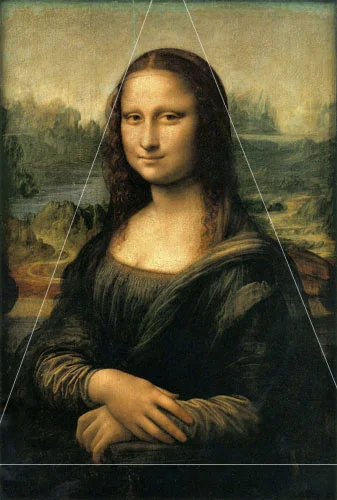
Triangle composition has a long history in visual art. Leonardo da Vinci used a stable, pyramid-like arrangement in the Mona Lisa: the head forms the apex, while the arms and hands create a wider base. Photographers can use the same principle when posing a seated subject.
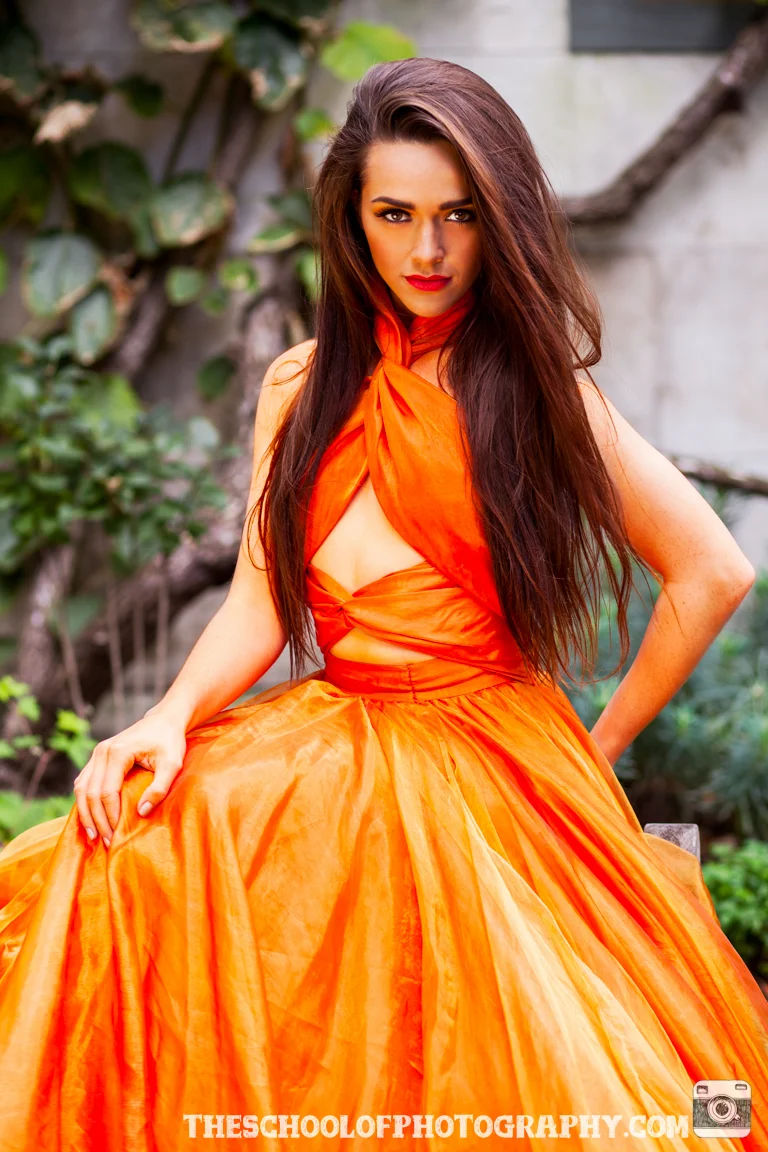
Triangles in composition
Learn more about portrait photography with our Fine Art Family Portraiture Course.
Types of Triangle Composition in Photography
Triangles can appear in a photograph in several different ways:
Literal triangles: Clearly visible triangular subjects or shapes, such as mountains, rooftops, sails and architectural details.
Implied triangles: Three people, objects or points of interest positioned so the viewer mentally connects them into a triangle.
Stable triangles: A triangle resting on a broad base creates a balanced, solid and dependable feeling. This works particularly well in portraits and group photographs.
Dynamic triangles: A tilted, inverted or uneven triangle can introduce movement, energy or tension into the frame.
Triangles created by perspective: Roads, paths, buildings and other converging lines can form a triangle that leads the viewer towards a subject or vanishing point.
Take your photography to the next level by becoming a member of TSOP
Your task, should you chose to accept it!
Make someone look powerful by using a triangle composition and when you do tag us in on Facebook or Instagram @theschoolofphotography1 – we love to see your responses to our tasks.
Tips – Get close and use your lens on its widest angle. Get low and have your model looking down on you, sitting on a wall or stairs can help. Don’t have any distractions in the background or foreground of the shot.
Good luck!
Frequently Asked Questions About Composition in Photography using Triangles
What are triangles in photography?
Triangles in photography are shapes or objects that form the shape of a triangle. This gives a stable and strong feeling to an image.
What is triangle composition in photography?
Triangular composition in photography is where a photographer will position objects in a way so they form a triangular shape.
Why are triangles effective in photography?
Triangles are effective in photography if you want to create a strong, stable, and solid feeling to your image. Just like the examples shown in this blog post.
How do you create a triangle composition in a portrait?
In portraiture, a very easy way to create a triangular composition is to position yourself low and look up towards your model. Using a wide‑angle lens also helps accentuate this look, as it will stretch out the foreground—the lower parts of the body—and shrink the distance to the head of the body.
Do triangles in photography need to be visible shapes?
No, triangles in photography do not need to be physical shapes. It just means that the objects within your photograph—whether that be people, buildings, nature, etc.—when put together form the shape of a triangle.
Can triangle composition be used outside portrait photography?
Yes, triangular compositions can absolutely be used in outside portrait photography. Please check out this blog for instructions on how to do that. To learn photography properly and in more depth, check out our beginners photography course here.
Like this? - Check out similar tutorials below


I hope you liked this tutorial, please leave us a comment and support us by sharing it with your friends and subscribe to our newsletter at the bottom of this page for more.
We also have an excellent learning community on social media so please join us there as well.
Thanks for watching and remember – Learn more at The School of Photography.