3 Portrait Photography Composition Techniques You Need to Know
Good portrait photography isn't only about choosing the right camera settings or finding flattering light. Portrait photography composition plays a huge part in determining how the viewer sees your subject and how visually engaging the final photograph feels.
Composition is essentially how you arrange the different elements within your photograph. By carefully considering where you position your subject and how you use the surroundings, you can guide the viewer's eye towards the most important part of the image.
In this tutorial, we'll look at three simple portrait photography composition techniques that you can start using straight away:
· Frame within a frame
· Leading lines
· Symmetry
These techniques can be used in all kinds of portrait photography and, importantly, you don't need any additional photography equipment to try them.
1. Use Frame Within a Frame in Portrait Photography
The first portrait composition technique is known as frame within a frame.
This involves finding an object or feature within the scene that can create a natural frame around your subject.
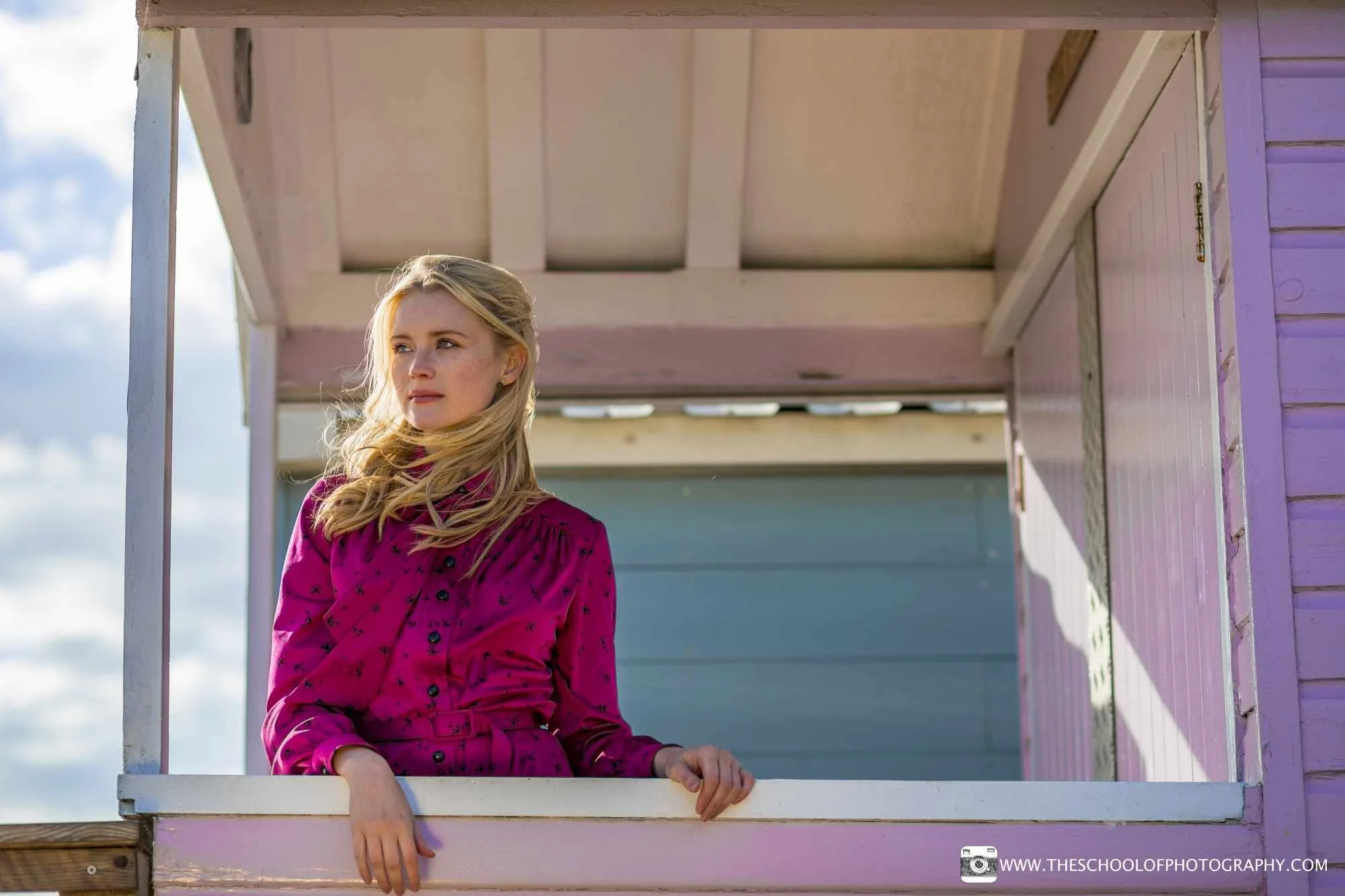
In our example, we photographed our model at a beach hut and used the window of the hut to create a frame around her.
By positioning the model within the window, the surrounding structure naturally draws the viewer's attention towards her.
This is why frame within a frame photography can be particularly effective for portraits. Rather than having lots of competing elements within the photograph, the frame helps direct the viewer towards your subject.
What Can You Use to Frame a Portrait?
Once you start looking for them, you'll find natural frames almost everywhere.
For example, you could use:
Windows and doorways
Archways
Trees and foliage
Buildings
Fences
Tunnels
Gaps between objects
Foreground elements
The frame doesn't necessarily have to completely surround your subject. Even objects positioned along two or three sides of the photograph can help create the feeling of a frame.
When you're taking portraits on location, take a moment to look around before you start shooting. You may find an interesting feature that can be incorporated into your portrait composition.
Learn more about how to use a frame within a frame in photography.
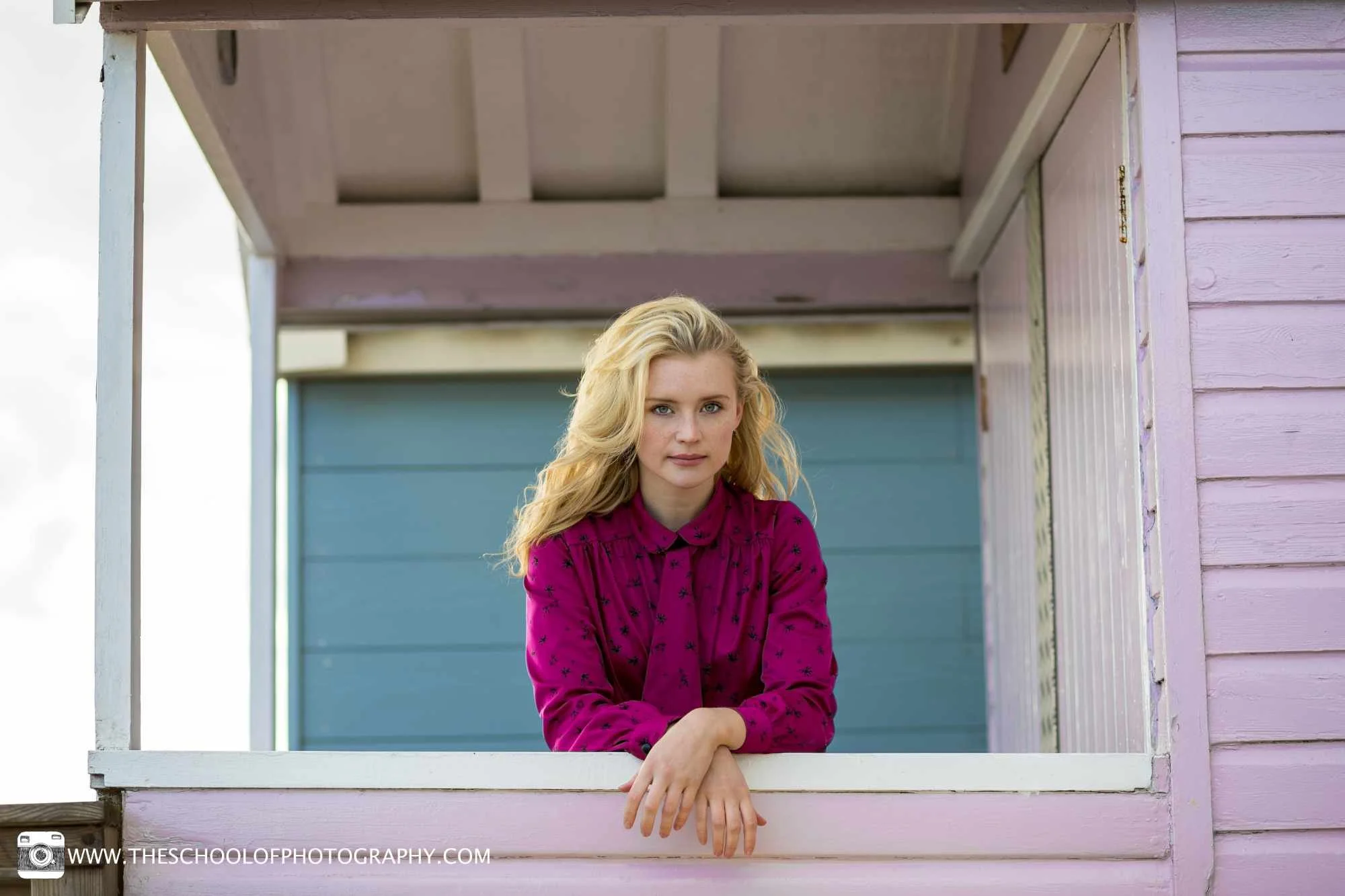
A woman posed in the window of a pastel-coloured beach hut, demonstrating the frame within a frame composition technique in portrait photography.
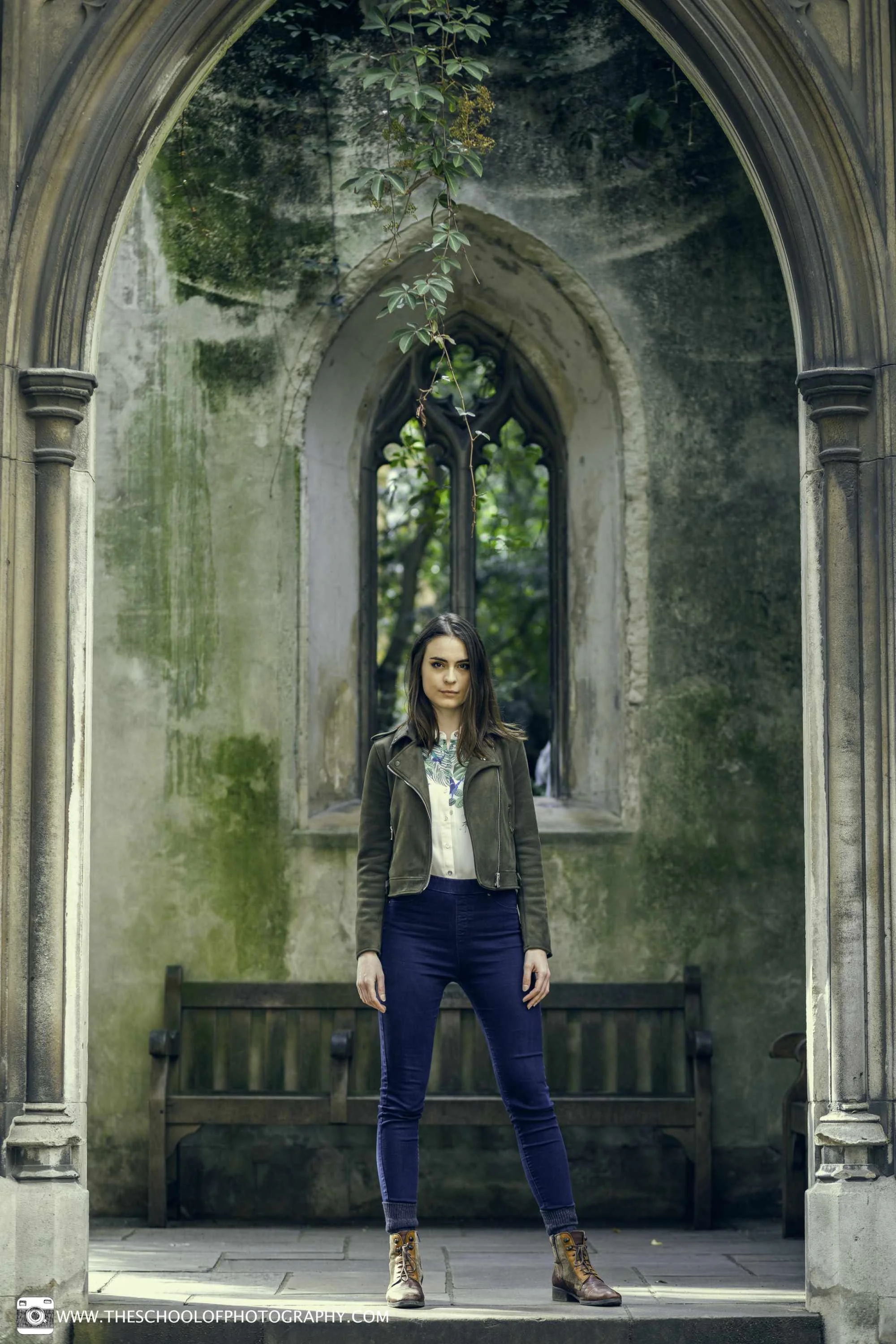
Full-length environmental portrait of a woman standing beneath a large Gothic arch, framed by weathered stonework, climbing greenery and an arched window behind her.
Get access to ALL our online courses - 1000’s of videos, worksheets, critiques of students work, personalised support and much more with our monthly membership.
2. Use Leading Lines in Portrait Photography
Another powerful composition technique is leading lines.
Leading lines are lines within the photograph that naturally guide the viewer's eye towards a particular part of the image.
In portrait photography, that destination will normally be your subject.
For our portrait, we used the wooden cladding of the beach hut. The lines created by the wood lead through the photograph and towards the model.
The important thing to remember is that leading lines don't have to be literal painted lines. Many everyday objects can create them.
Look for things such as:
Roads and pathways
Walls
Fences
Railings
Rows of buildings
Bridges
Shadows
Patterns in architecture
Wooden panels or cladding
When composing your portrait, consider where these lines enter the photograph and where they lead.
Ideally, you want the viewer's eye to follow them towards your subject rather than away from them.
How to Photograph a Portrait Using Leading Lines
Start by identifying any strong lines within your location.
Next, change your shooting position and see how those lines interact with your subject. Moving just a few steps left, right, forwards or backwards can completely change the composition.
Once you've found your position, focus on your subject and then reframe the shot to create your final composition.
This is a very simple technique, but it can make a big difference to the way someone views your portrait.
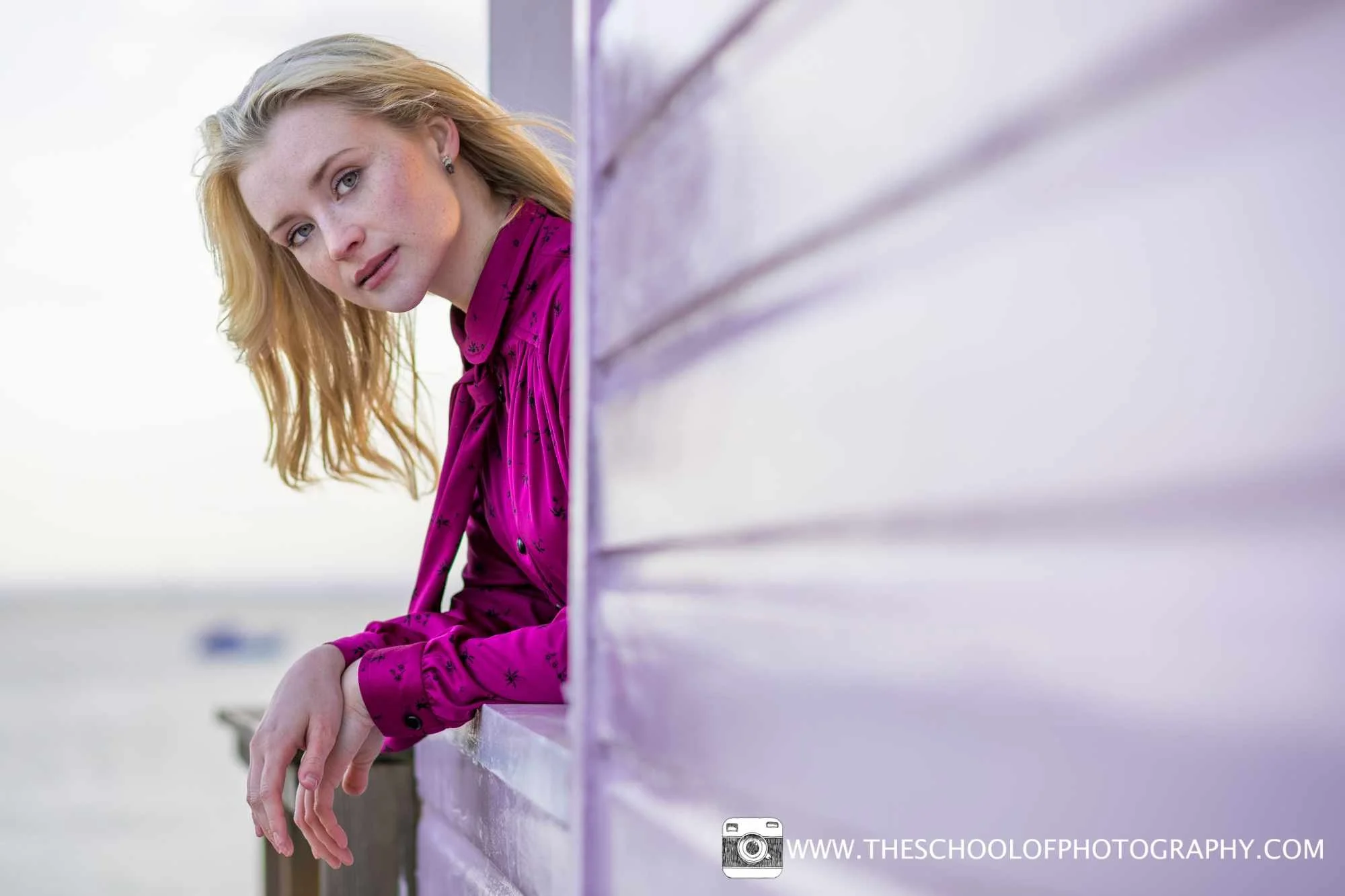
Woman posing beside a pastel-coloured beach hut, with the horizontal wooden panels creating leading lines that guide the viewer’s eye towards the subject.

Environmental portrait of a blonde woman posing beside a wall in warm natural light, with sunglasses on her head and a softly blurred background.
3. Use Symmetry in Portrait Photography
The third portrait photography composition technique is symmetry.
Symmetrical compositions occur when elements on either side of the photograph mirror or balance each other.
Symmetry can give portraits a very clean, deliberate and structured appearance.
In our example, we positioned the model centrally within a symmetrical environment and photographed her looking directly towards the camera.
The result is a portrait where the composition reinforces the clean, almost clinical feel of the location.
Finding Symmetry for Portraits
Architecture is one of the easiest places to find symmetry.
Look for:
Doorways
Corridors
Staircases
Bridges
Building entrances
Windows
Columns
Repeating architectural features
When using symmetry, accurate positioning becomes particularly important.
Try positioning yourself directly in the centre of the scene and pay attention to the edges of your frame. Small differences in camera position can make an otherwise symmetrical photograph feel slightly unbalanced.
You can then position your subject centrally to reinforce the symmetry.
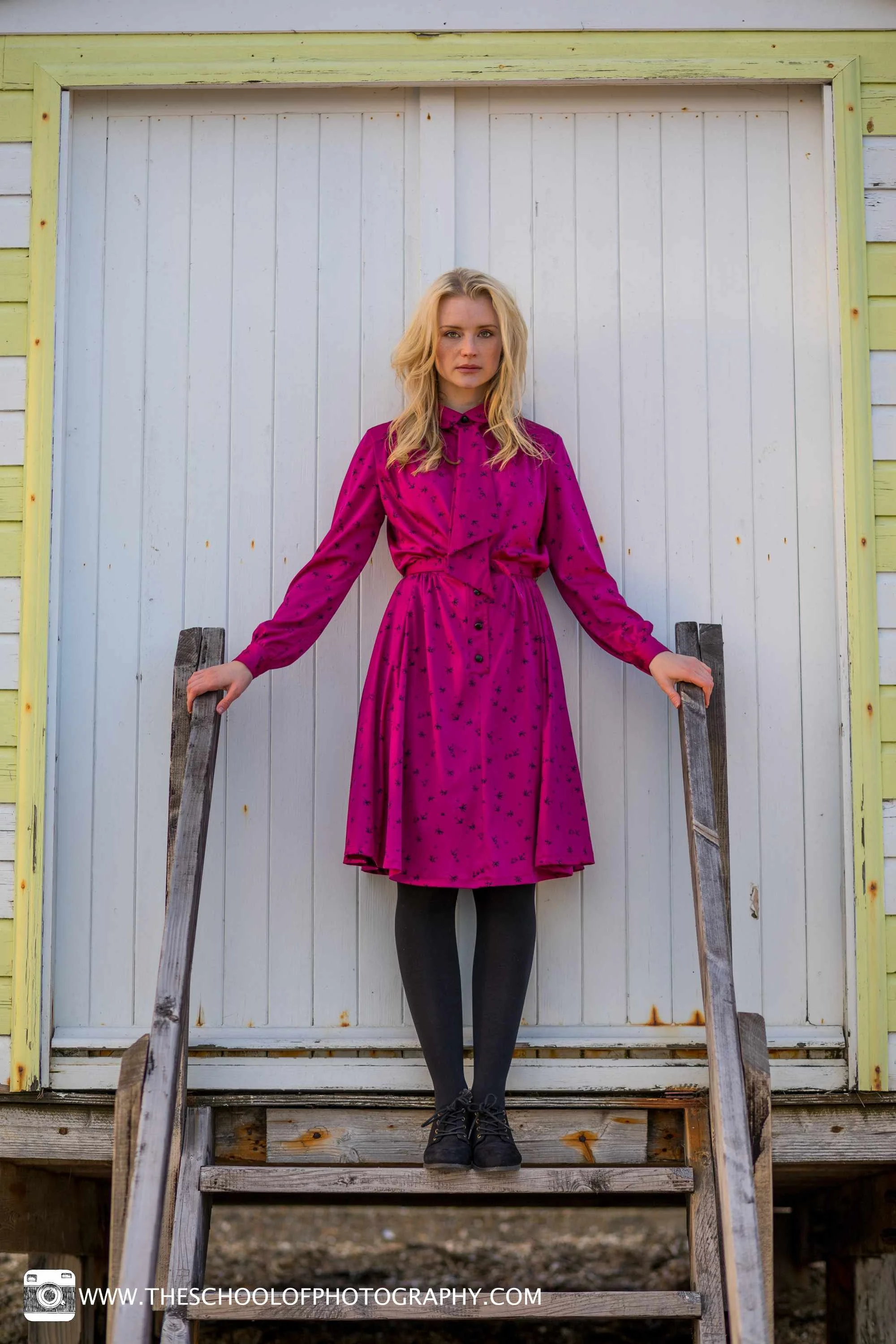
Woman standing centrally on beach hut steps, using the doorway, railings and her pose to create a balanced symmetrical portrait composition.
Composition Should Enhance Your Portrait
One important thing to remember is that composition won't make a photograph on its own – it enhances the photograph.
Your portrait still needs a strong subject, appropriate lighting, good focus and suitable camera settings.
Composition is another tool that helps bring those elements together.
Rather than simply pointing your camera at your subject, start thinking about everything else that appears within the frame.
Ask yourself:
Where does my eye go first?
Are there lines that could lead towards my subject?
Can I use something in the scene to frame them?
Is there symmetry that I could incorporate into the photograph?
Developing this awareness is an important part of improving your photography.
Learn composition in depth in our Beginners Photography Course.
Which Portrait Composition Technique Should You Use?
There isn't one composition rule that works for every portrait.
The best technique depends on your subject, location and the look you want to create.
If you want to strongly emphasise your subject, try frame within a frame.
If your location contains strong lines, use leading lines to guide the viewer towards your subject.
If you're working somewhere with balanced architectural features, experiment with symmetry.
You can even combine several composition techniques within the same photograph.
The more you practise looking for these opportunities, the more naturally you'll begin to recognise good compositions before you've even raised the camera to your eye.
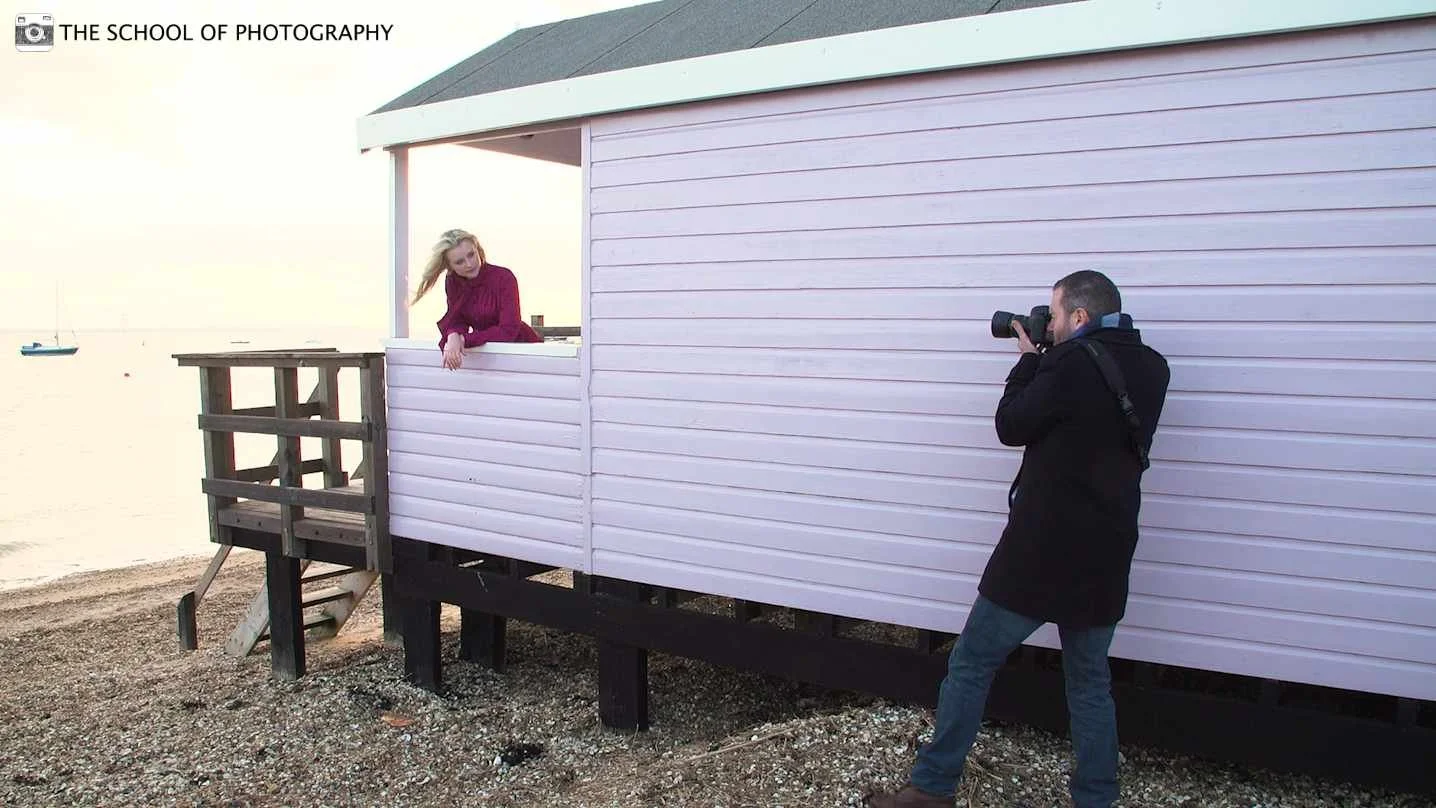
Photographer taking a portrait of a woman posing in the window of a pastel-coloured beach hut, showing how the location is used to create the portrait composition.
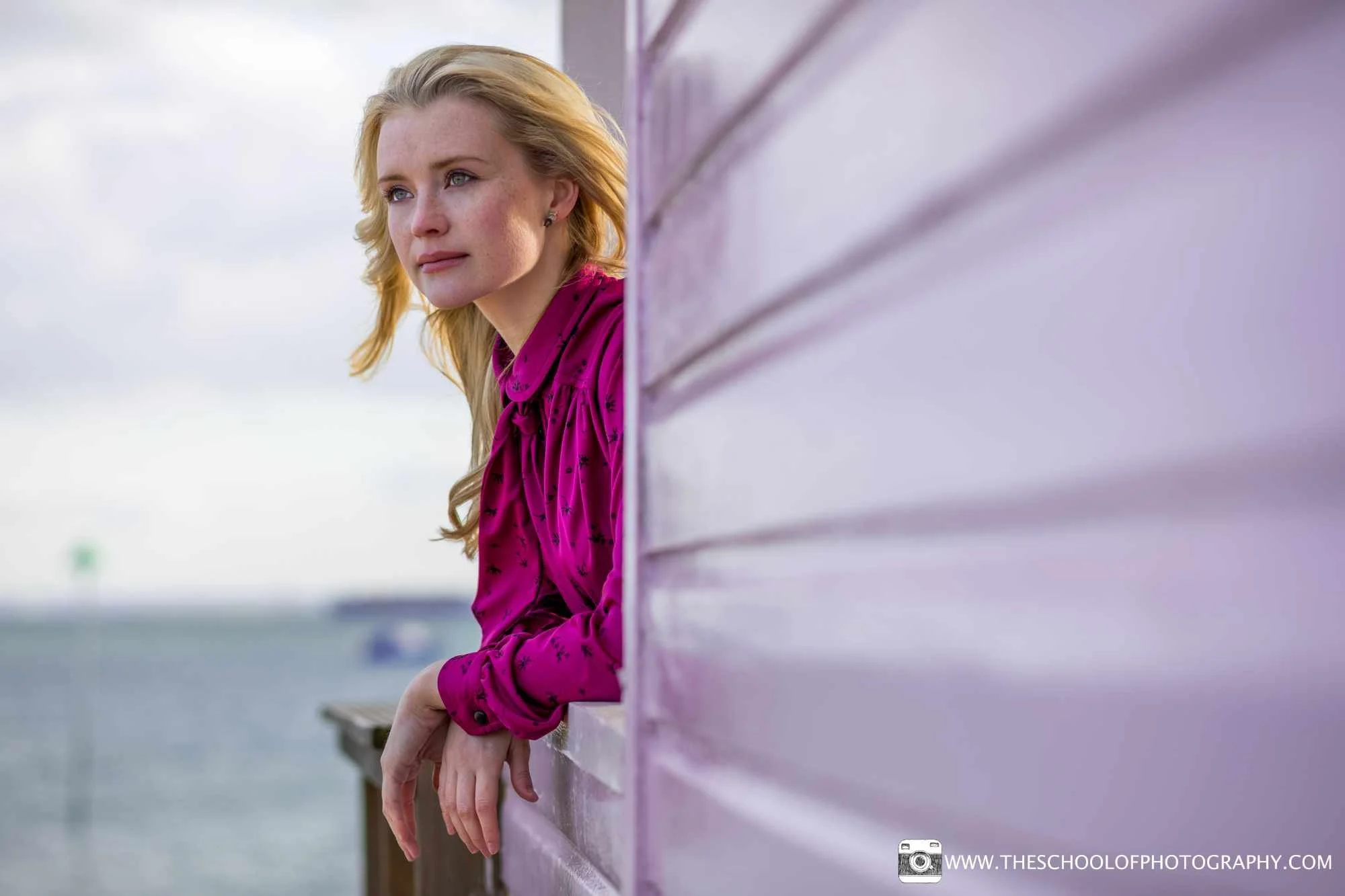
Outdoor portrait of a blonde woman wearing a vibrant pink blouse, leaning against a pastel pink beach hut and looking out towards the sea. A shallow depth of field softly blurs the coastal background.
Improve Your Portrait Photography Composition
The next time you're photographing someone, don't concentrate solely on the person.
Look at the entire scene.
Search for natural frames, lines and symmetrical features that could become part of your composition. Sometimes changing your position by only a few metres can turn an ordinary portrait into a much stronger photograph.
Learning to recognise these opportunities will help you become more deliberate about how you compose your portraits rather than simply relying on what happens to be behind your subject.
And remember: composition isn't there to make the photograph – it's there to enhance it.
Learn more about portrait photography with our Fine Art Portraiture Course.
Photographer taking a portrait of a woman posing in the window of a pastel-coloured beach hut, showing how the location is used to create the portrait composition.
Conclusion
Good portrait photography composition is about much more than simply placing your subject in the frame. By paying attention to the environment around them, you can use everyday features to create stronger and more engaging portraits.
Techniques such as frame within a frame, leading lines and symmetry are simple to understand but can make a noticeable difference to your photography. The key is to slow down, look carefully at your surroundings and think about how each element in the scene helps draw attention towards your subject.
Try practising these three composition techniques on your next portrait shoot. The more you use them, the more naturally you'll begin to spot opportunities for better compositions wherever you're photographing.
Like this? - Check out more free tutorials below


About the author
Hi, I’m Marc Newton and I’m a photographer, educational speaker, author, teacher of photography and the founder of The School of Photography. Follow my personal work on Facebook, Instagram.