
In this tutorial, you’re going to learn flat lay photography and how to create professional-looking flat lay photos, even if you’re working on a budget. Flat lay photography is one of the most popular photography styles today, especially for social media, small businesses, and product marketing.
I’ll show you how to achieve great flat lay photography using just a window, a cheap second-hand camera or phone, and even a simple piece of polystyrene.
Get access to ALL our online photography courses – including flat lay photography tutorials – with 1000’s of videos, worksheets, critiques of members’ work, personalised support, and much more through our monthly membership.
What is Flat Lay Photography?
Flat lay photography is a style of photography taken from directly above, looking straight down on the subject. This bird’s-eye view photography technique is most commonly used for products, food, clothing, and lifestyle items.
Flat lay photography is extremely popular on social media platforms such as Instagram and Pinterest and is a great way to showcase products for small businesses, restaurants, or creative personal projects.
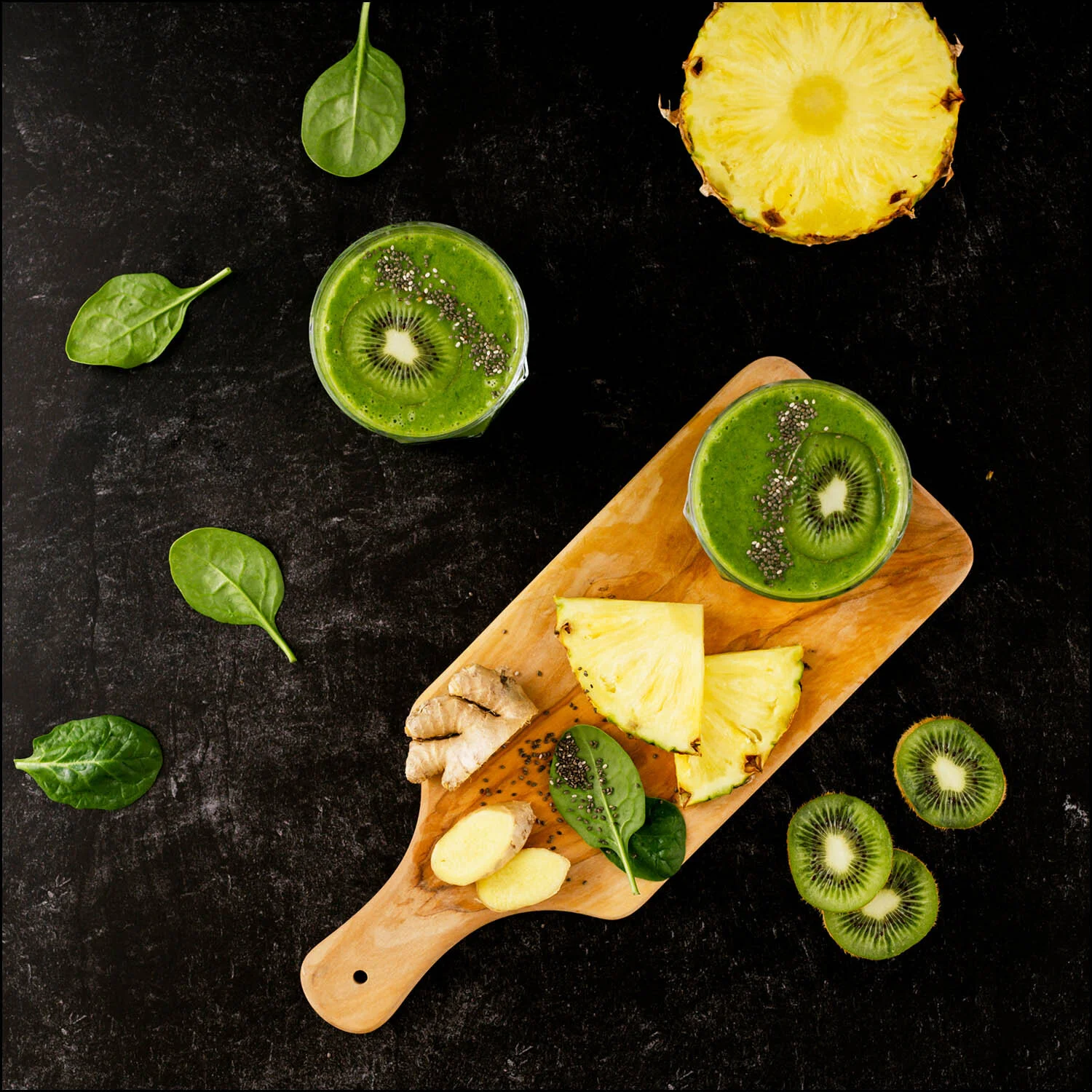
Food Flat Lay Photography - Credit – ReplicaSurfaces.com

Flat Lay Photography - Credit – ReplicaSurfaces.com
Theme and Feeling
Before you start shooting flat lay photography, decide on a theme or feeling. Don’t go in blind. Think about the mood that best suits your subject.
Is it a dark, moody flat lay for mechanical or vintage products? Or a bright, fresh flat lay photography style for coffee, cakes, or lifestyle items? Planning this in advance will help your flat lay photos look more intentional and professional.

Food Flat Lay Photography - Credit – ReplicaSurfaces.com

Food Flat Lay Photography - Credit – ReplicaSurfaces.com

Flat Lay Photography with Cameras
Flat Lay Photography with Cameras
What to photograph?
What you choose to photograph will strongly influence the overall feeling of your flat lay photography. If you’re shooting for a business or restaurant, the focus should clearly be on what you sell.
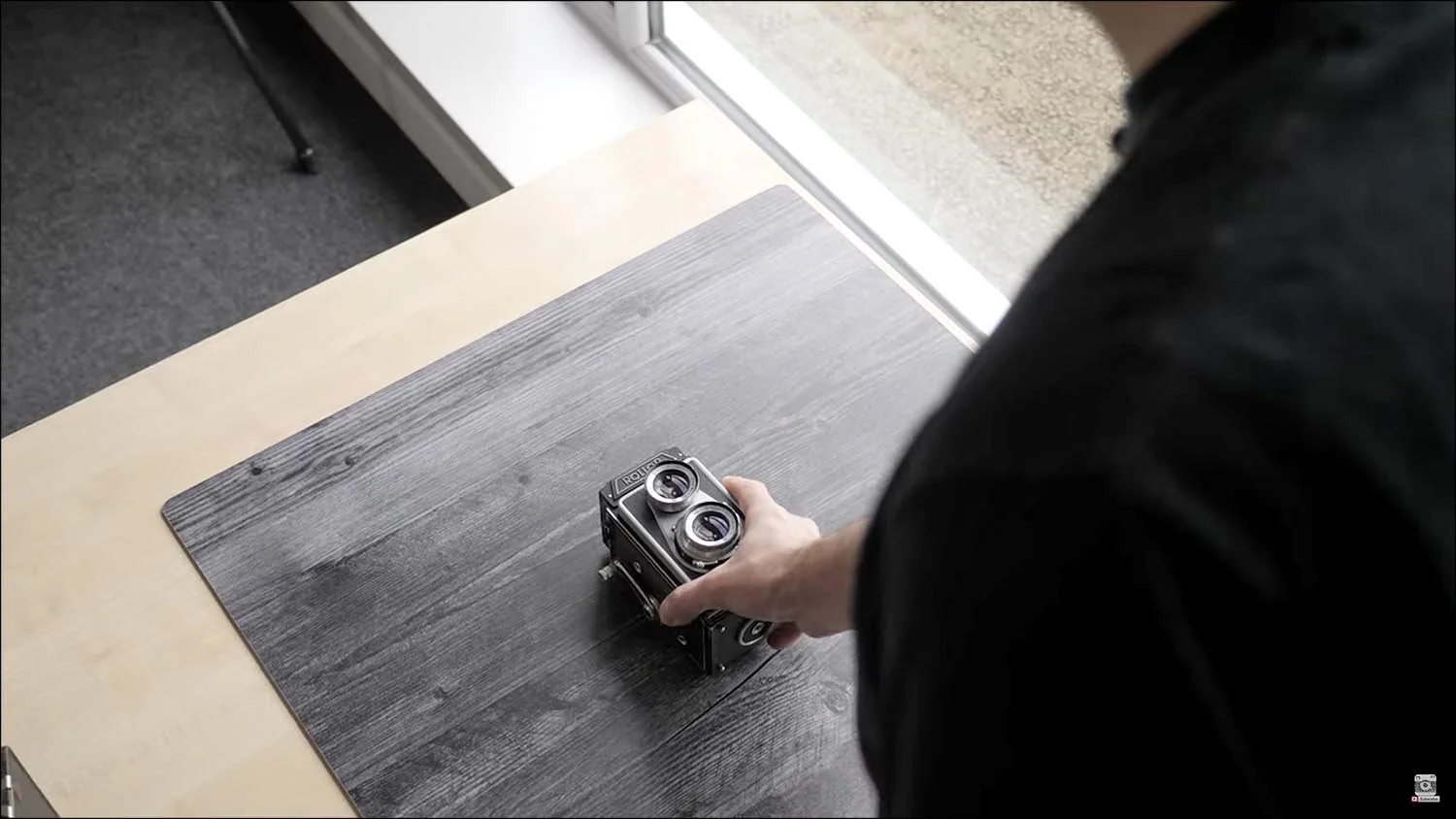
If you’re practising flat lay photography for yourself, choose something personal or something you’re passionate about. For this example, I’m using my collection of classic vintage cameras.
Flat lay Backgrounds
Your flat lay photography background plays a huge role in the final image and should always match the mood you’re trying to create.
You can use almost anything as a flat lay background — wood, tables, vinyl, fabric — or you can use purpose-made flat lay photography backgrounds like the ones we use from ReplicaSurfaces.com.
These rigid, ready-made backgrounds are ideal for flat lay photography because they come in a wide range of styles and make creating professional flat lays much easier.
Check out the range of backgrounds available from www.ReplicaSurfaces.com
Flat Lay Lighting Technique
Lighting is essential in flat lay photography. The general rule is: the softer and brighter the light, the better.
A large window works perfectly as your main light source. If the sunlight is too harsh, soften it by placing net curtains or chiffon fabric over the window.
To reduce shadows, use a reflector. A simple piece of white polystyrene, white card, or a silver reflector will bounce light back into darker areas and help balance your flat lay photography lighting.

Softening light with chiffon fabric

White card or polystyrene for reflector

No reflector

With white reflector
Balance
Composition is a crucial part of flat lay photography. One of the most important elements to consider is balance.
Think of your flat lay composition like a set of scales. If you place a large object on one side, balance it with similar visual weight on the other side. This doesn’t need to be exact, but avoid leaving one side heavy and the other empty.

Flat Lay Photography with clothing - Credit – ReplicaSurfaces.com
Camera Choices for Flat Lay Photography
You can use almost any camera for flat lay photography, from a mobile phone to a DSLR.
If your flat lay photography is mainly for Instagram or social media, a phone will work well. However, for professional use such as websites or print, a DSLR camera is recommended. A DSLR gives you better control over focal length, reduces image noise, and helps minimise camera shake.
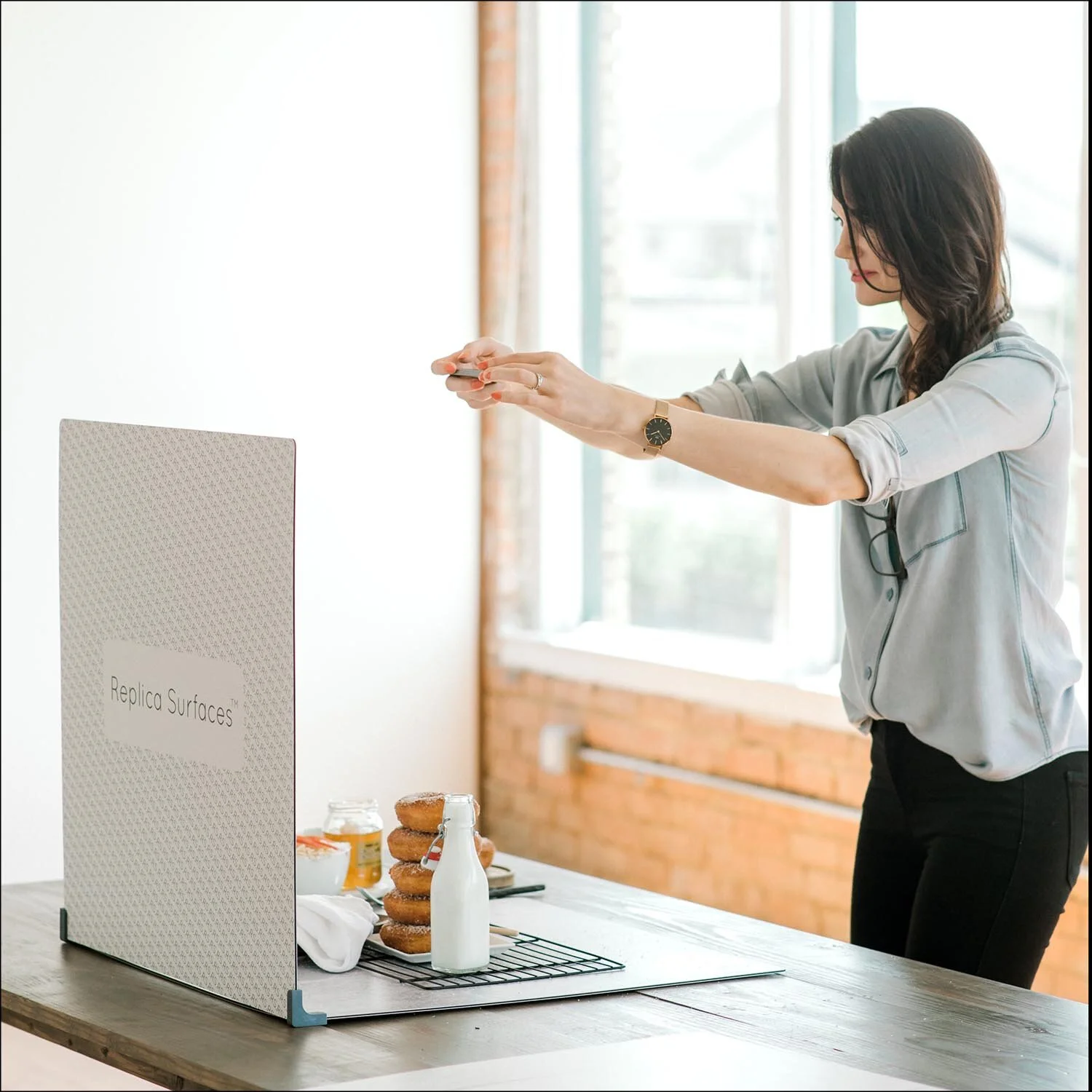
Credit – ReplicaSurfaces.com

Food Flat Lay Photography - Credit – ReplicaSurfaces.com
Camera Settings for Flat Lay Photography
You don’t need advanced photography knowledge to improve your flat lay photography — just a few key settings will make a big difference.
Flat lay photos work best with an “as your eye sees” focal length, meaning the scene looks natural and undistorted. On most DSLR cameras, this is between 30–35mm, depending on sensor size.
Camera Sensor Size Comparison – Which one is right for you?
To avoid camera shake set your camera to its Tv or S mode which is called shutter speed priority. Then set the camera’s shutter speed to 1/125th of a second. If you’re still seeing a slight blur at this setting change it to 1/250th of a second.
Then put your ISO onto Auto and make sure you have plenty of light available.
In summary
Camera mode – Tv or S (Shutter Speed Priority).
Set the shutter speed to 1/125th or 1/250th.
Put your ISO on Auto.
Put your lenses focal length to 30-35mm.
Make sure you have plenty of light.
To get more in-depth knowledge on photography click here.

Camera Settings for Flat Lay Photography

Camera Settings for Flat Lay Photography
Leave Space for Graphics in Flat Lay Photography
When setting up your flat lay photography scene, leave space for graphics or text if the image will be used for marketing.
If you’re shooting for a specific aspect ratio, such as 16:9 for video or web banners, compose the flat lay with that final output in mind.
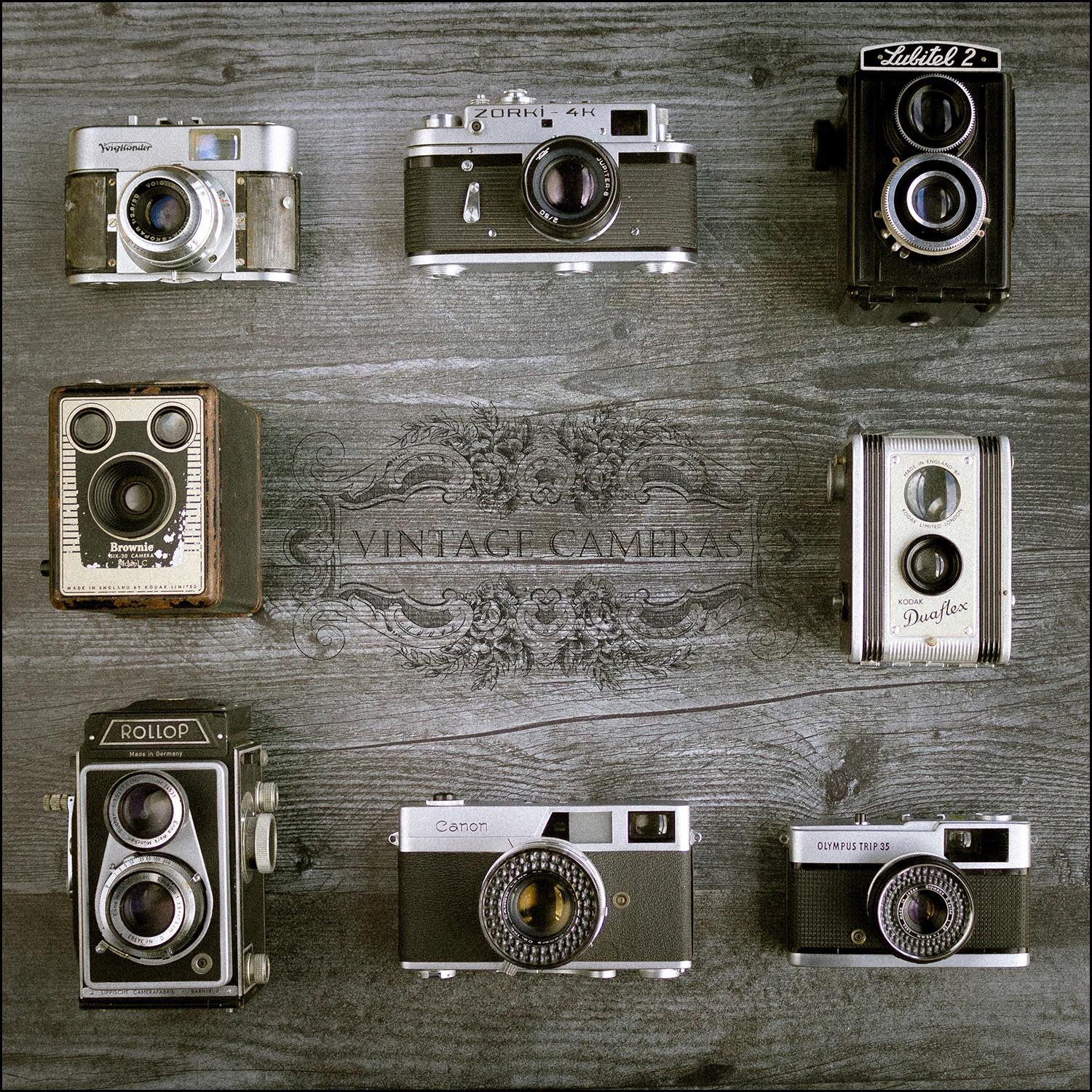
Flat Lay Photography with a Graphic
Post-processing for flat lay photos
Post-processing is the final step in professional flat lay photography.
This can be as simple as cropping and adjusting contrast using a mobile app, or more advanced editing using Lightroom or Photoshop. Shooting in RAW format allows greater flexibility when editing flat lay photos.
For this example, I created a vintage-style Lightroom preset to enhance the flat lay photography mood.
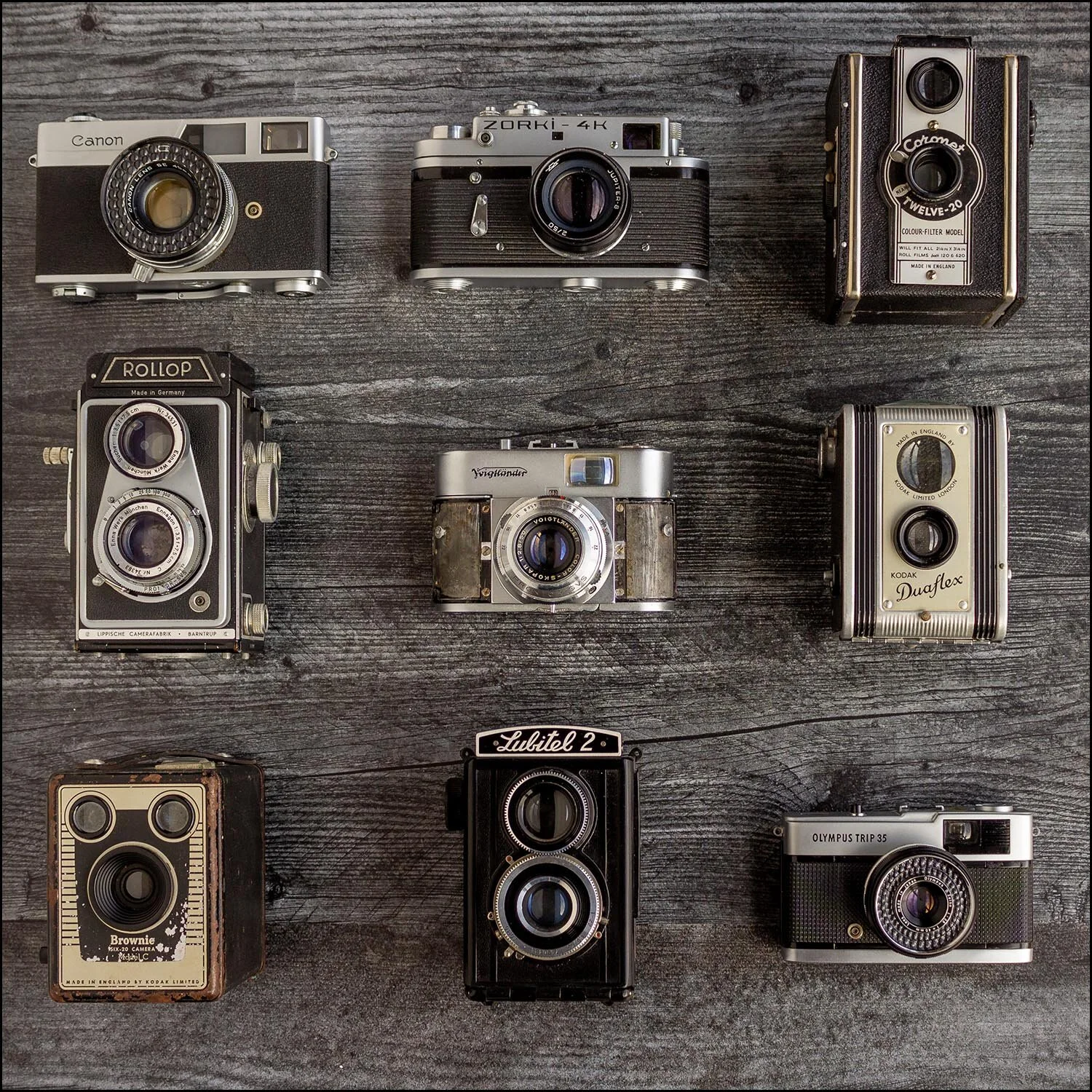
Classic cameras without preset

Classic cameras with vintage lightroom preset
Final Thoughts on Flat Lay Photography
Flat lay photography is a versatile, creative, and accessible photography style that anyone can learn with minimal equipment.
If you enjoyed this flat lay photography tutorial, check out our related photography guides below and support us by sharing this article with your friends. Don’t forget to subscribe to our newsletter and join our photography community on social media.
Like this? - Check out similar tutorials below


I hope you liked this tutorial, please leave us a comment and support us by sharing it with your friends and subscribe to our newsletter at the bottom of this page for more.
We also have an excellent learning community on social media so please join us there as well.
Thanks for watching and remember – Learn more at The School of Photography.
