
Forest Photography with Lee Cooper – Tips, Techniques and the Mindset Behind the Images
Woodland photography is one of the most rewarding genres of landscape photography—but it's also one of the hardest to master.
Unlike mountains or coastlines, forests are naturally busy. Trees overlap, branches cross over one another, and it's easy to end up with photographs that simply look cluttered.
Recently, we sat down with woodland photographer Lee Cooper, whose stunning photographs of the New Forest have earned him over 200,000 followers on social media. During our conversation, he shared some fantastic advice for photographers wanting to improve their woodland photography and take stunning forest photography.
Here are ten of his best tips.
1. Shoot Around the Edge of the Woodland
This was probably Lee's biggest piece of advice.
Most photographers instinctively walk straight into the middle of a forest and begin shooting outwards.
Instead, Lee recommends working around the edges.
Why?
Because this is often where the best light lives.
Early morning mist drifts into woodland edges, sunlight filters through more easily, and you can create far greater depth in your photographs by shooting into the trees rather than out of them.
Sometimes, simply changing where you stand completely transforms the image.
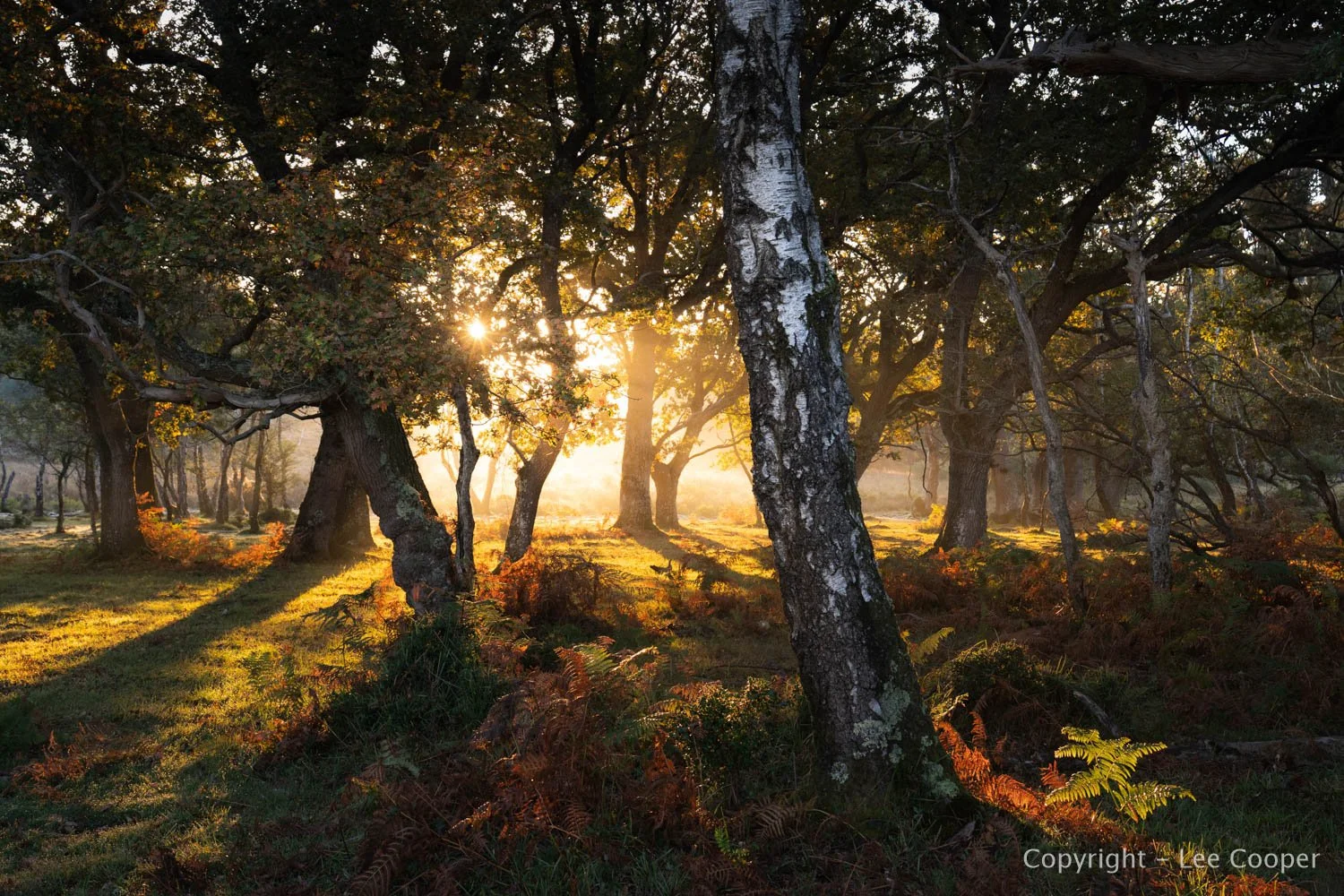
© Lee Cooper | Golden sunlight breaks through an autumn woodland, casting long shadows across ferns and ancient trees.
2. Zoom In Rather Than Going Wider
A common mistake in woodland photography is trying to include everything.
Lee prefers the opposite approach.
Rather than photographing the whole forest, he zooms in and searches for smaller scenes hidden within the larger landscape.
His favourite focal lengths are often between 50mm and 100mm, allowing him to isolate interesting trees, shapes and patterns while removing distractions.
If your woodland photographs feel chaotic, try zooming in before pressing the shutter.
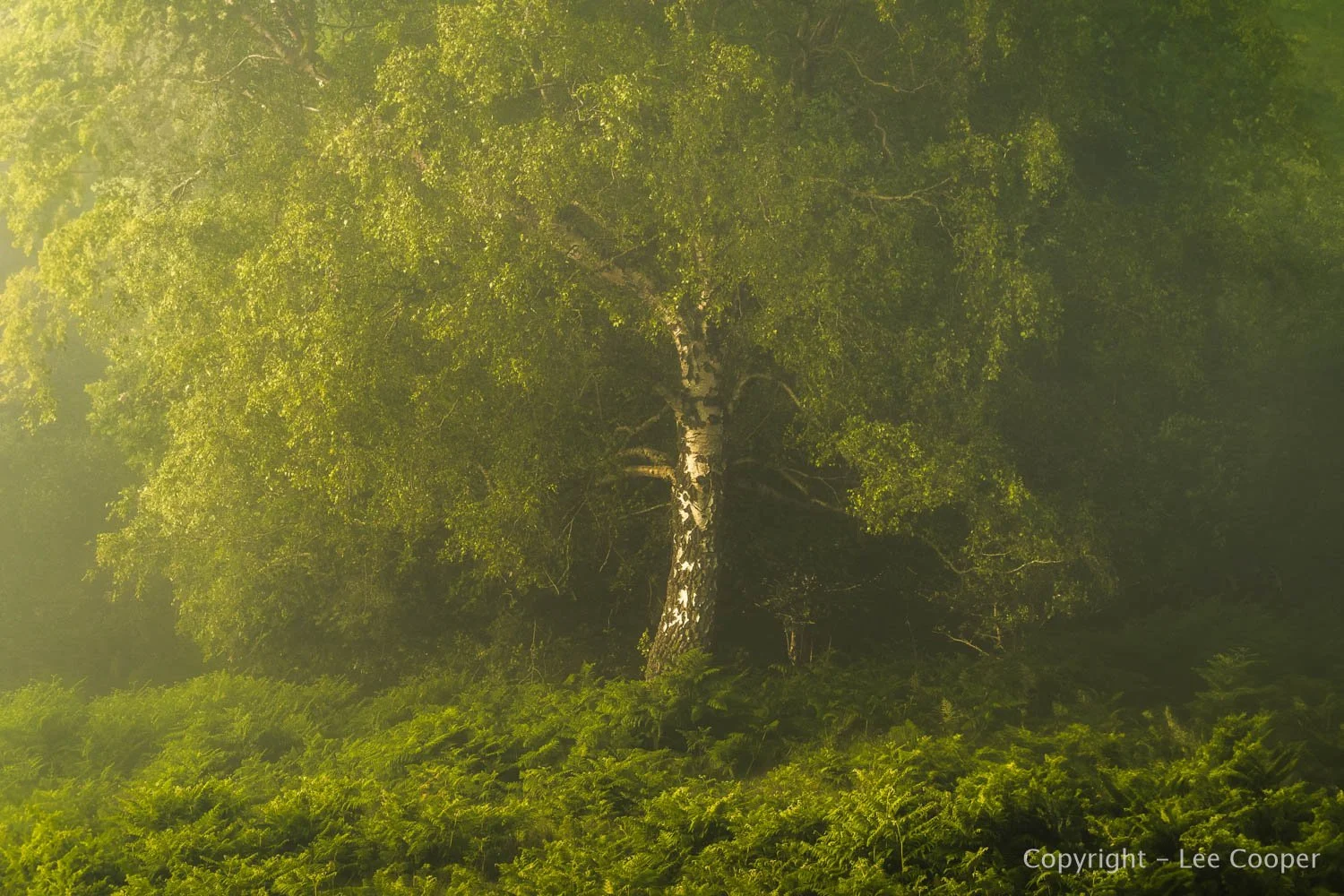
© Lee Cooper | A silver birch glows in golden morning light, surrounded by a sea of lush green ferns.
Get access to ALL our online courses - 1000’s of videos, worksheets, critiques of students work, personalised support and much more with our monthly membership.
3. Use a Wider Aperture Than You Think
Landscape photographers often live at f/11.
Woodland photographers don't have to.
Lee frequently shoots between f/4 and f/8, allowing backgrounds to soften naturally while keeping the main subject sharp.
This creates depth and helps separate the subject from the surrounding woodland.
Instead of making every single branch razor sharp, ask yourself:
What actually needs to be in focus?
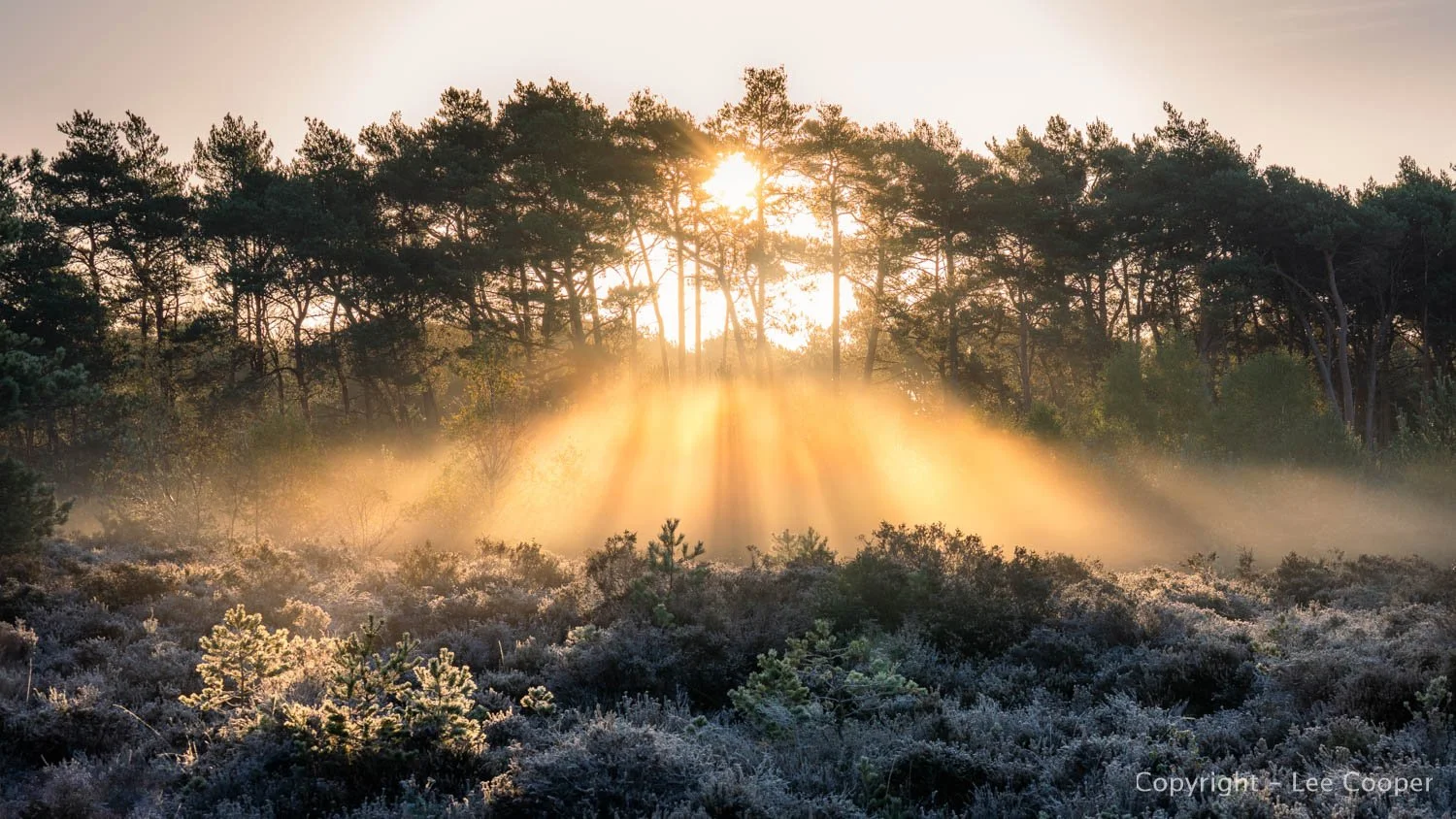
© Lee Cooper | Golden rays of sunlight pierce the morning mist above a frost-covered heath, framed by a line of pine trees.
4. Keep Your Camera Settings Simple
Lee's approach is refreshingly uncomplicated regarding aperture and ISO.
Most of the time he shoots in:
Aperture Priority mode
Aperture between f/5.6 and f/8
ISO adjusted to maintain a suitable shutter speed
Rather than constantly changing every setting manually, he concentrates on composition and the changing light.
Sometimes, keeping things simple helps you become more creative.
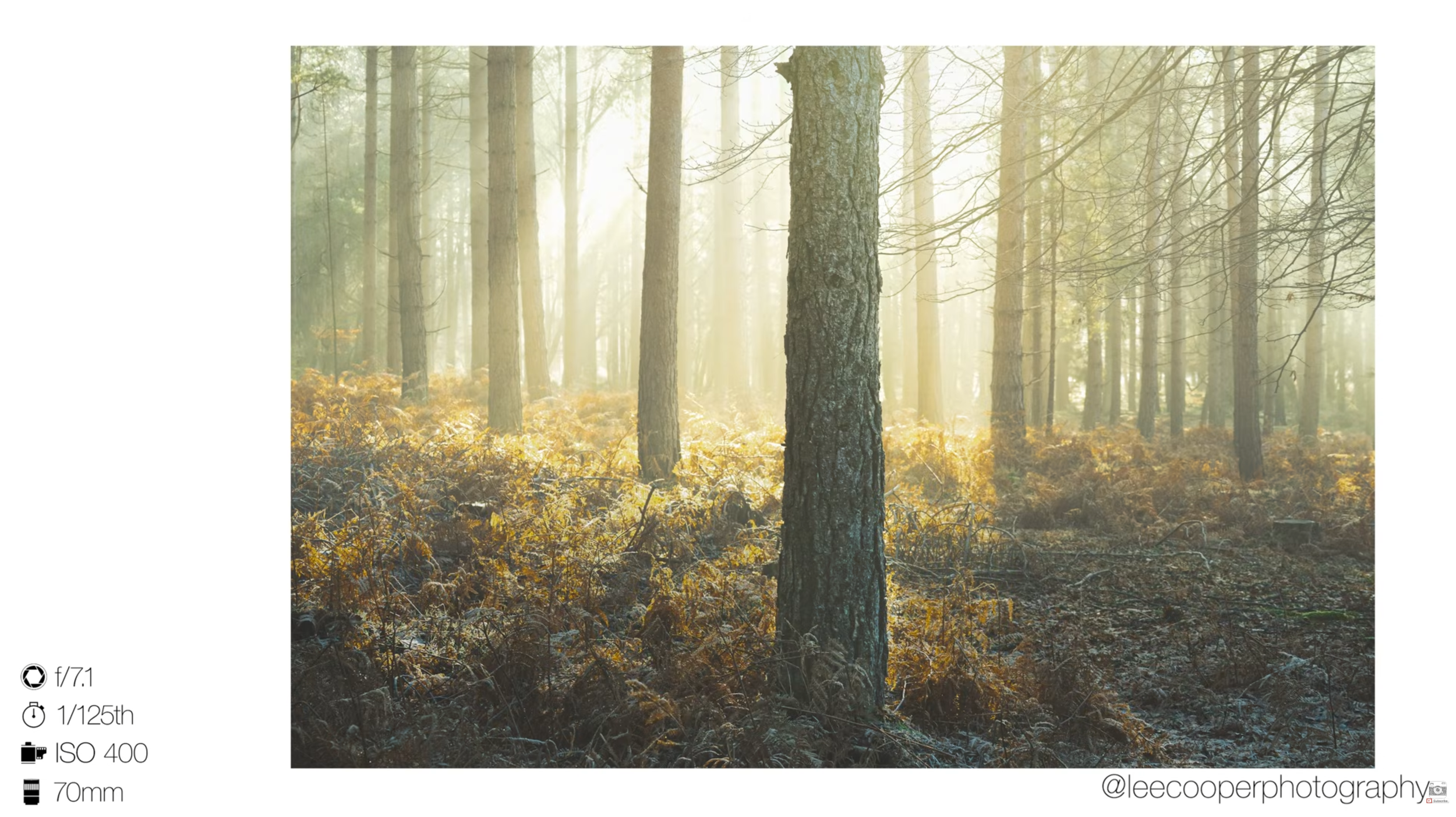
©Lee Cooper | Warm morning sunlight streams through a peaceful pine woodland, lighting up the autumn ferns below.
5. Don't Fear Higher ISO
Many photographers still avoid increasing ISO.
Lee doesn't.
If the conditions require it, he's perfectly happy shooting at ISO 3200.
Modern cameras handle noise remarkably well, and a slightly noisy image is infinitely better than a blurred one.
Besides, a little grain can enhance the atmosphere of a misty woodland scene.
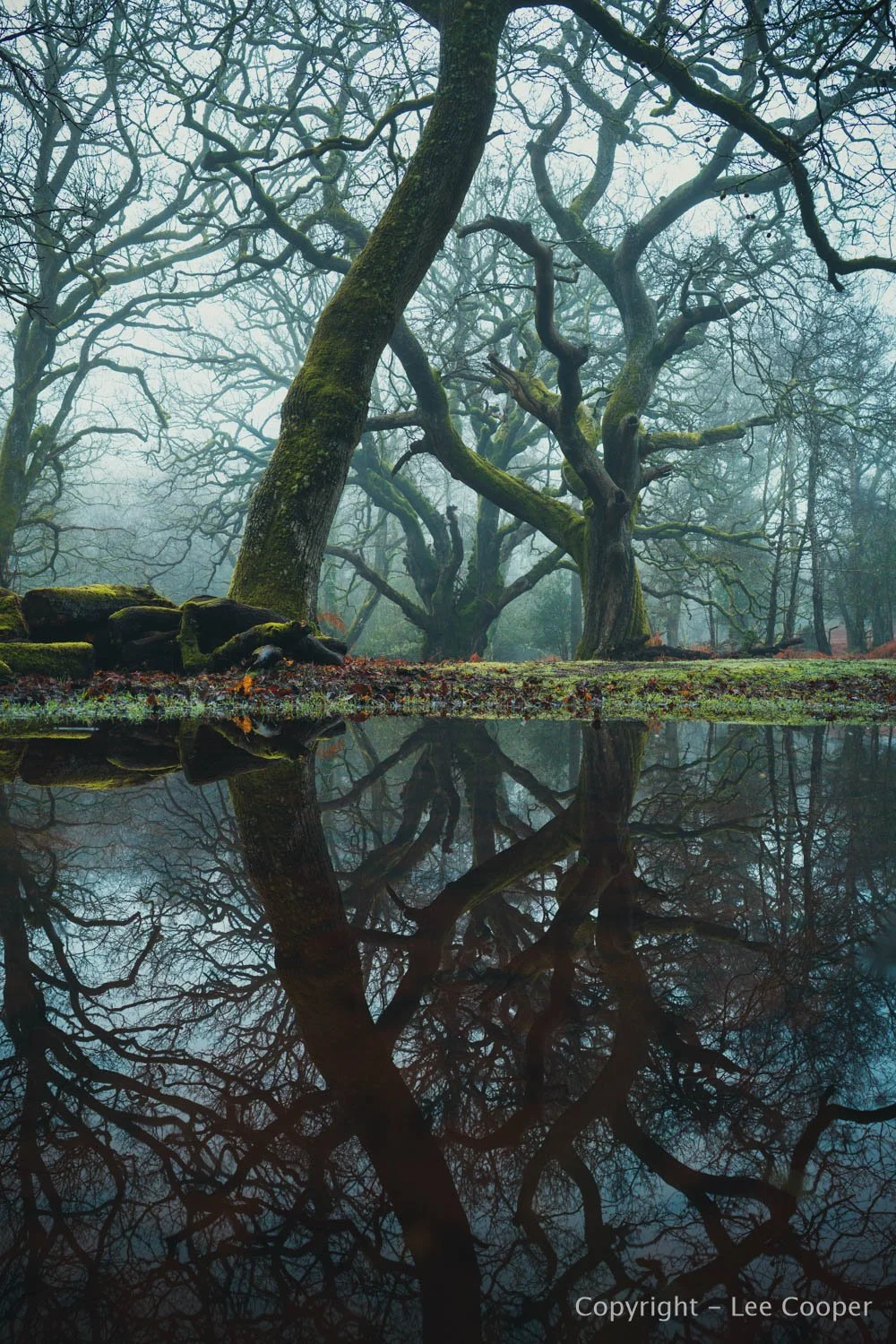
© Lee Cooper | Ancient woodland trees emerge through the mist, their twisting branches mirrored in a still forest pool.
6. Learn to Read the Weather
For woodland photographers, weather is everything.
Lee looks for three ingredients:
High humidity
Clear skies overnight
Low wind
These conditions often produce the magical early morning mist that makes woodland photography so special.
He also recommends checking several weather apps rather than relying on just one forecast.
No forecast is perfect, but if several agree, your chances improve considerably.
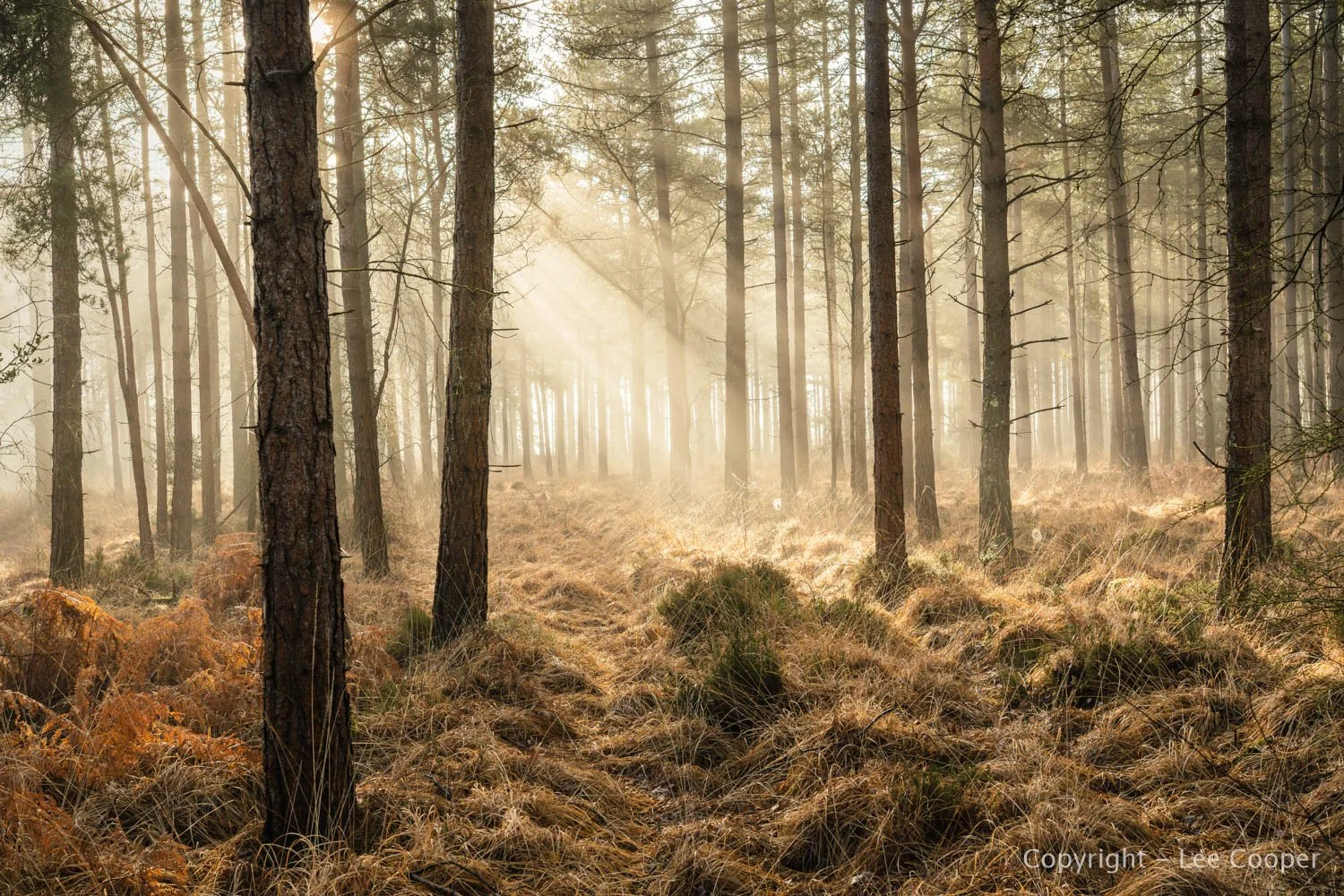
© Lee Cooper | Soft morning light filters through a misty pine forest, illuminating a carpet of golden grasses and ferns.
7. Let Nature Do the Hard Work
One of Lee's favourite photographs happened almost entirely by accident.
A frosty morning, smoke drifting through the trees from a nearby bonfire and perfectly timed sunrise light combined to create an unforgettable scene.
The resulting image required almost no editing.
It's a great reminder that photography isn't always about complicated techniques.
Sometimes patience—and a little luck—creates the best photographs.
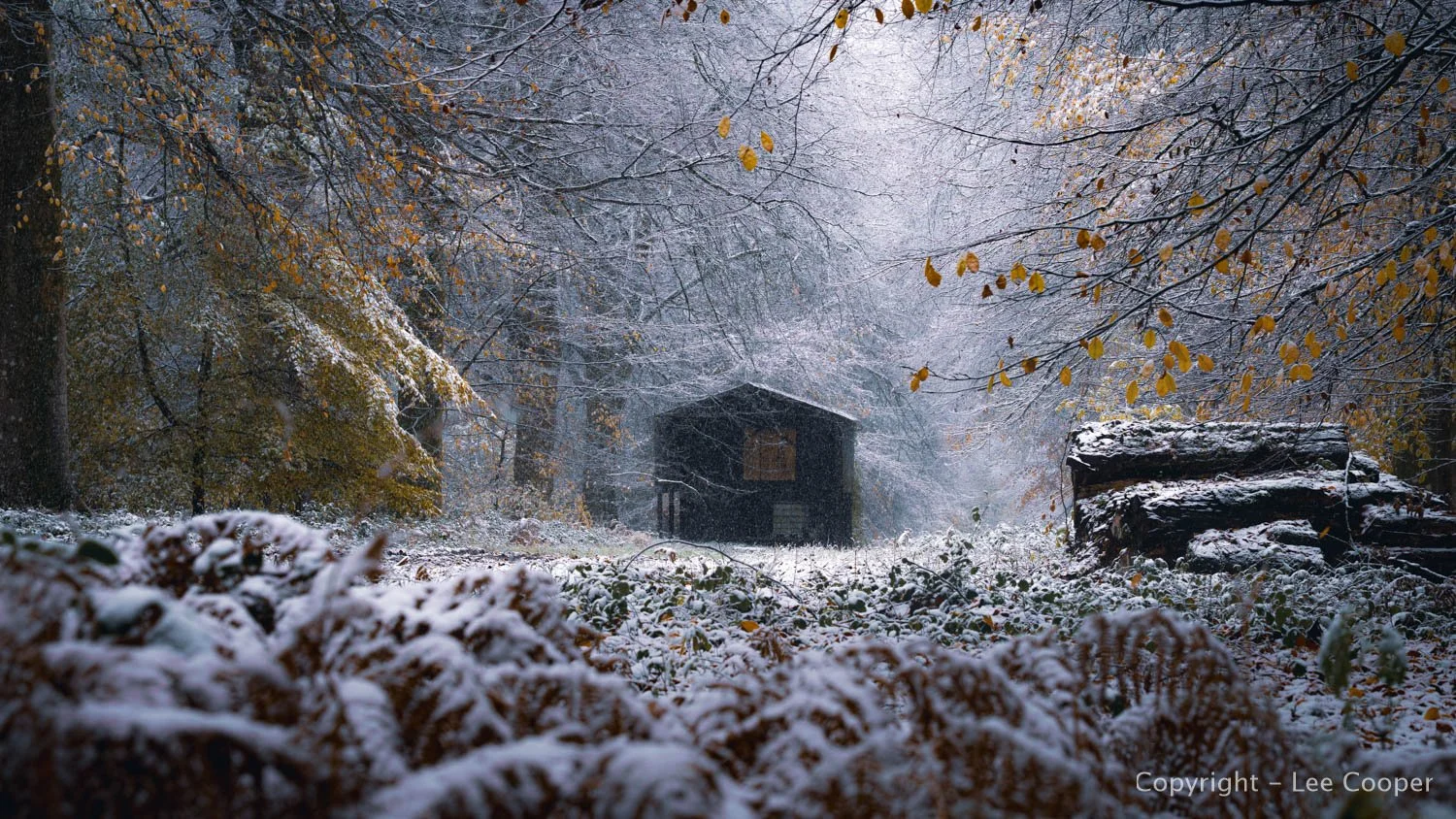
© Lee Cooper | The first snowfall transforms a quiet woodland cabin, with autumn’s last golden leaves lingering among the winter frost in New Forest.
8. Look for Character, Not Just Trees
When Lee walks through the forest, he isn't simply photographing woodland.
He's looking for personalities.
Interesting tree shapes.
Curves.
Textures.
Individual trees that stand out from the crowd.
He even describes much of his work as "tree portraiture."
Approaching woodland photography this way changes how you see a forest.
Instead of photographing everything, you're photographing someone.
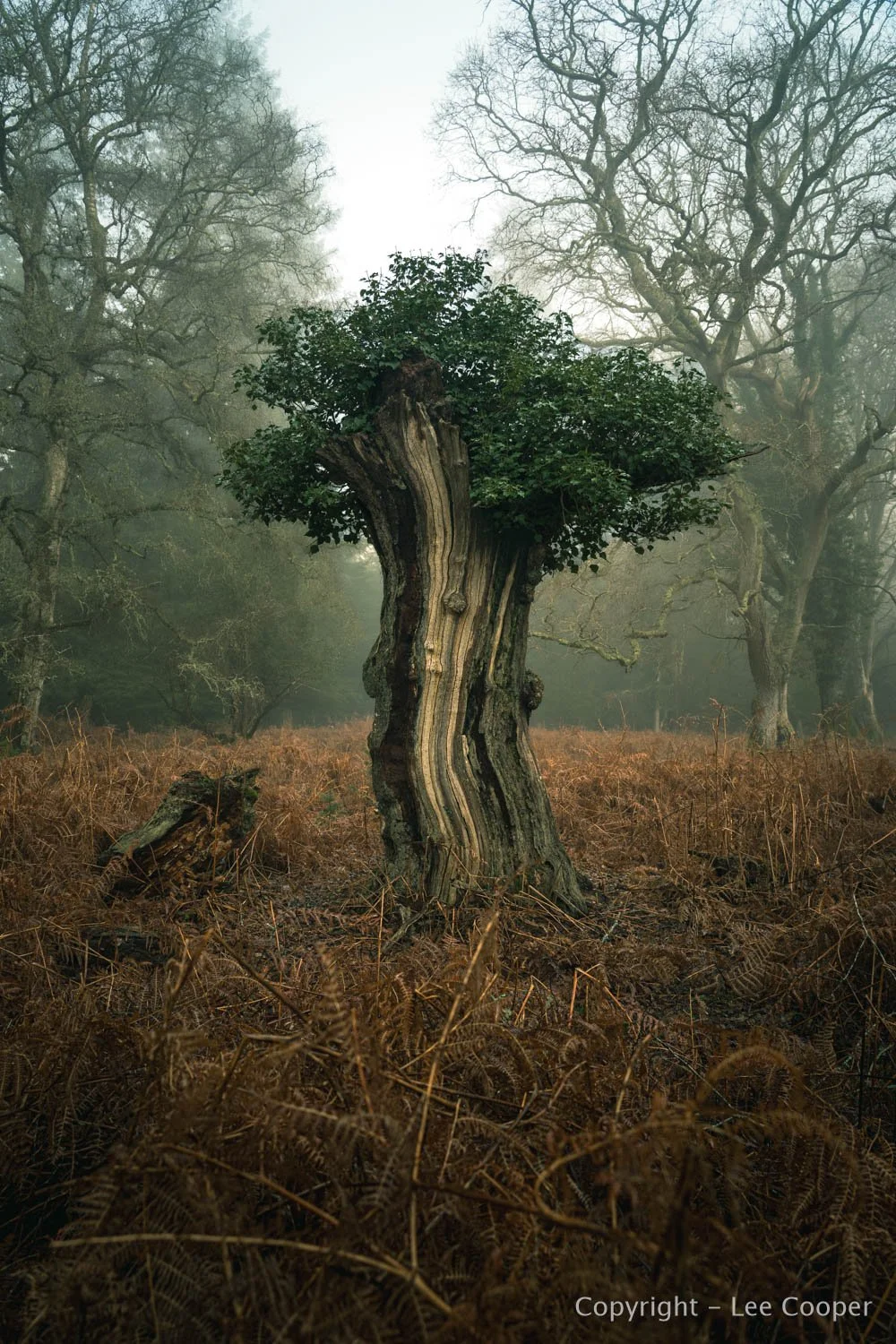
© Lee Cooper | New growth emerges from an ancient tree, standing quietly among the ferns and mist of the woodland.
9. Focus on Atmosphere, Not Technical Perfection
One of the most refreshing parts of our conversation was hearing Lee say that he isn't obsessed with technical perfection.
His priority is atmosphere.
How does the image feel?
Does it transport the viewer into the woodland?
Does it capture the calm, mystery or emotion of the moment?
Those questions matter far more than whether every leaf is perfectly sharp.
Photography is about creating an emotional response—not simply recording a scene.
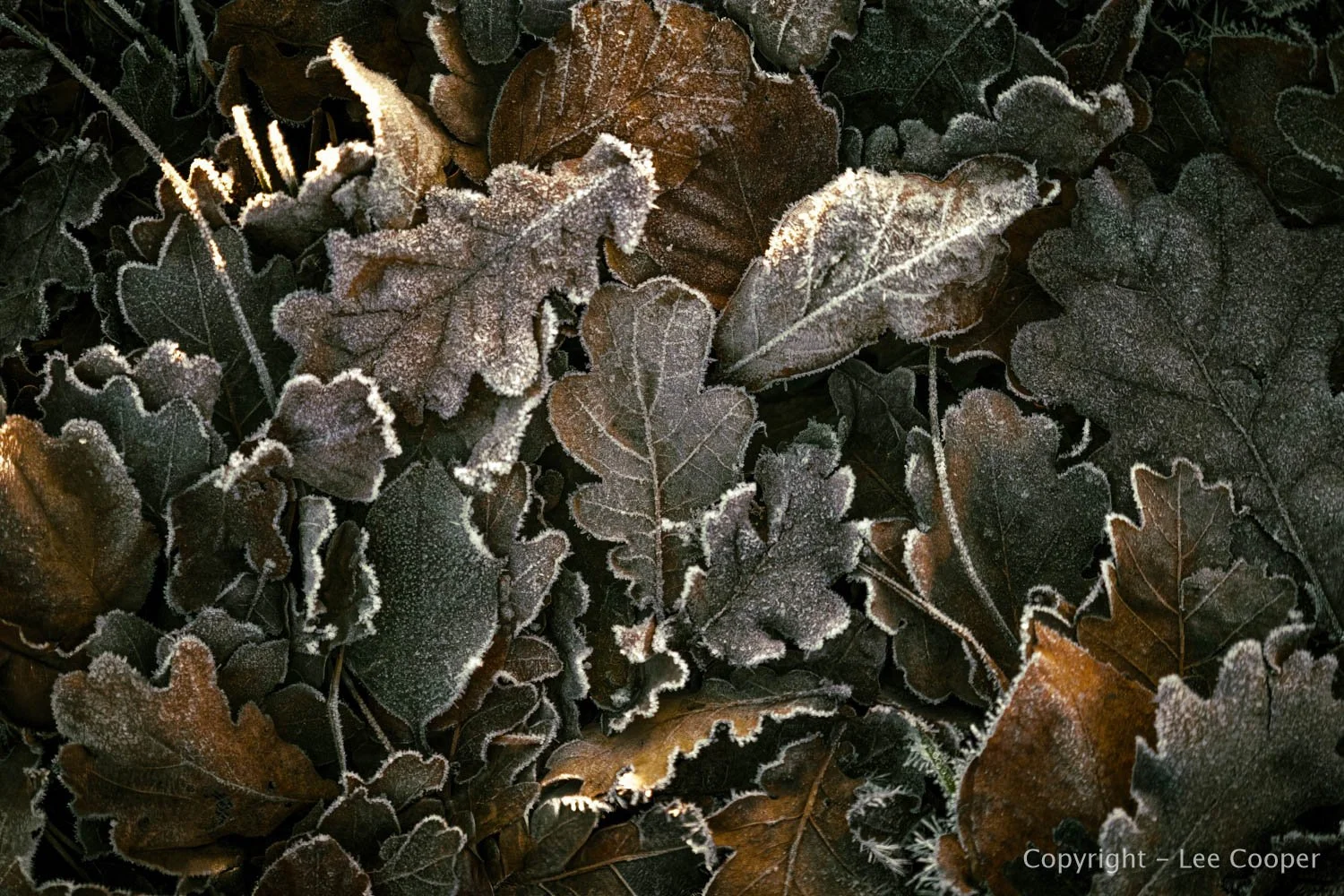
© Lee Cooper | A delicate layer of frost traces the edges of fallen autumn leaves in the soft morning light.
10. Keep Going Back
Perhaps the biggest lesson of all is persistence.
Lee spends countless early mornings chasing conditions that often never appear.
Some mornings are complete failures.
Others produce unforgettable photographs.
The difference is simply being there often enough.
The more time you spend exploring your local woodland, the more familiar you become with its light, weather, seasonal changes and hidden compositions.
Knowledge of a location is one of the greatest advantages any photographer can have.
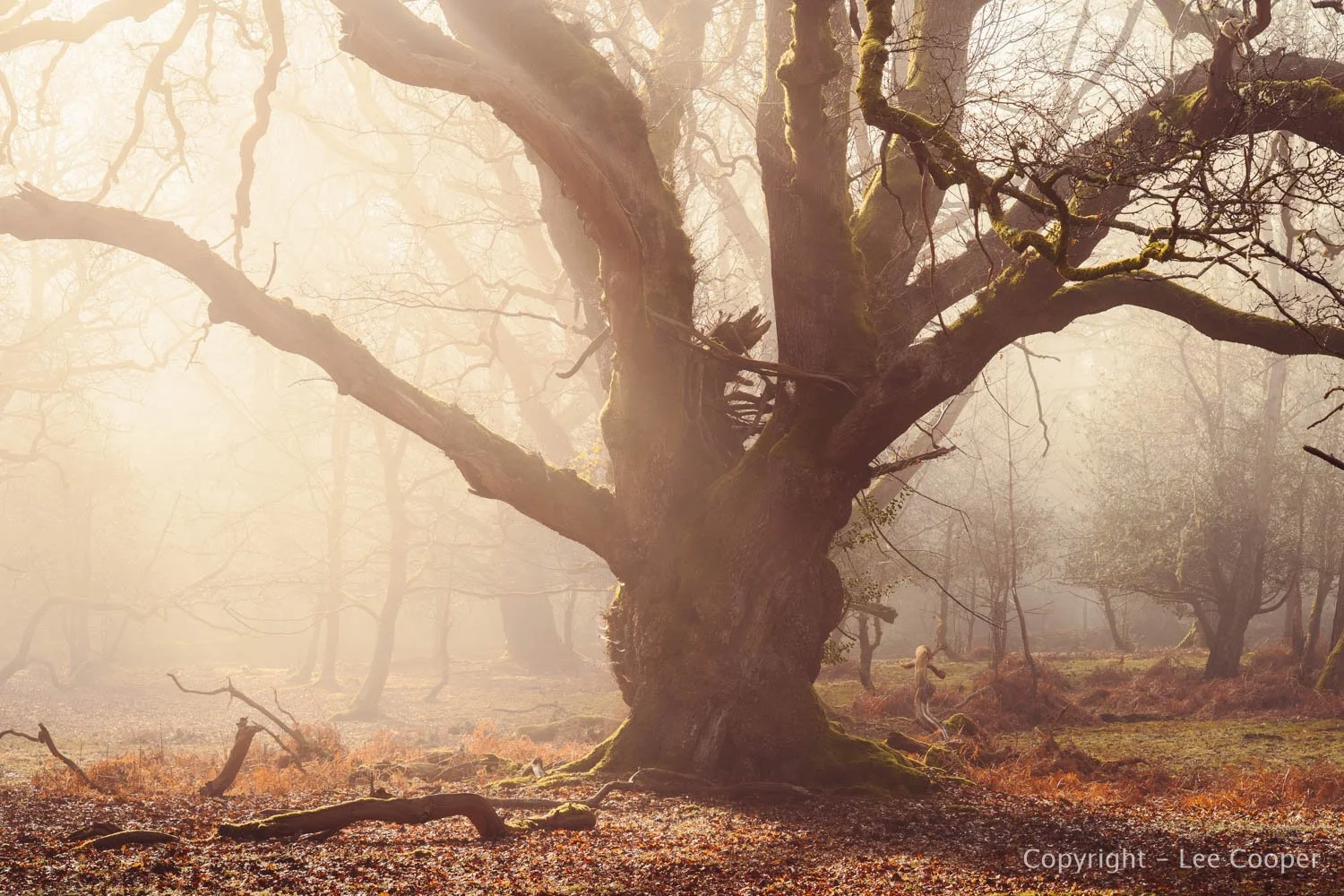
© Lee Cooper | An old oak emerges from the morning mist, its sprawling branches glowing in soft golden light.
Final Thoughts
What makes Lee Cooper's work so compelling isn't just his camera equipment or editing skills.
It's his patience.
His willingness to return to the same locations over and over again.
His understanding that photography isn't just about taking pictures—it's about slowing down, noticing light, and enjoying the experience of being outdoors.
If you'd like to improve your woodland photography, don't worry about travelling to famous locations.
Visit your nearest woodland.
Go back regularly.
Learn how the light changes.
Wait for the mist.
Most importantly, enjoy the process.
I hope you liked this tutorial on Woodland Photography Tips. If you did, please leave us a comment and support us by sharing it with your friends and subscribe to our newsletter at the bottom of this page for more.
We also have an excellent learning community on social media so please join us there as well.
Thanks for watching and remember – Learn more at The School of Photography.
Watch the Full Interview
If you'd like to hear Lee Cooper explain these techniques in more detail, you can watch our full interview on the School of Photography YouTube channel, where we discuss equipment, camera settings, composition, weather, and the mindset behind creating beautiful woodland photographs.
Like this? - Check out more free tutorials below


About the authors
Hi, I’m Marc Newton and I’m a photographer, educational speaker, author, teacher of photography and the founder of The School of Photography. Follow my personal work on Facebook, Instagram.
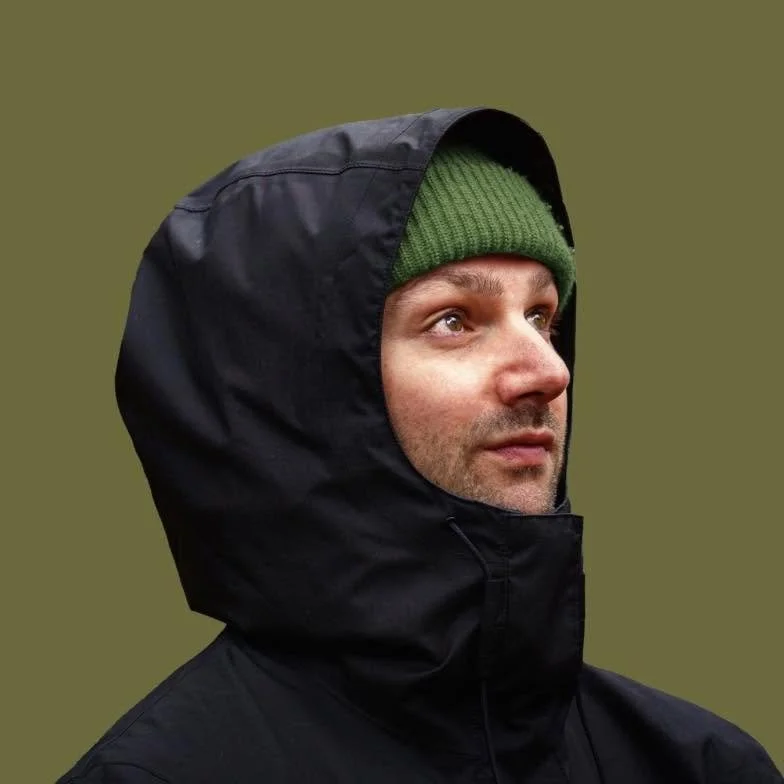
Lee Cooper is an award-winning woodland and nature photographer based in the New Forest, Hampshire. See more his work here.

Marc Newton
Lee Cooper
