
Wedding photography is about much more than capturing the ceremony, the first kiss or the happy couple. Sometimes, the smallest details tell the biggest stories.
From wedding rings and jewellery to shoes, flowers, invitations and watches, these carefully chosen accessories often hold special meaning for the couple. Capturing them beautifully is an important part of telling the story of their wedding day.
One creative approach is wedding flat lay photography, where accessories are arranged and photographed from directly above. But there's more to wedding detail photography than flat lays alone. Close-ups, interesting angles, creative lighting and natural interactions can all help you produce beautiful, meaningful photographs.
In this guide, we'll explore 10 essential tips for wedding flat lay photography and detail shots, drawing on advice from professional wedding photographer Mariana Castanheira, who teaches our Wedding Photography Course.
Whether you're photographing your first wedding or looking to improve your existing work, these techniques will help you capture the little details that make every wedding unique.
Free Wedding Flat Lay & Detail Checklist
Want to make sure you're prepared to photograph all those important wedding details?
Download our FREE Wedding Flat Lay & Detail Checklist, created to help beginner wedding photographers organise their shots and capture beautiful wedding accessories with confidence.
The checklist includes:
Bridal and groom accessories to photograph
Flat lay composition reminders
Lighting and background checks
Camera settings reminders
Creative ideas for individual detail shots
Final checks before moving on
Download the checklist below.
What is wedding flat lay photography?
Wedding flat lay photography involves carefully arranging wedding accessories on a flat surface and photographing them from directly above.
These compositions often include items such as wedding rings, invitations, jewellery, shoes, flowers, watches and other meaningful accessories.
The aim is to create an attractive, balanced photograph that reflects the wedding's style and tells a little of the couple's story.
Wedding detail photography is a broader term. It includes flat lays but also covers individual close-ups and photographs taken from different angles.
For example, you might photograph wedding rings as part of a styled flat lay, then capture a close-up of the rings in the groom's hands.
Both approaches are valuable, and combining them helps create a more varied and complete collection of wedding photographs.
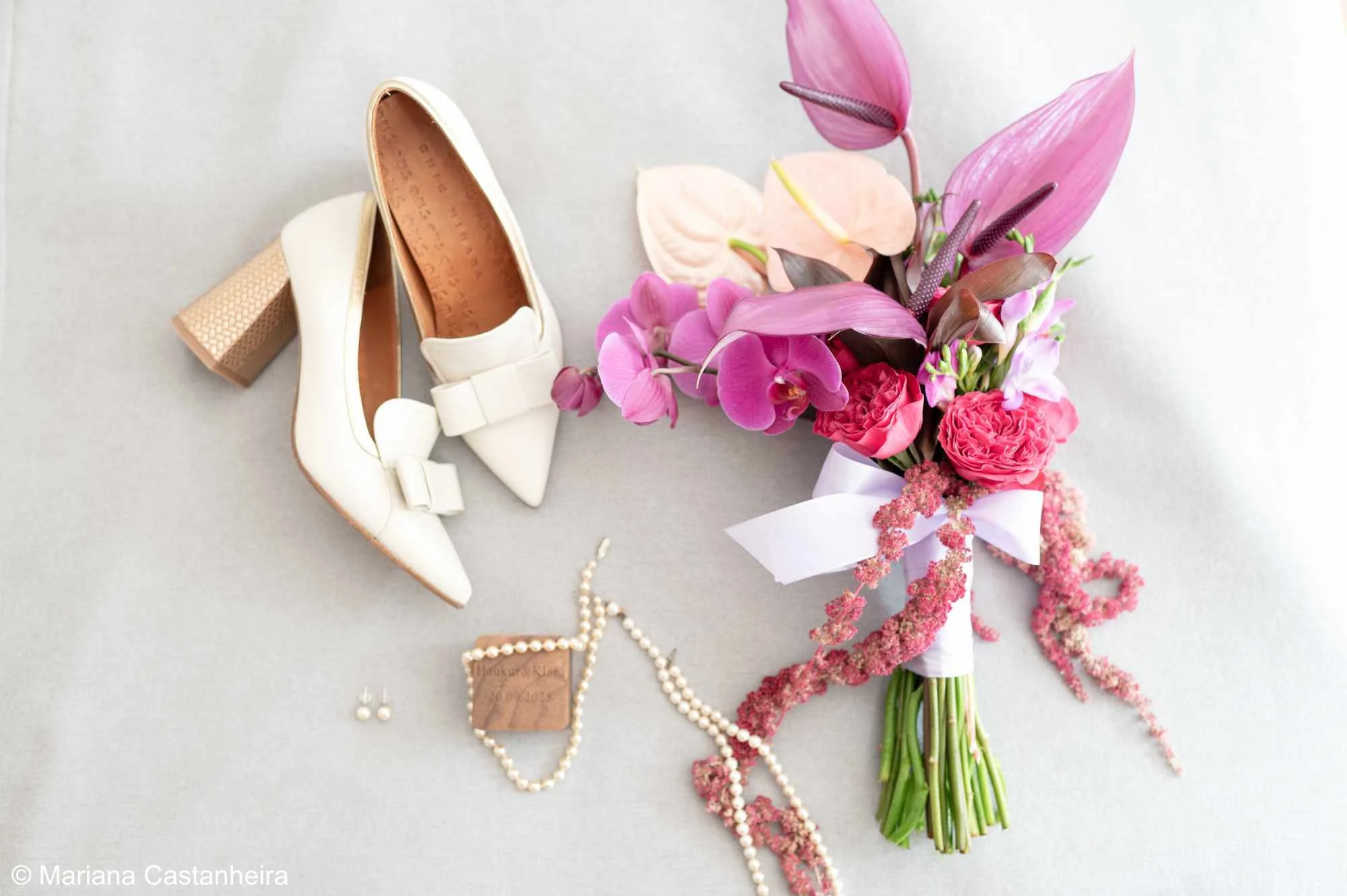
© Mariana Castanheira | Bridal accessories arranged in a beautiful wedding flat lay composition.
1. Start with the Wedding Details
One of Mariana's recommendations is to start photographing details when you arrive at the bride's or groom's preparation (also known as, getting ready).
This gives you an opportunity to photograph important accessories before they're needed. It also helps the couple and their families become comfortable with your presence before you begin photographing more personal moments.
Start by asking where the important wedding accessories are kept.
During bridal preparation, look for:
Wedding rings
Shoes
Jewellery and earrings
Flowers and the bridal bouquet
Invitations and stationery
Hair accessories and other meaningful items
During groom preparation, consider watches, shoes, cufflinks, ties, rings and other accessories.
Ask the couple whether any items have particular sentimental value. A watch might have been a gift, for example, or a piece of jewellery might be a family heirloom.
These details can help you tell a more personal story through your photographs.
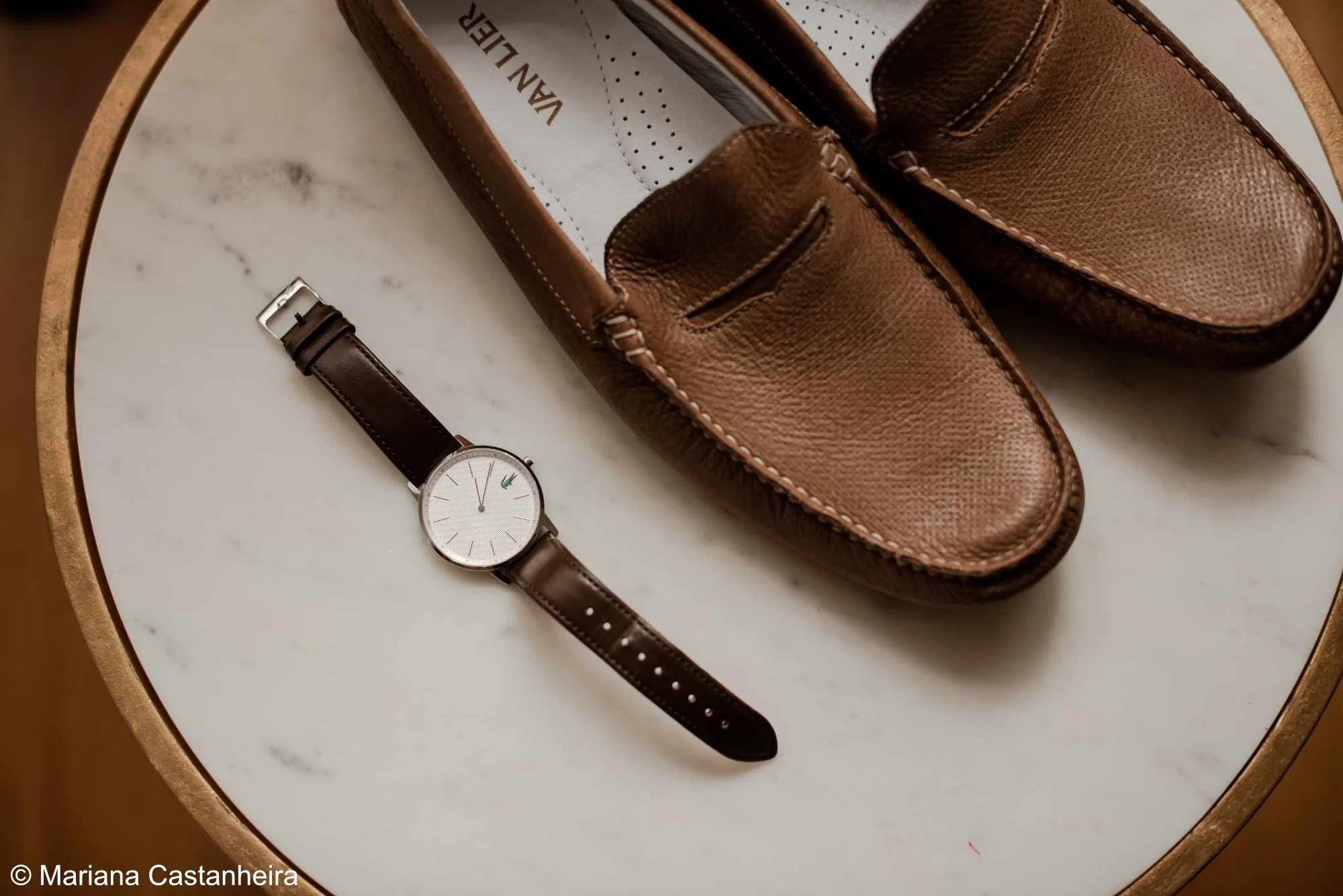
© Mariana Castanheira | Groom's shoes and watch arranged in a stylish wedding flat lay composition.
Get access to ALL our online courses - 1000’s of videos, worksheets, critiques of students work, personalised support and much more with our monthly membership.
2. Look for the best natural light, get creative
Before choosing your background or arranging your accessories, take a moment to observe the light.
Good lighting can make even simple wedding details look beautiful.
Soft window light is often an excellent starting point. Positioning your subject near a window can create flattering illumination, while side lighting helps reveal texture, shape and depth.
Pay attention to how the light interacts with different materials. Jewellery, glass, polished shoes and metallic surfaces can all produce reflections that need careful positioning.
In Mariana's bridal preparation lesson, she demonstrates how interesting lighting can inspire a photograph. In one example, light passing through a champagne bottle creates an unusual effect for a wedding ring photograph.
It's a useful reminder that you don't always need elaborate lighting equipment. Sometimes, the best approach is to recognise and use the light already available.
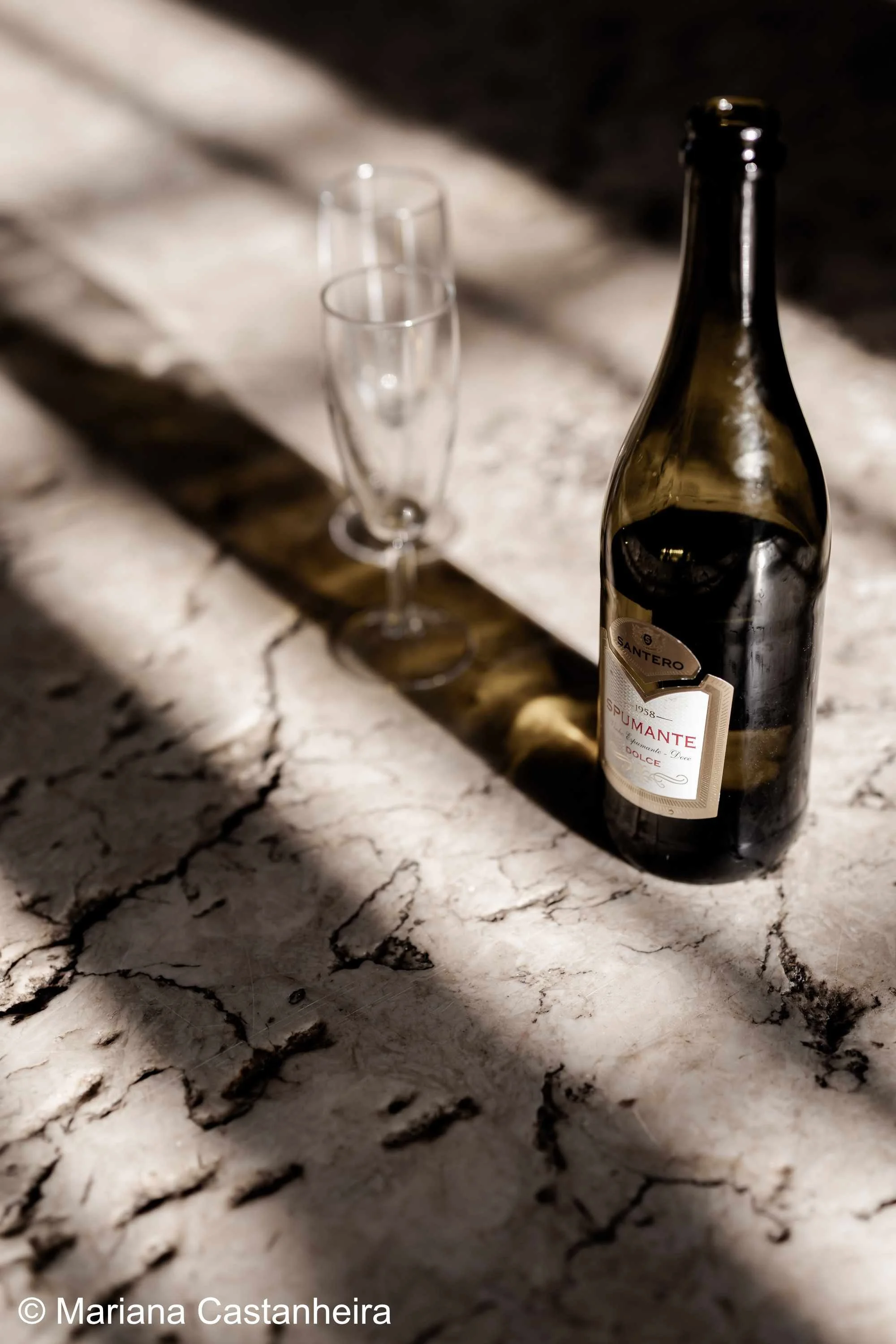
© Mariana Castanheira | Mariana spotted an interesting pattern of light and shadows created by the wine bottle and saw an opportunity for a creative shot.
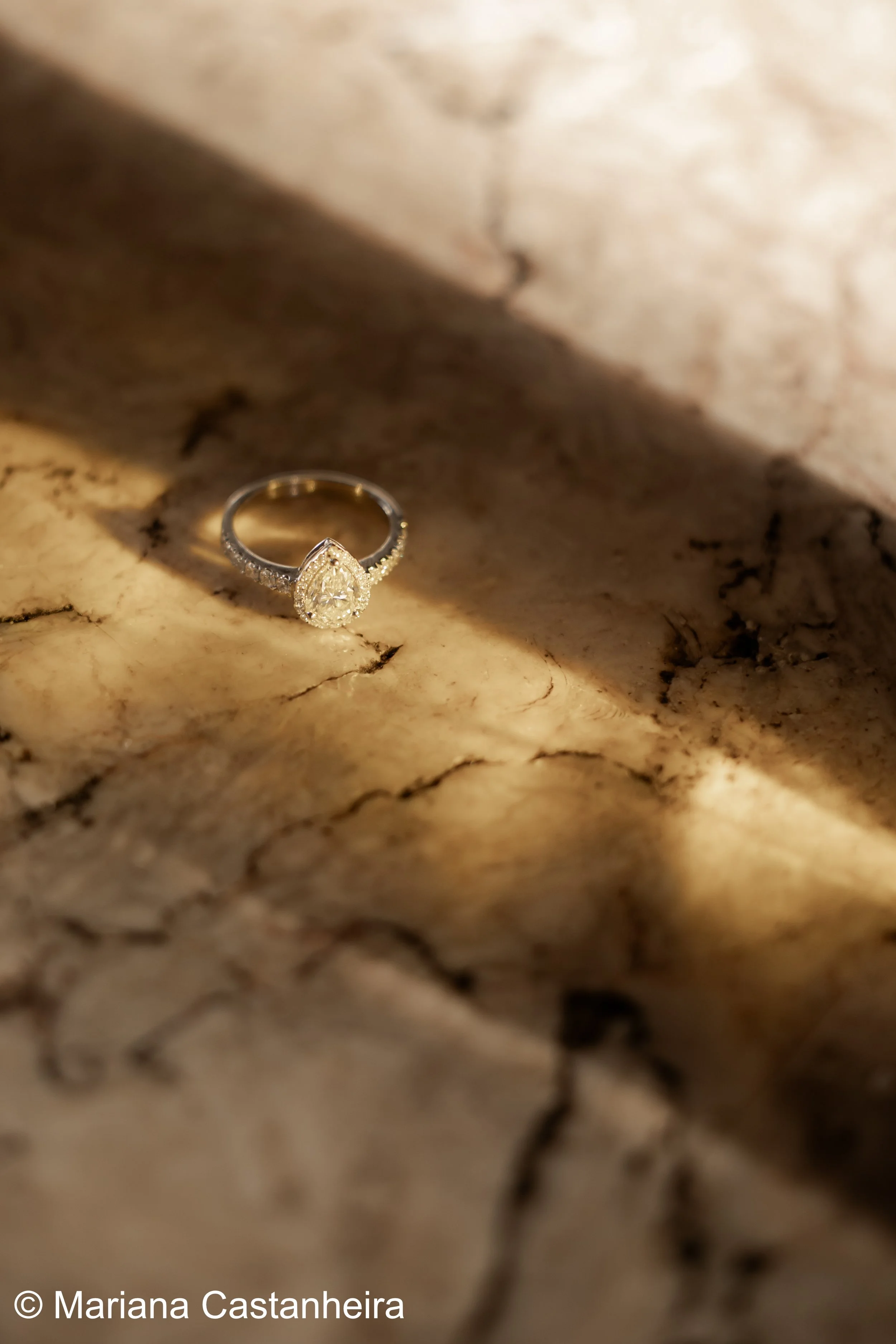
© Mariana Castanheira | The finished wedding ring photograph, using the light and shadows to create a unique and striking composition.
3. Create a Beautiful Wedding Flat Lay Composition
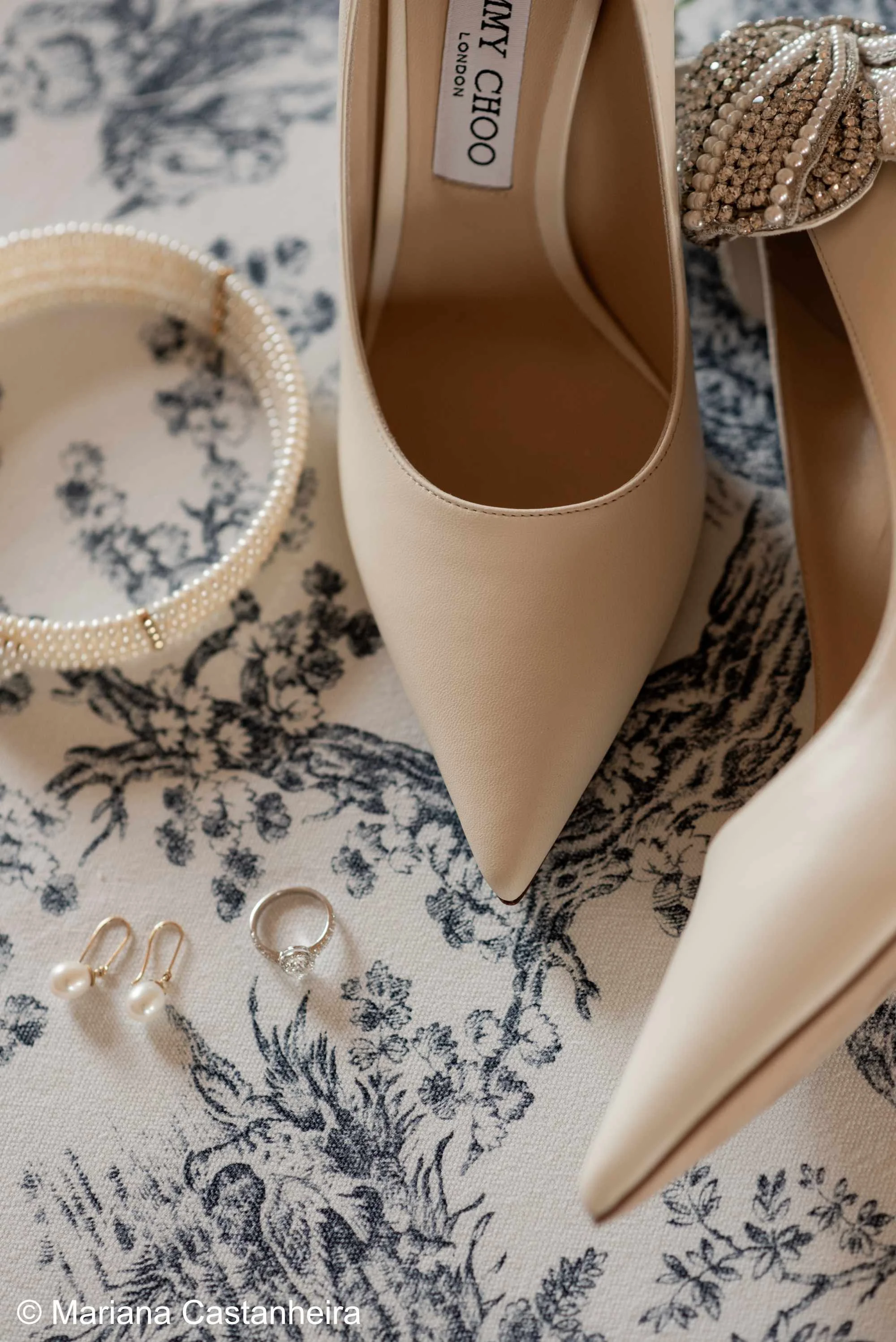
© Mariana Castanheira | Bridal accessories arranged in a wedding flat lay on a decorative fabric background.
A successful wedding flat lay begins with a thoughtful arrangement.
Start with one or two important items, such as the wedding rings or invitation, and build your composition around them.
Position smaller accessories, flowers or decorative elements to complement the main subject without overwhelming it.
Consider these elements:
Balance: Distribute objects throughout the photograph.
Spacing: Leave enough space for individual accessories to stand out.
Colour: Look for complementary colours and tones.
Shapes and lines: Use shoes, stationery, flowers and ribbons to guide the viewer's eye.
Storytelling: Include items that represent the couple and their wedding.
Avoid the temptation to include absolutely everything. Sometimes, a simple arrangement of rings, jewellery and flowers will create a stronger photograph than a crowded composition.
In Mariana's bridal preparation lesson, she describes gathering the bride's shoes, flowers, earrings and other accessories before arranging them together into a composition.
The important lesson is to work creatively with the items and surroundings available to you.
4. Choose an Interesting Background
Your background helps set the mood of a wedding flat lay.
Look around the preparation room for surfaces that could complement the accessories. Wooden tables, marble, decorative tiles and fabrics can all make attractive backgrounds.
For a soft, romantic photograph, try a simple, light-coloured surface. For a more dramatic image, experiment with darker materials or stronger contrasts.
You should also consider the wedding's overall style. A rustic wedding might suit natural wood, while an elegant, traditional celebration might work beautifully with a neutral fabric or stone surface.
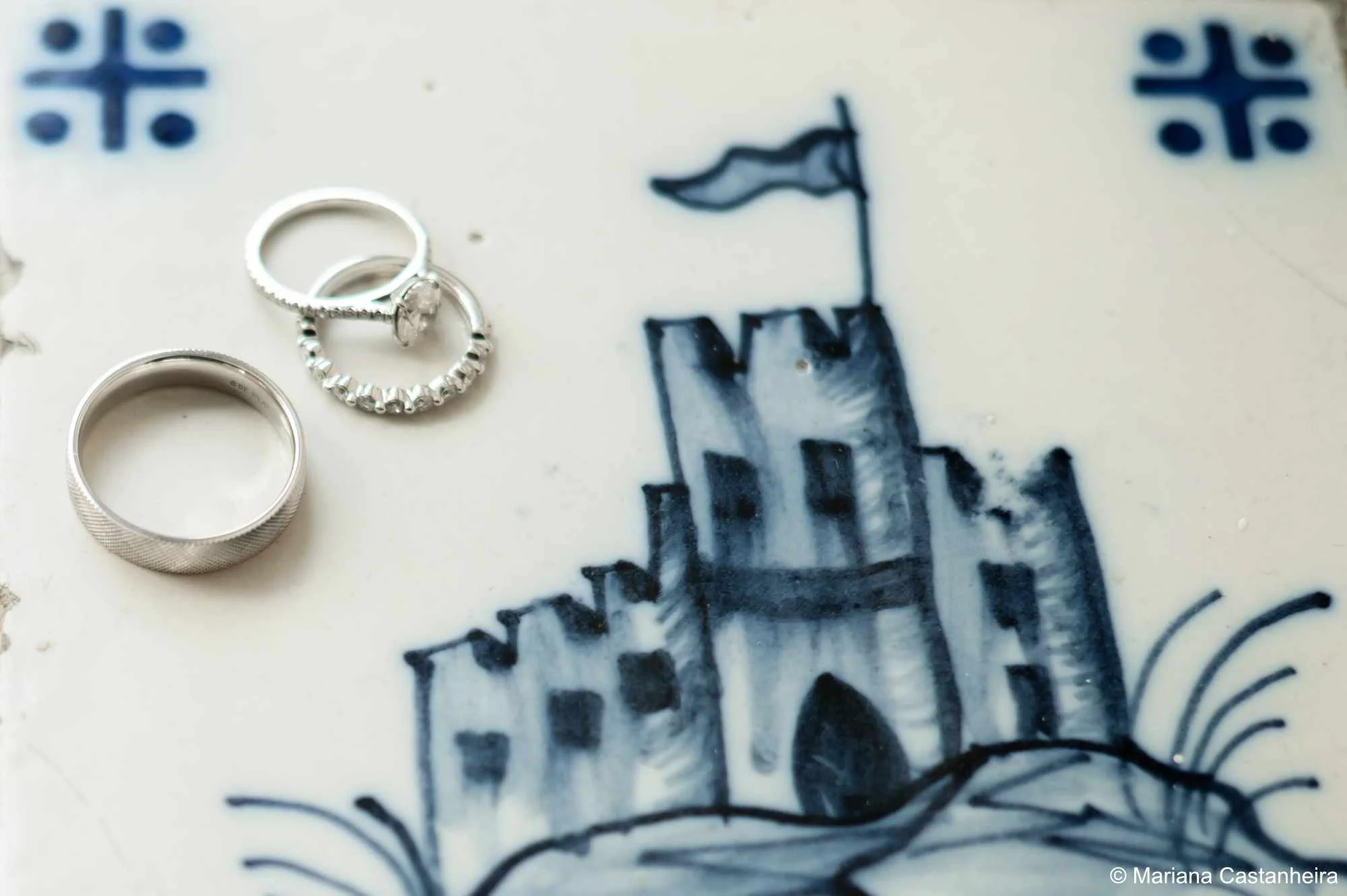
© Mariana Castanheira | Wedding rings arranged on decorative tiles, using the patterns and colours of the surface to create an interesting composition.
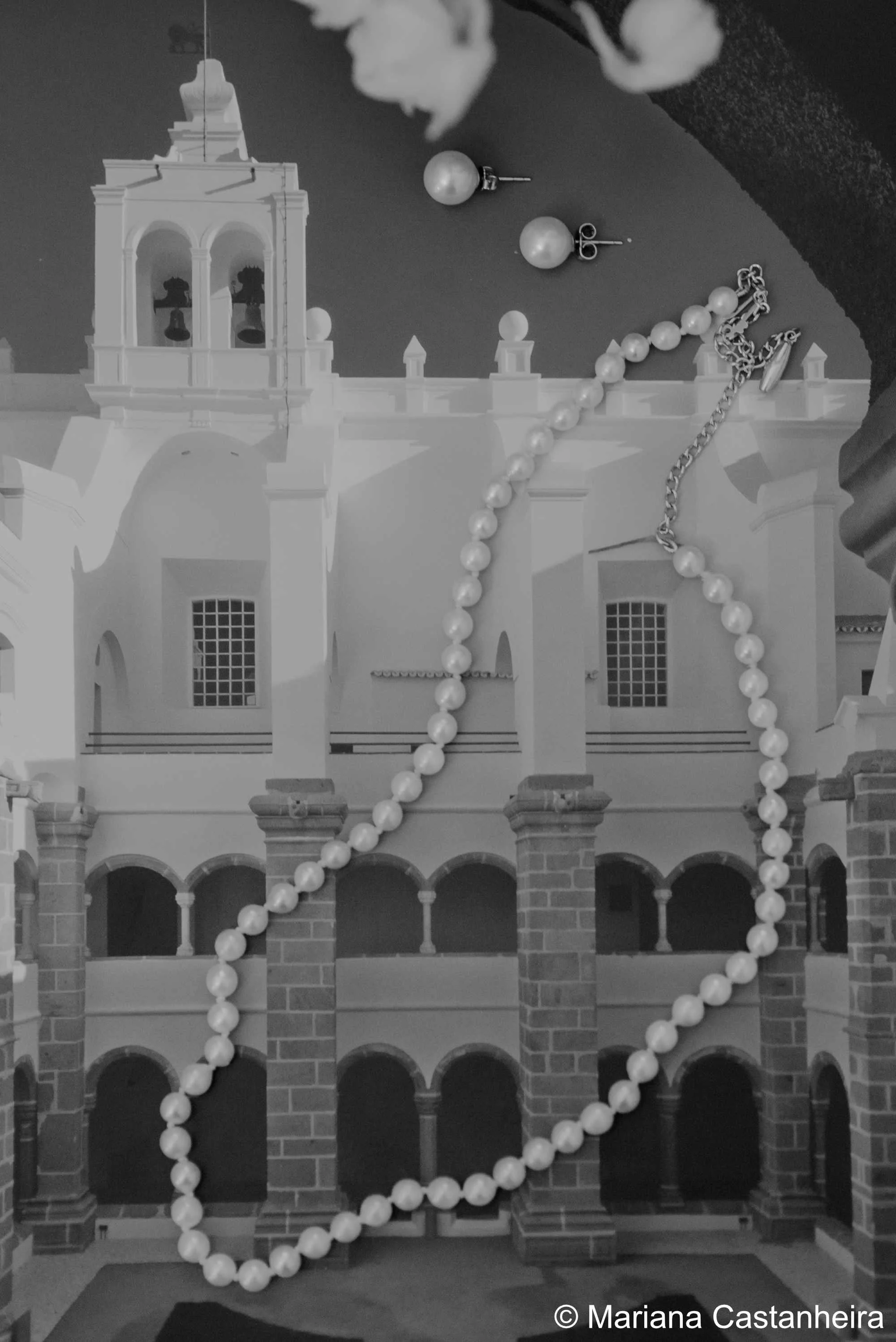
© Mariana Castanheira | Pearl jewellery arranged over an architectural photograph, creating a layered black-and-white wedding detail composition.
5. Photograph Wedding Rings Creatively
Wedding rings are among the most meaningful details you'll photograph.
Start with a simple, clear photograph of the rings, then experiment with different arrangements, backgrounds and lighting.
You could photograph the rings:
On the wedding invitation
Alongside flowers or jewellery
Against an interesting texture or pattern
As part of a complete wedding flat lay
Individually using a close-up composition
In the bride's or groom's hands
Mariana encourages photographers to create photographs that include interaction rather than always photographing accessories in isolation.
For example, photographing the groom holding the rings creates a connection between the objects and the person.
This can make the final image feel more meaningful and help tell the story behind the wedding details.
When photographing rings close up, pay particular attention to focus. Their small size and reflective surfaces can make them challenging subjects.
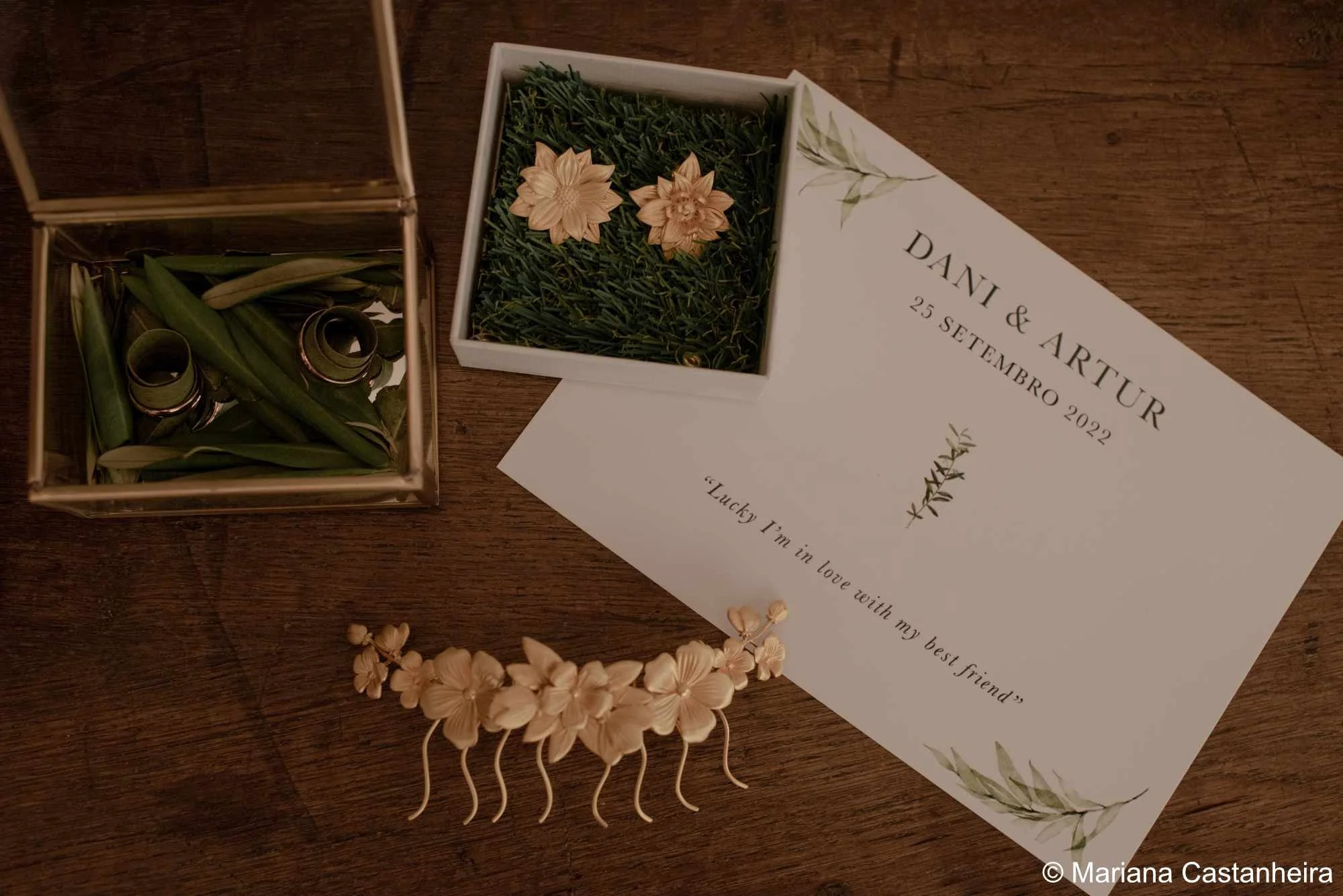
© Mariana Castanheira | Wedding rings and bridal accessories arranged in a creative flat lay composition.
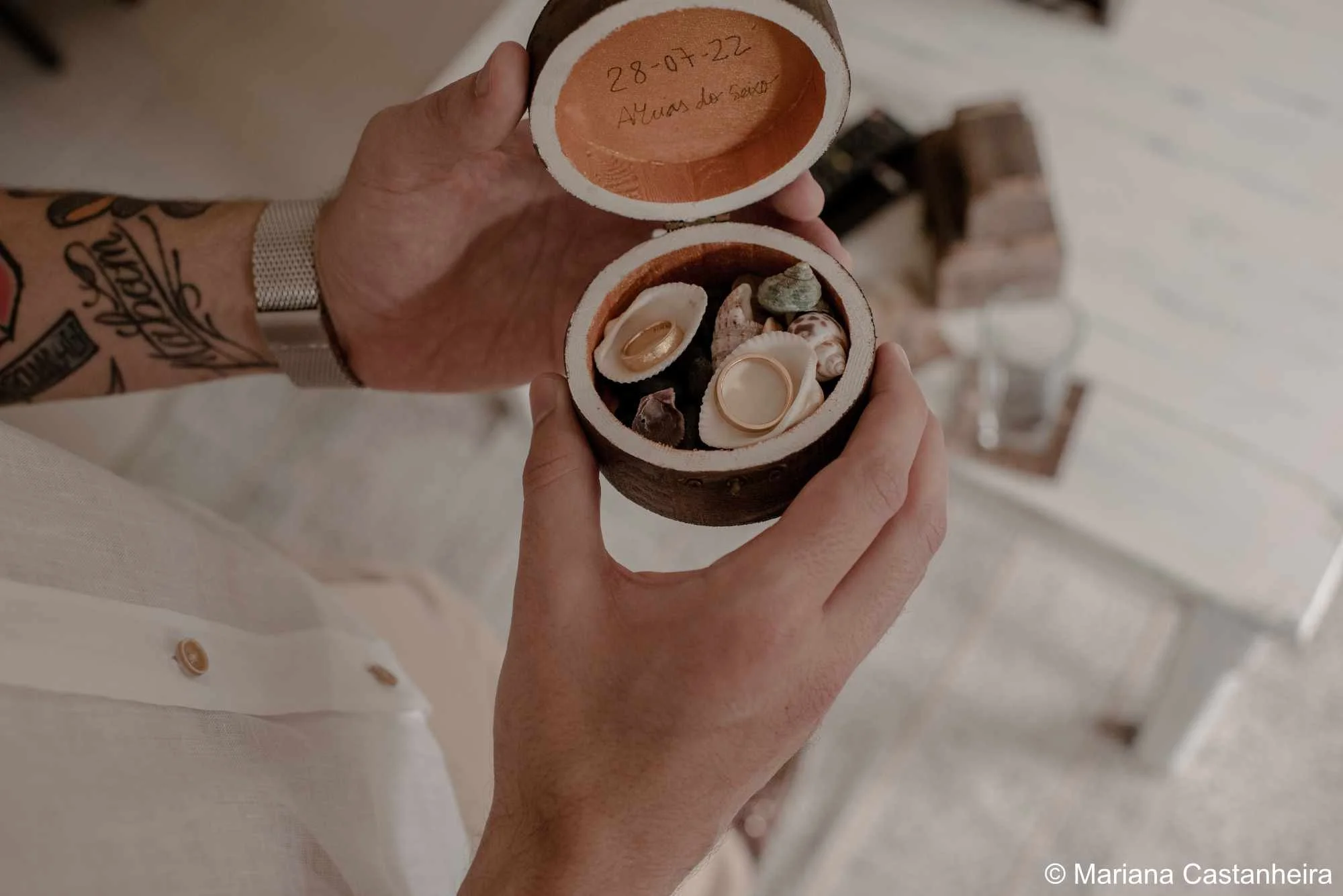
© Mariana Castanheira | The groom holding the wedding rings in a personalised wooden box, creating a meaningful wedding detail photograph.
6. Capture Individual Details from Different Angles
Once you've created a complete wedding flat lay, don't stop there.
The same collection of accessories can give you several different photographs.
Try moving closer to photograph individual items, changing your camera angle or experimenting with a shallower depth of field.
For example, after photographing shoes, earrings and flowers together, you could create a separate photograph of each item.
A side angle can reveal the shape of the shoes, while a close-up might emphasise the sparkle or texture of jewellery.
For smaller accessories, experiment with the distance between your subject and the background. This can help you create attractive background blur and draw attention to the detail you're photographing.
The aim is to create variety without spending unnecessary time rearranging everything.
Learn more about composition in photography here.
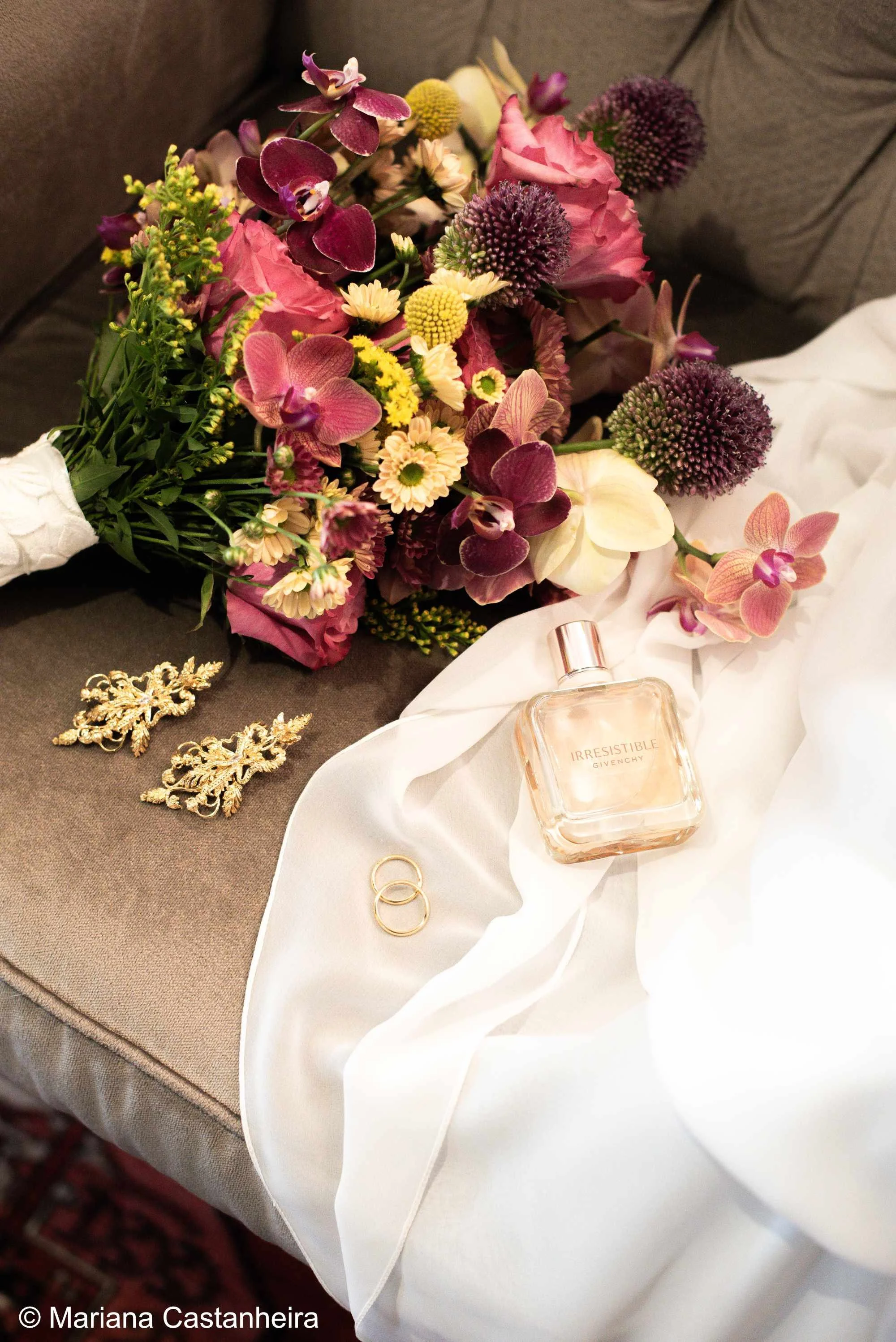
© Mariana Castanheira | Bridal flowers, jewellery and perfume arranged to capture the beautiful details of the wedding day.
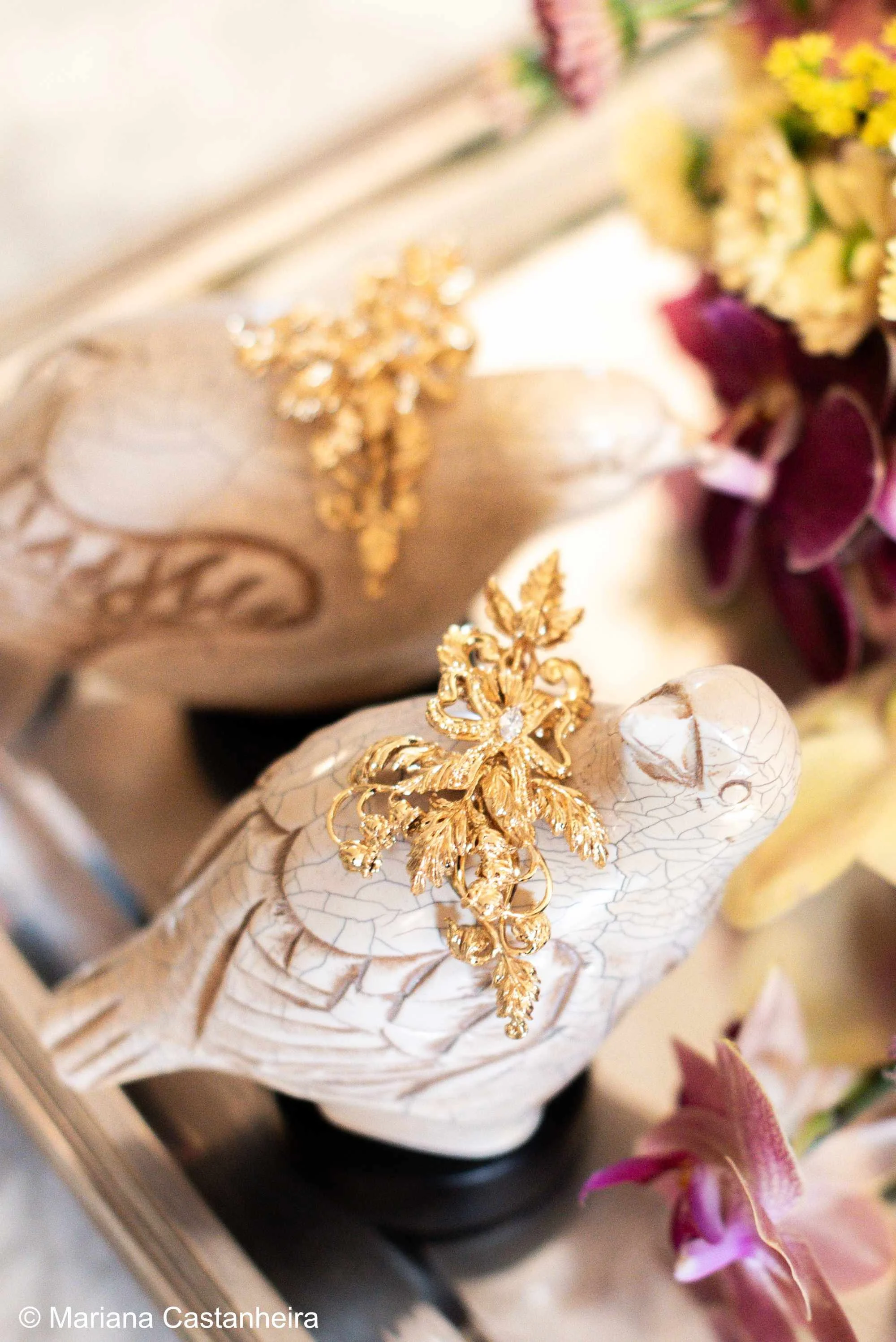
© Mariana Castanheira | Creative bridal jewellery photography using decorative objects and a shallow depth of field.
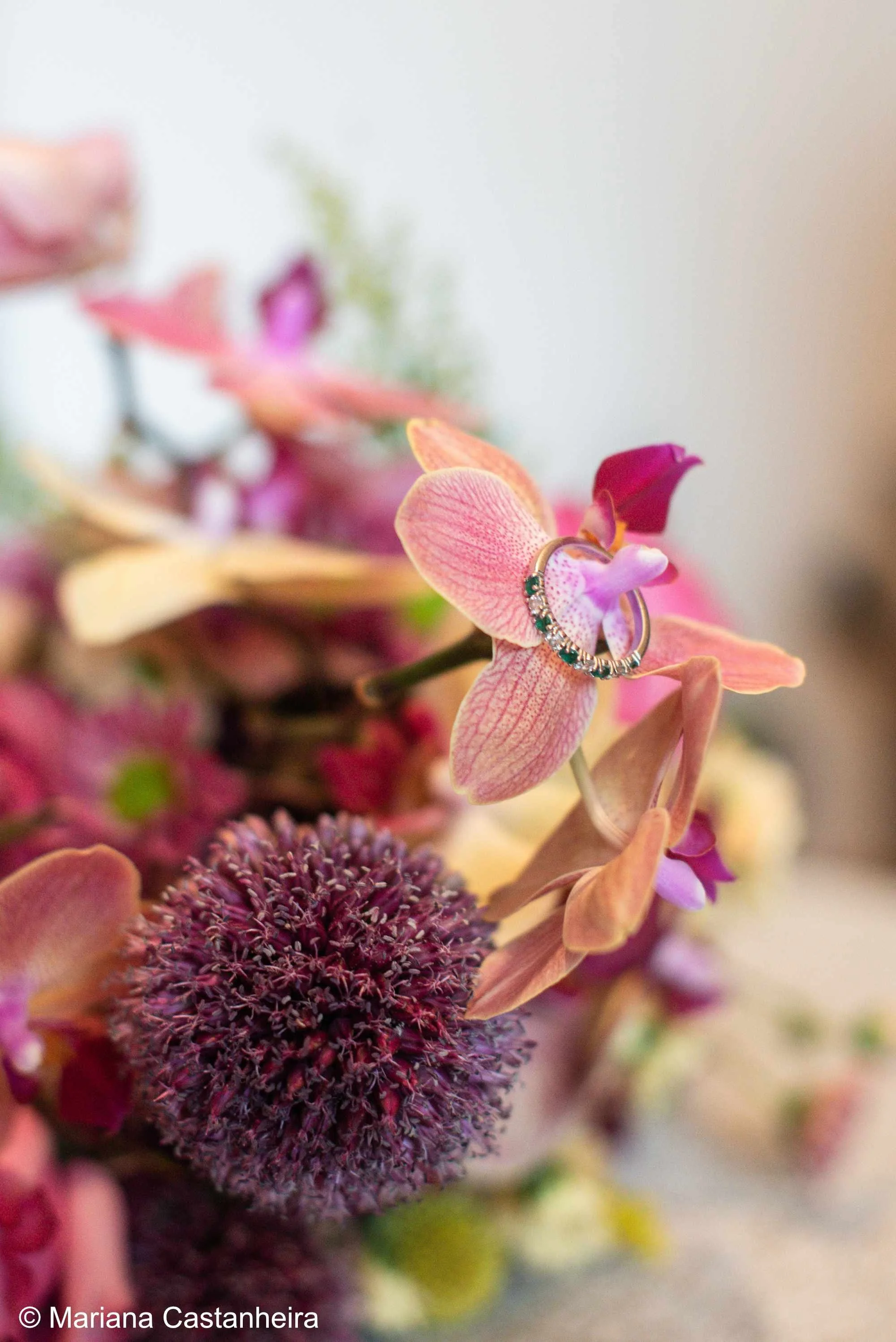
© Mariana Castanheira | A creative wedding ring photograph using flowers and a shallow depth of field to highlight the jewellery.
7. Use the Right Camera Settings
Wedding detail photography gives you an opportunity to work carefully with composition, lighting and focus.
Your settings will depend on the available light, your equipment and whether you're photographing a complete arrangement or a single object.
For overhead wedding flat lays, an aperture around f/5.6 to f/8 can be a useful starting point when you want several accessories to appear sharp.
For individual detail photographs, try a wider aperture such as f/2.8 or f/4 to isolate the subject and create background blur.
Keep the following in mind:
Aperture: Choose it based on how much of the arrangement you want in focus.
Shutter speed: Use a speed that prevents camera shake, particularly when shooting handheld.
ISO: Keep it as low as practical, increasing it when more exposure is needed.
Focus: Check that the most important detail is sharp.
RAW: Photographing in RAW gives you greater flexibility when adjusting exposure and colour during editing.
These settings are starting points rather than fixed rules. Always adapt them to the lighting and photograph you're trying to create.
Learn how to better understand camera settings with our Beginners Photography Course.
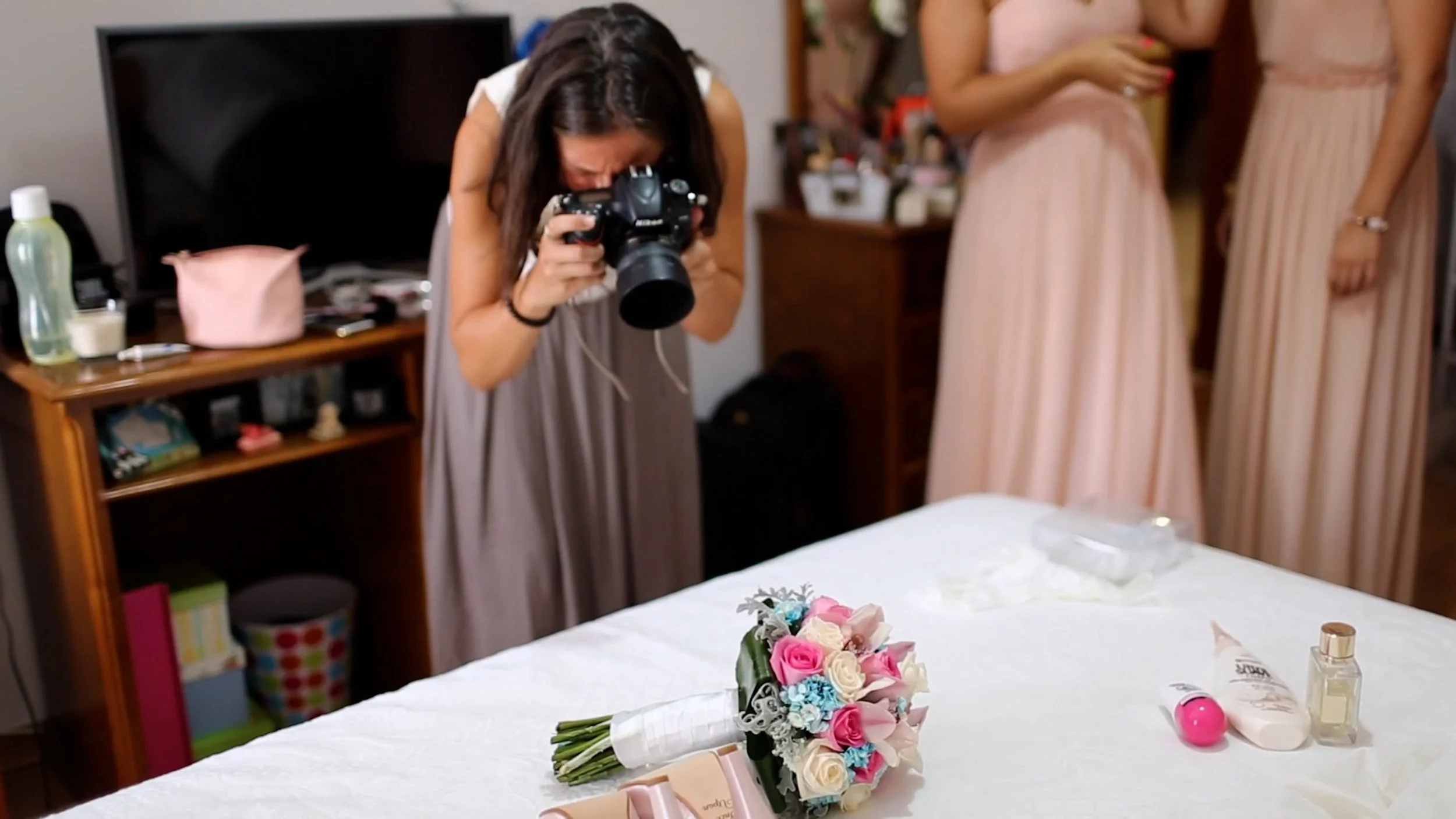
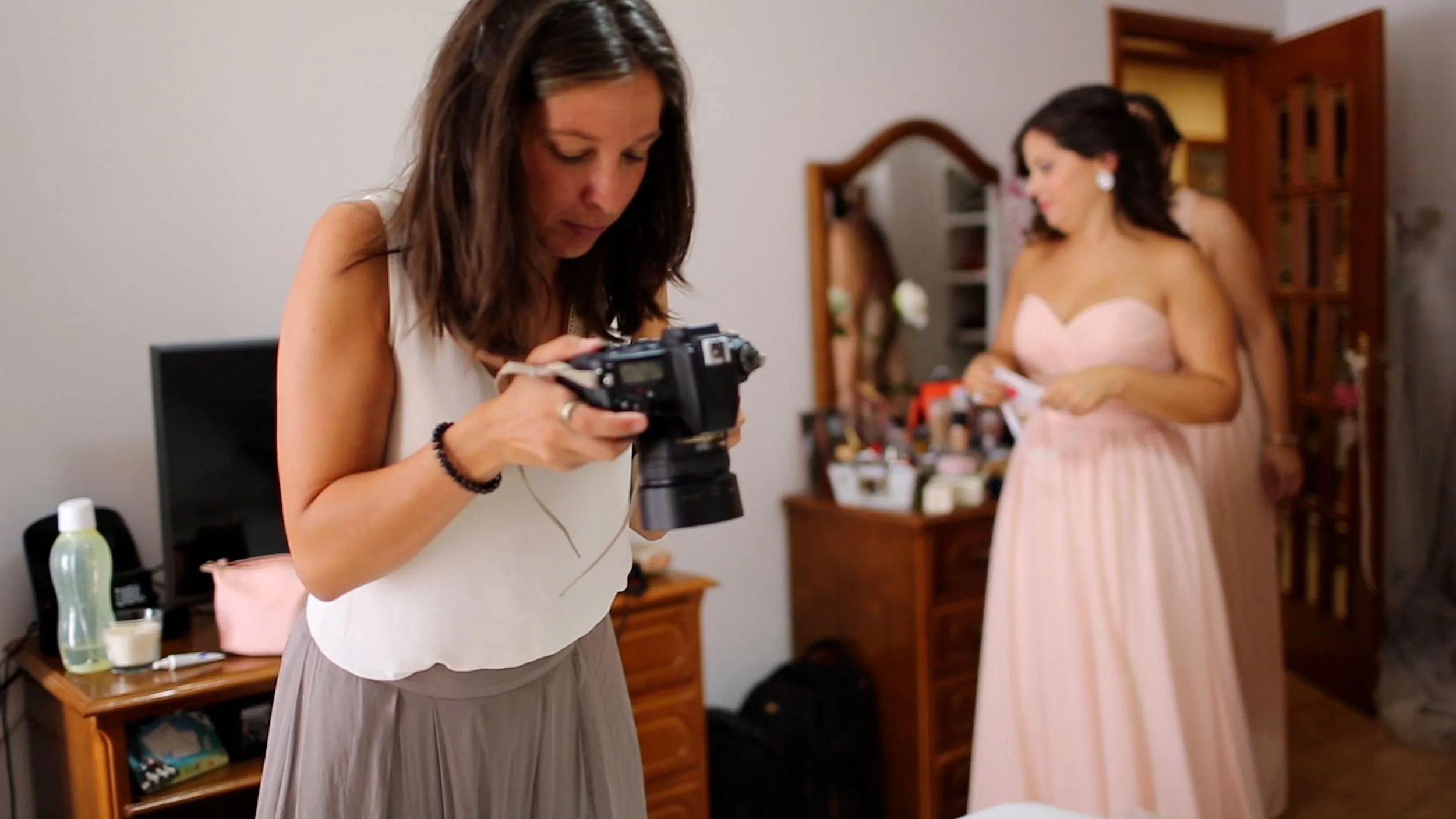
8. Don't Forget Flowers, Shoes and Dress Details
Wedding accessories aren't limited to items arranged on a table.
The bridal bouquet, wedding dress and shoes can provide plenty of opportunities for beautiful detail photographs.
In her bridal preparation lesson, Mariana emphasises photographing the wedding dress in its surroundings as well as capturing smaller details.
Look for interesting textures, embroidery, lace and decorative features.
Side lighting can be particularly effective for revealing these details through highlights and shadows.
For the bouquet, photograph the entire arrangement and then move closer to capture individual flowers, ribbons or other distinctive elements.
Remember to ask permission before moving the dress or other valuable belongings, and handle everything carefully.
Learn how to find and photograph details on a wedding day here.
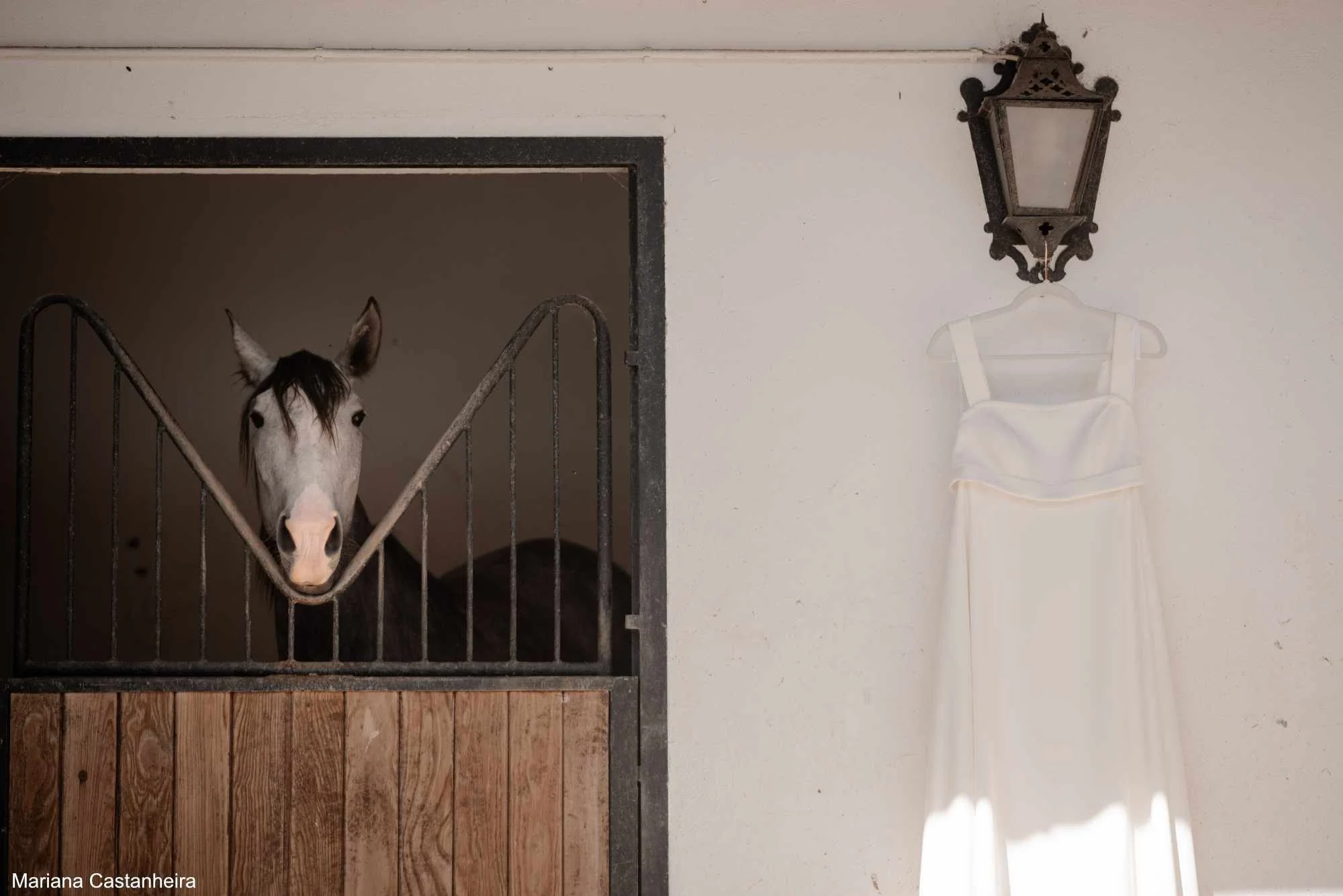
© Mariana Castanheira | A creative wedding detail photograph featuring a grey horse in a stable alongside a white bridal gown, capturing an unusual moment from the wedding preparations.
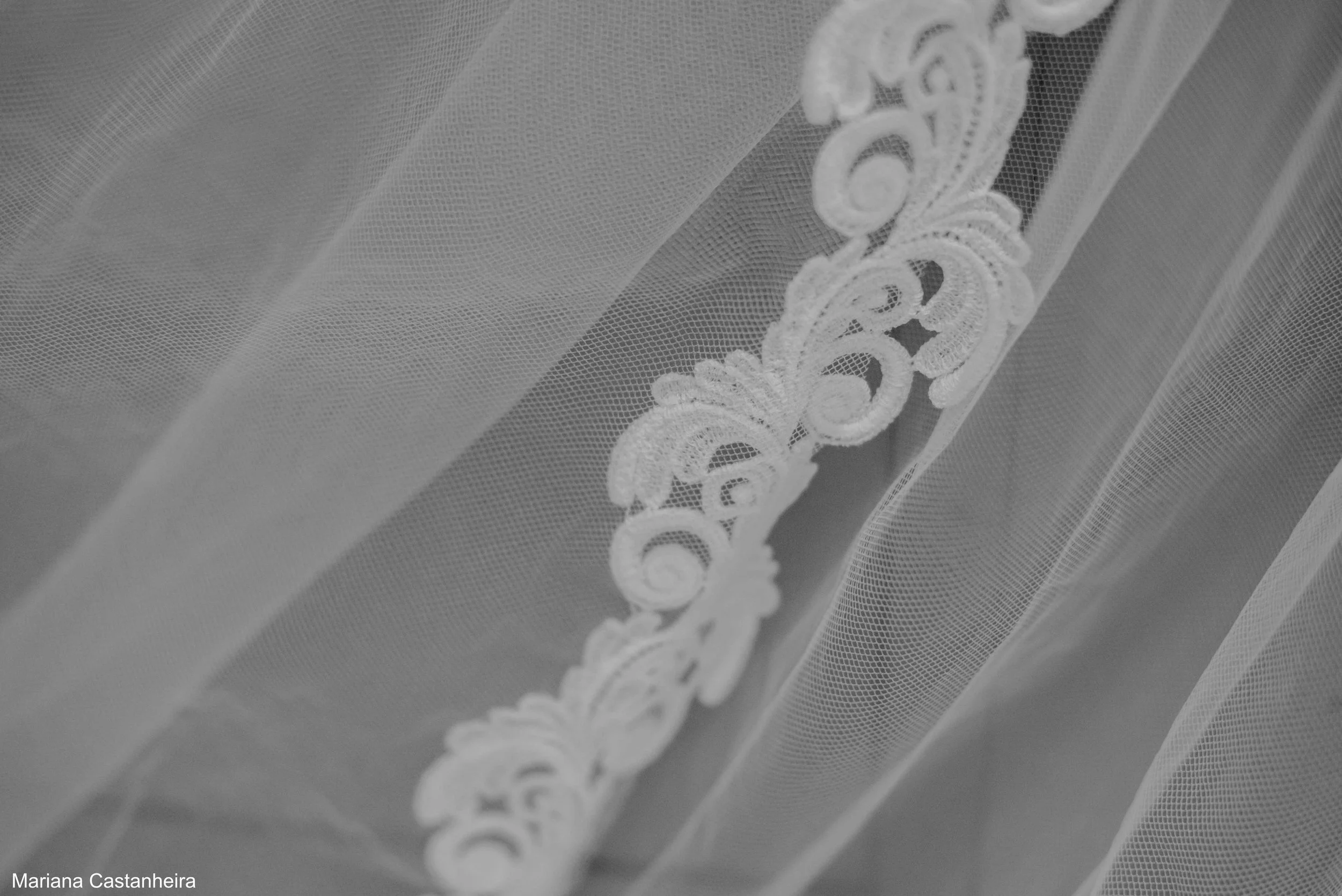
© Mariana Castanheira | A black-and-white close-up of intricate bridal lace and delicate fabric, highlighting the textures and finer details of wedding attire.
9. Use Details to Tell the Wedding Story
Wedding detail photography isn't simply about making accessories look attractive.
It's also about documenting the objects and moments that are meaningful to the couple.
A watch, for example, might have been a gift from the bride. A necklace could have belonged to a family member, while an invitation might feature artwork designed especially for the wedding.
Whenever possible, try to understand why these items matter.
Mariana also recommends photographing accessories while people interact with them.
Rather than capturing every detail as a static arrangement, look for natural opportunities to photograph someone fastening a watch, holding the rings or adjusting jewellery.
These moments add context and emotion to the wedding gallery.
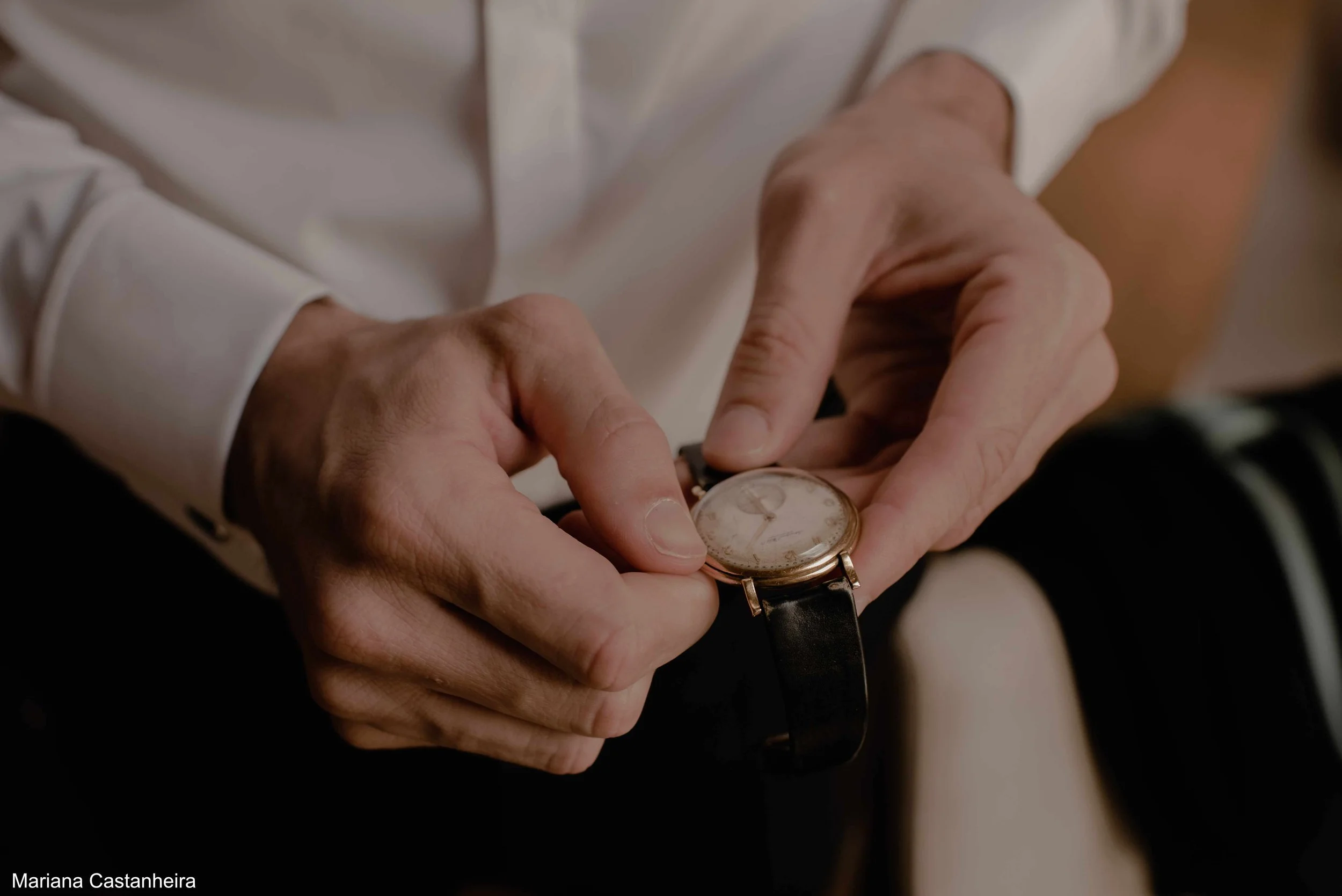
© Mariana Castanheira | A wedding preparation photograph showing a groom holding an elegant wristwatch, capturing one of the small details before the wedding ceremony.
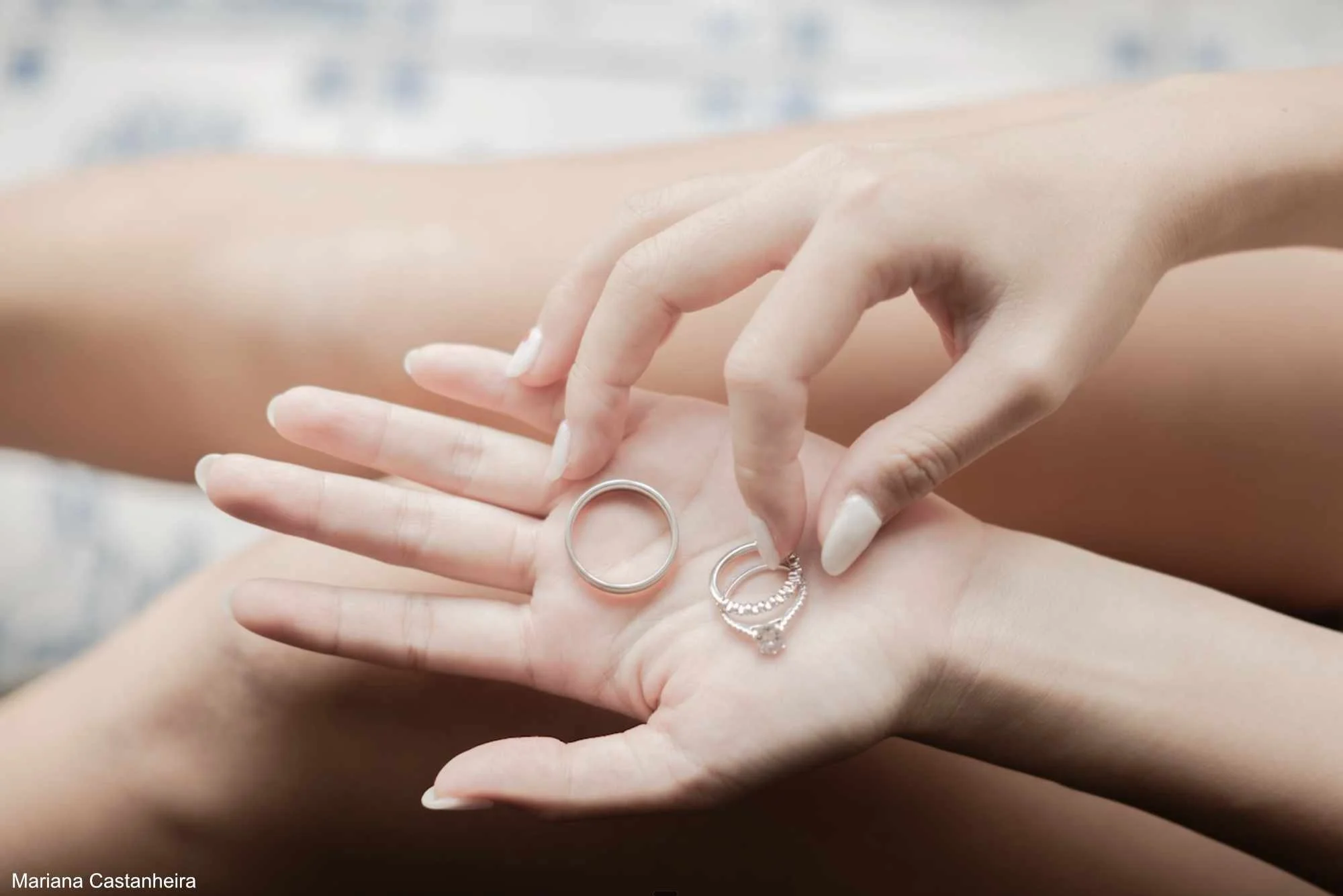
© Mariana Castanheira | A delicate wedding detail photograph showing a bride holding her wedding rings and engagement ring, highlighting the meaningful jewellery and personal details of the wedding day.
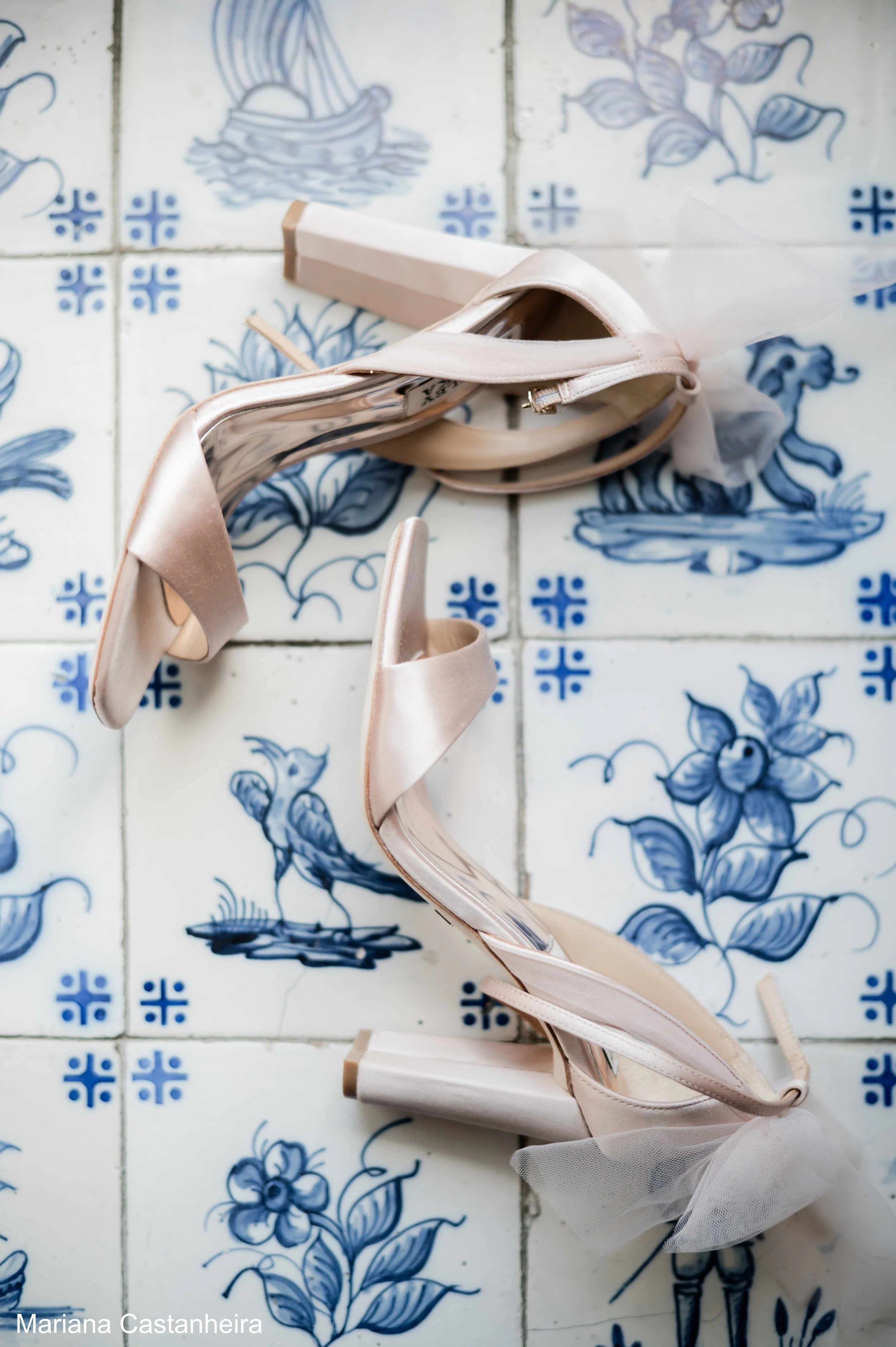
© Mariana Castanheira | Elegant ivory bridal heels with tulle bows, photographed against traditional blue-and-white Portuguese tiles.
10. Be Creative, but Work Efficiently
Wedding preparations can move quickly, so it's important to make the most of your time.
Once you've gathered the accessories and identified suitable lighting, plan a few different compositions.
You might start with a complete wedding flat lay, followed by individual close-ups and alternative angles.
Then return the accessories to the couple before they're needed.
Keep your arrangements simple when time is limited, and avoid becoming so focused on photographing details that you miss important preparation moments.
Good wedding photography requires a balance between creativity, preparation and awareness of what's happening around you.
As Mariana teaches throughout her preparation lessons, being observant and ready for spontaneous moments is just as important as creating carefully composed photographs.
Frequently Asked Questions About Wedding Photography Flat Lay and Detail Shots
What is a wedding flat lay?
A wedding flat lay is a photograph of carefully arranged wedding accessories taken from directly above. Common subjects include rings, flowers, invitations, shoes and jewellery.
What should you include in a wedding flat lay?
Include meaningful accessories that complement one another, such as wedding rings, invitations, flowers, jewellery, shoes or watches. Focus on creating a balanced composition rather than including every available item.
What are wedding detail shots?
Wedding detail shots are photographs that highlight important objects and decorative elements from the wedding day. They include flat lays, individual close-ups, dress details, jewellery, flowers and other meaningful accessories.
How do you photograph wedding rings?
Begin with a simple composition and use suitable lighting to reveal their shape and texture. Experiment with overhead arrangements, close-ups and different backgrounds. You can also photograph the rings in the couple's hands to create more personal images.
What camera settings are best for wedding detail photography?
For flat lays, f/5.6 to f/8 can be a useful starting point for keeping several items sharp. For individual details, a wider aperture such as f/2.8 or f/4 can help blur the background. Adjust shutter speed and ISO to suit the available light and check your focus carefully.
Learn More with Our Wedding Photography Course
Photographing wedding details is just one small part of capturing a complete wedding day.
From bridal and groom preparation to ceremonies, portraits and receptions, wedding photographers need to work confidently in a variety of environments and lighting conditions.
In our Wedding Photography Course, professional photographer Mariana shares her knowledge and experience to help you develop your skills, improve your technique and confidently approach different stages of a wedding day.
Learn how to photograph important moments, work creatively with lighting and composition, and tell the story of a wedding through beautiful, meaningful photographs.
I hope you liked this tutorial on Wedding Photography Flat Lays and Detail Shots. If you did, please leave us a comment and support us by sharing it with your friends and subscribe to our newsletter at the bottom of this page for more.
We also have an excellent learning community on social media so please join us there as well.
Thanks for reading and remember – Learn more at The School of Photography.

