Colour vs Black and White Street Photography: Which Should You Choose?
Colour or black and white? It’s one of those decisions every street photographer has to make.
Sometimes the answer is obvious. Beautiful colours, warm sunlight or bold contrasts might make colour the natural choice. At other times, strong shapes, shadows, textures and interesting light seem made for black and white.
But what happens if you don’t get to choose?
I recently headed into the City of London with professional photographer and YouTuber Jimmy Cheng for a street photography challenge. One of us would photograph entirely in colour and the other entirely in black and white — and a coin toss would decide who got what.
Jimmy ended up shooting black and white. I got colour.
More importantly, once we had made that decision, we had to stick with it.
It turned into a really interesting exercise in how limiting your choices can actually make you a better photographer.
Colour vs Black and White: The Street Photography Challenge
We started around Liverpool Street before making our way towards Bank and eventually the Lloyd’s of London building.
The rules were simple.
Jimmy would shoot exclusively in black and white while I would shoot exclusively in colour. Rather than taking RAW files and deciding on the look afterwards, we also wanted to use our cameras’ colour profiles to get as close as possible to the finished photographs in-camera.
That meant we had to start thinking in colour or black and white before pressing the shutter.
And that changes the way you see a scene.
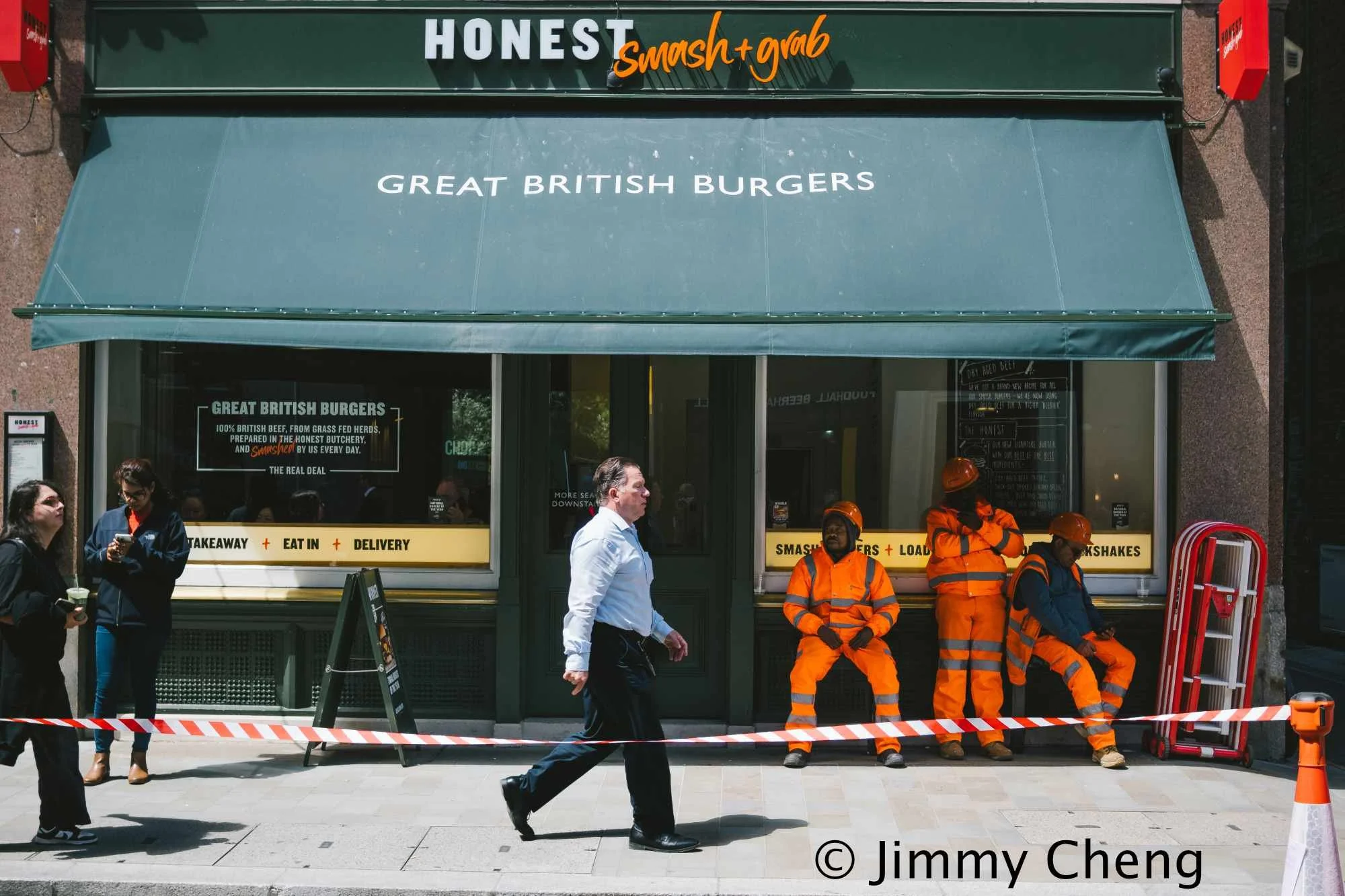
© Jimmy Cheng. The London street scene photographed in colour, where the vivid orange workwear and urban details become important elements of the composition.
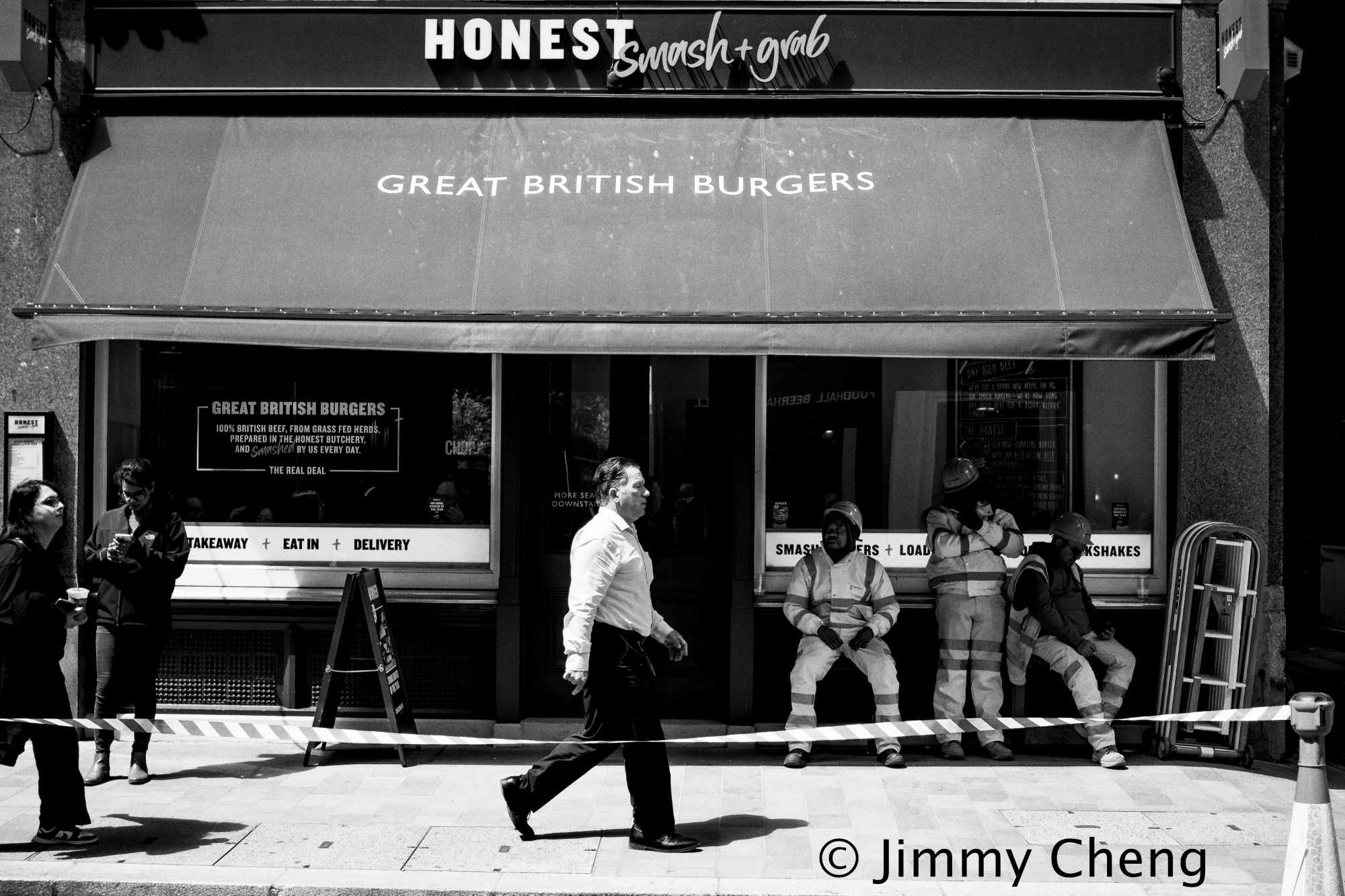
© Jimmy Cheng. The same London street photography scene captured in black and white, using contrast, light and everyday activity to create a strong urban composition.
Get access to ALL our online courses - 1000’s of videos, worksheets, critiques of members work, personalised support and much more with our monthly membership.
Seeing the Street in Black and White
Jimmy was shooting with an OM System camera and a 25mm f/1.8 lens, giving him roughly the equivalent of a 50mm focal length on a full-frame camera.
He also deliberately restricted himself to that single prime lens for the day.
For his black-and-white photographs, he used a customised high-contrast monochrome profile.
Without colour to rely on, elements such as light, shadow, shape, line and contrast become incredibly important.
When we had strong sunlight in the City, this worked brilliantly.
The architecture around Bank produces strong lines and shapes, and when sunlight cuts between the buildings you can get small areas of bright light surrounded by deep shadow.
Put the right person into that light and suddenly you have the ingredients for a fantastic black-and-white street photograph.
But there was another lesson waiting for us - The sun disappeared.
Learn how to use light and shadow to create powerful images.
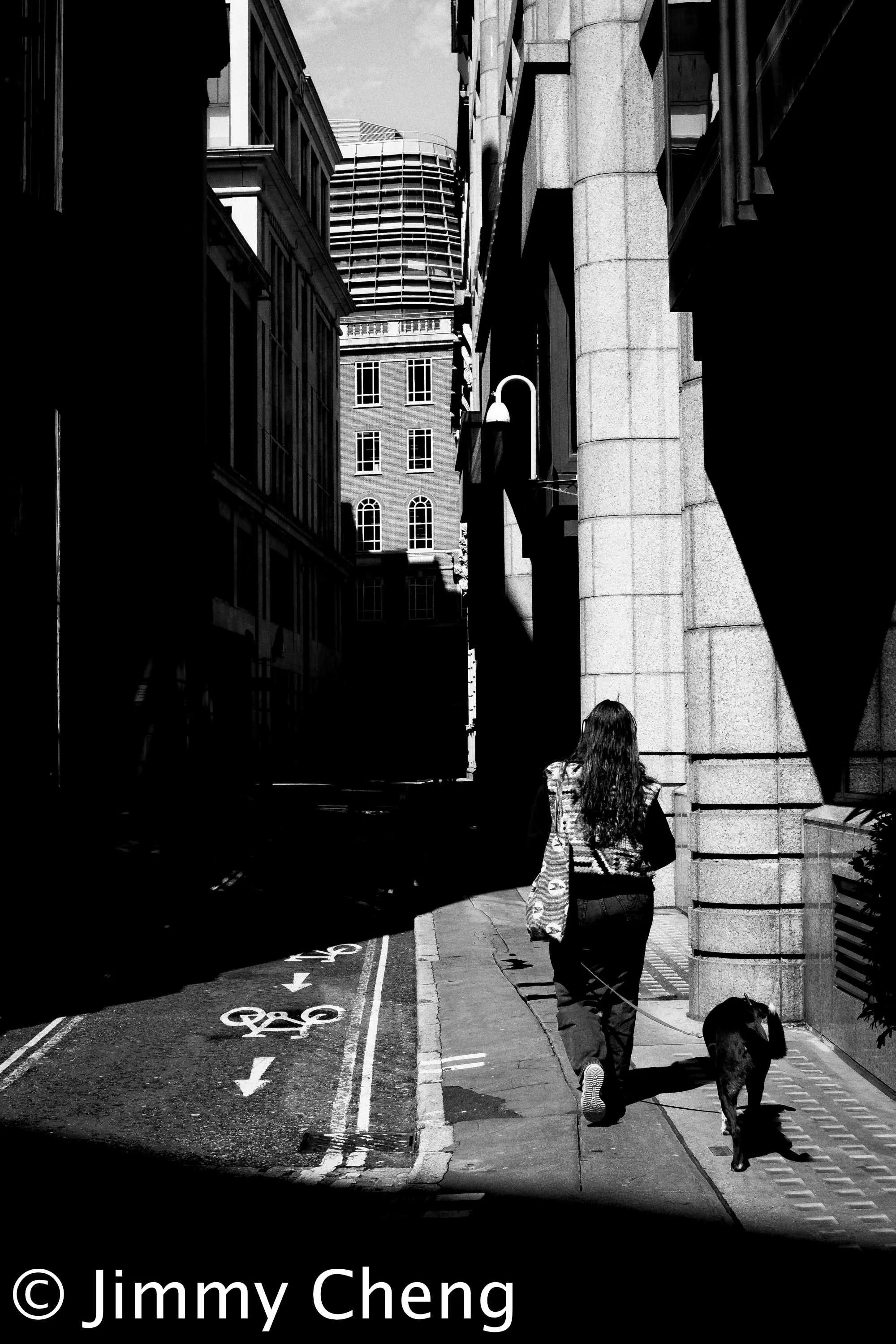
© Jimmy Cheng | Harsh light and deep shadows create bold contrast and strong geometric lines in this black and white London street photograph, drawing the eye towards the pedestrian and dog moving through the scene.
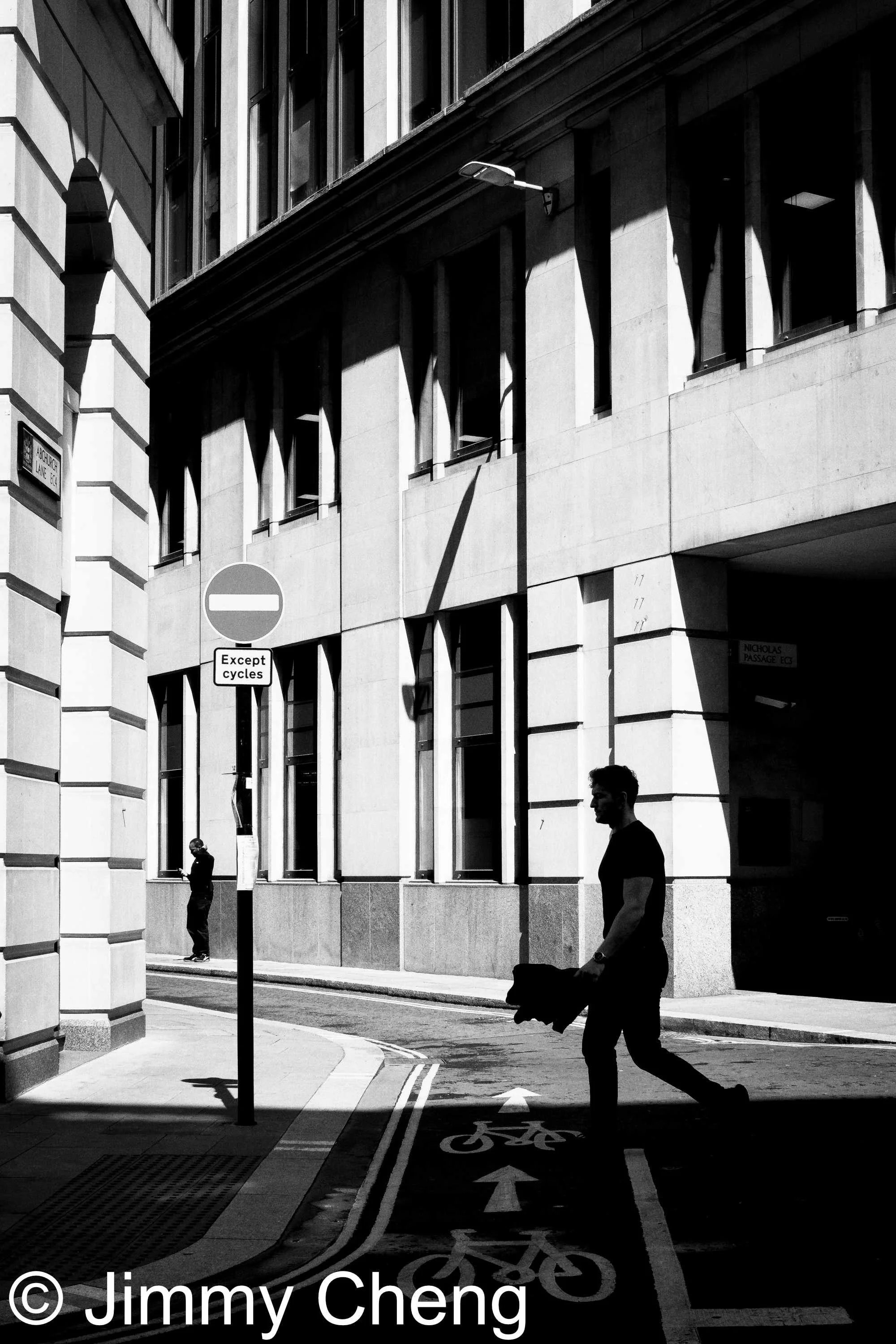
© Jimmy Cheng | Harsh light creates bold shadows, strong lines and striking contrast in this black and white London street photograph, turning an everyday moment into a graphic urban composition.
Street Photography Is About Adapting
One minute we had strong sunshine and hard shadows. The next it was overcast.
Then it started raining.
It would be easy to look at that as the end of the photography session, particularly when you've chosen a high-contrast black-and-white style that works beautifully with strong sunlight.
Instead, Jimmy adapted.
After the rain, the wet pavement outside the Bank of England started producing reflections. There was only a small window of opportunity before the ground dried, but it resulted in what could have been one of his best photographs of the day.
That's an important lesson for any street photographer: work with what you've got.
You can't control the weather. You can't control the people walking through your composition. You can't control exactly when the sun will appear.
What you can control is how you react to it.
Rain, reflections, mist, strong sunshine and flat overcast conditions all create different photographic opportunities.
Don't wait for perfect conditions. Learn to recognise what the conditions you've been given can offer you.
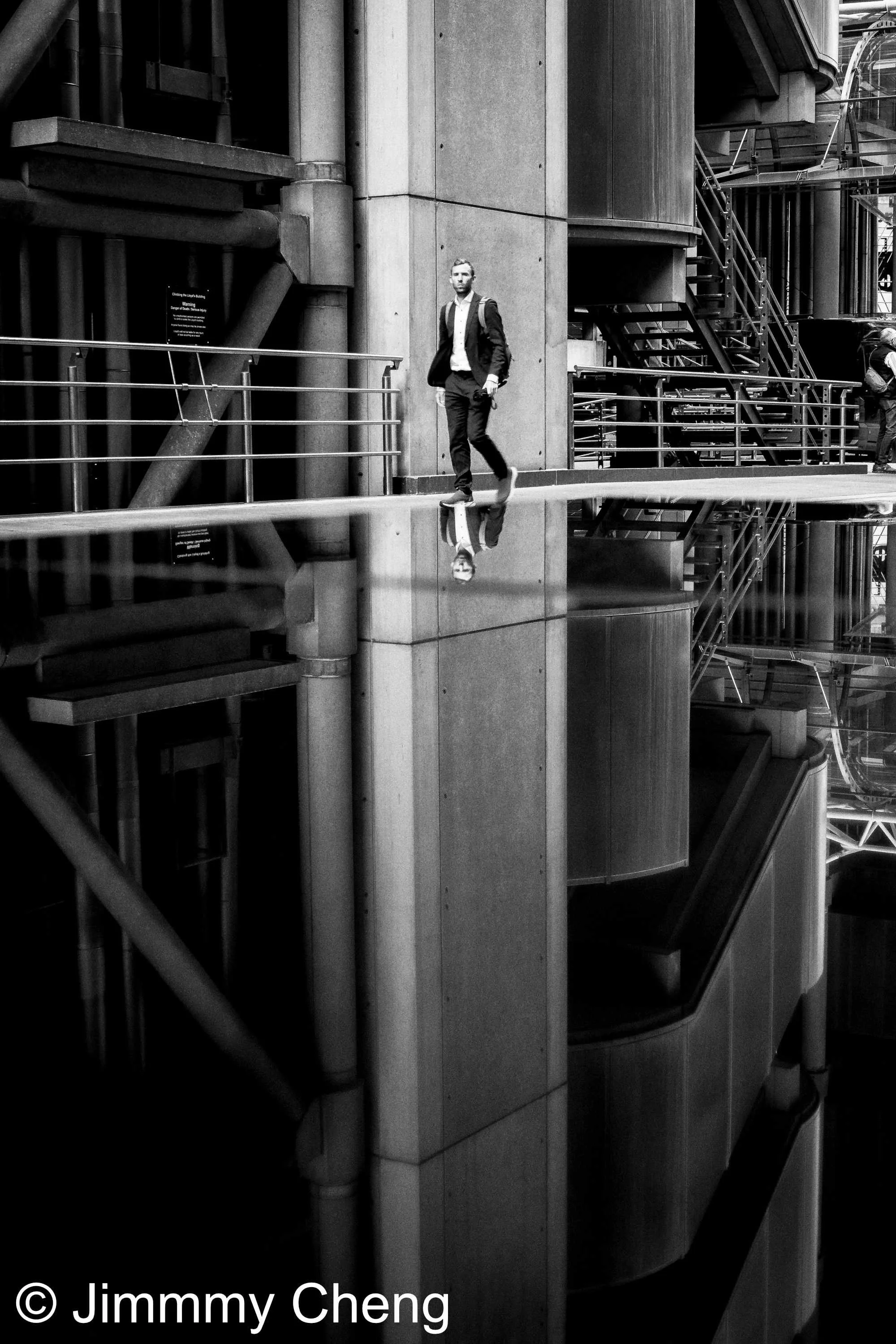
© Jimmy Cheng | Strong architectural lines and a near-perfect reflection create symmetry and depth in this black and white London street photograph, with the lone pedestrian providing a clear focal point within the geometric composition.
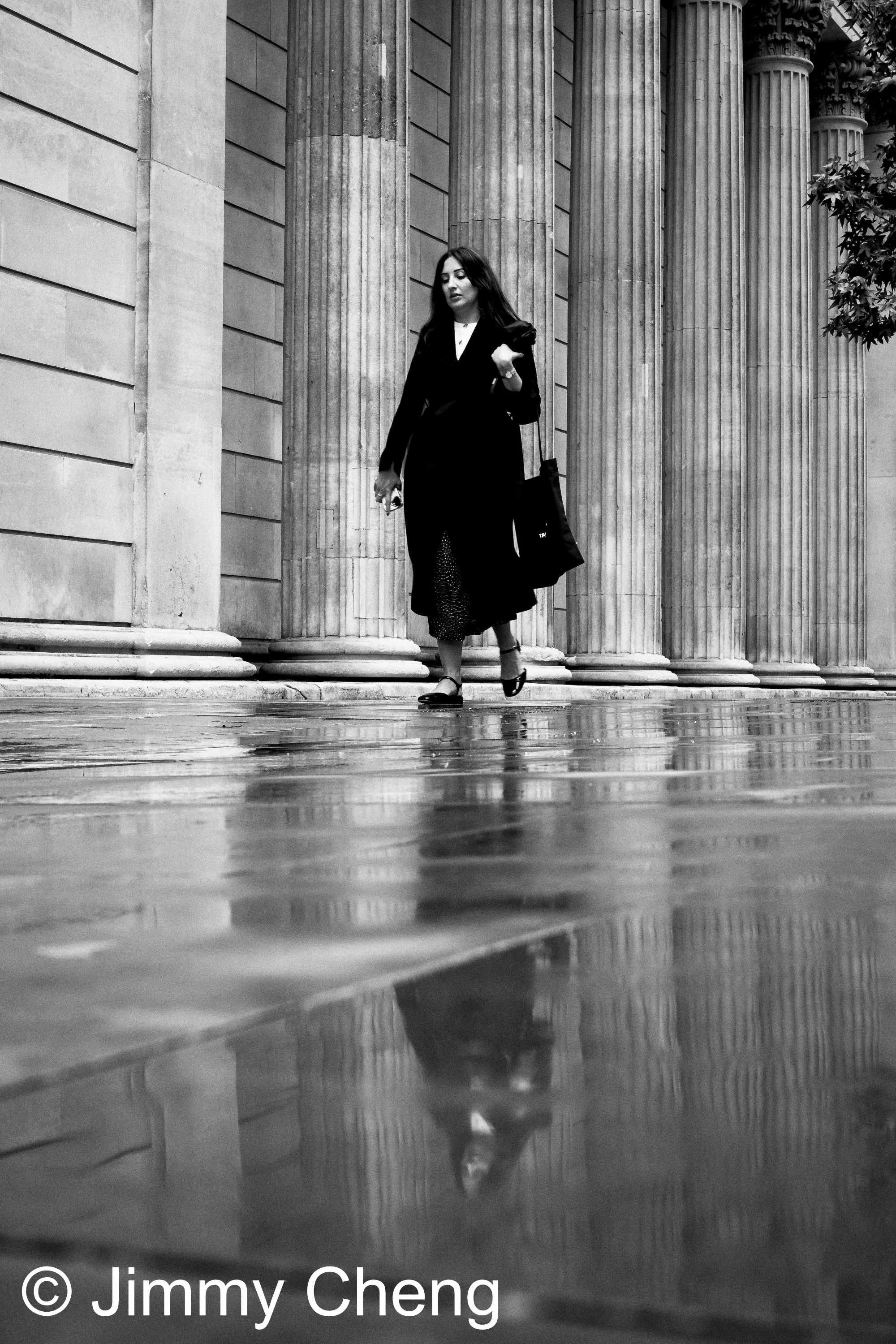
© Jimmy Cheng | Black and white London street photography showing a woman walking beside classical columns, with her reflection mirrored in the wet pavement after rain.
Shooting Street Photography in Colour
While Jimmy was concentrating on black and white, I had the opposite challenge.
I was shooting with my Fujifilm X-T5 and 18-55mm lens, using a Kodachrome-inspired film recipe.
The idea was to create a warm, saturated and slightly old-fashioned film look straight out of the camera.
When the sunlight appeared, I absolutely loved it.
Warm light combined with the colours of the city produced a completely different feeling to Jimmy's high-contrast monochrome photographs.
And this is where the colour-versus-black-and-white question becomes interesting.
Neither is necessarily better.
They simply make you look for different things.
With black and white, you might find yourself concentrating on contrast, geometry, texture, highlights and shadows.
With colour, the colour itself can become part of the composition. A brightly coloured coat, warm sunlight hitting a building or contrasting colours within a scene can become the reason you take the photograph.
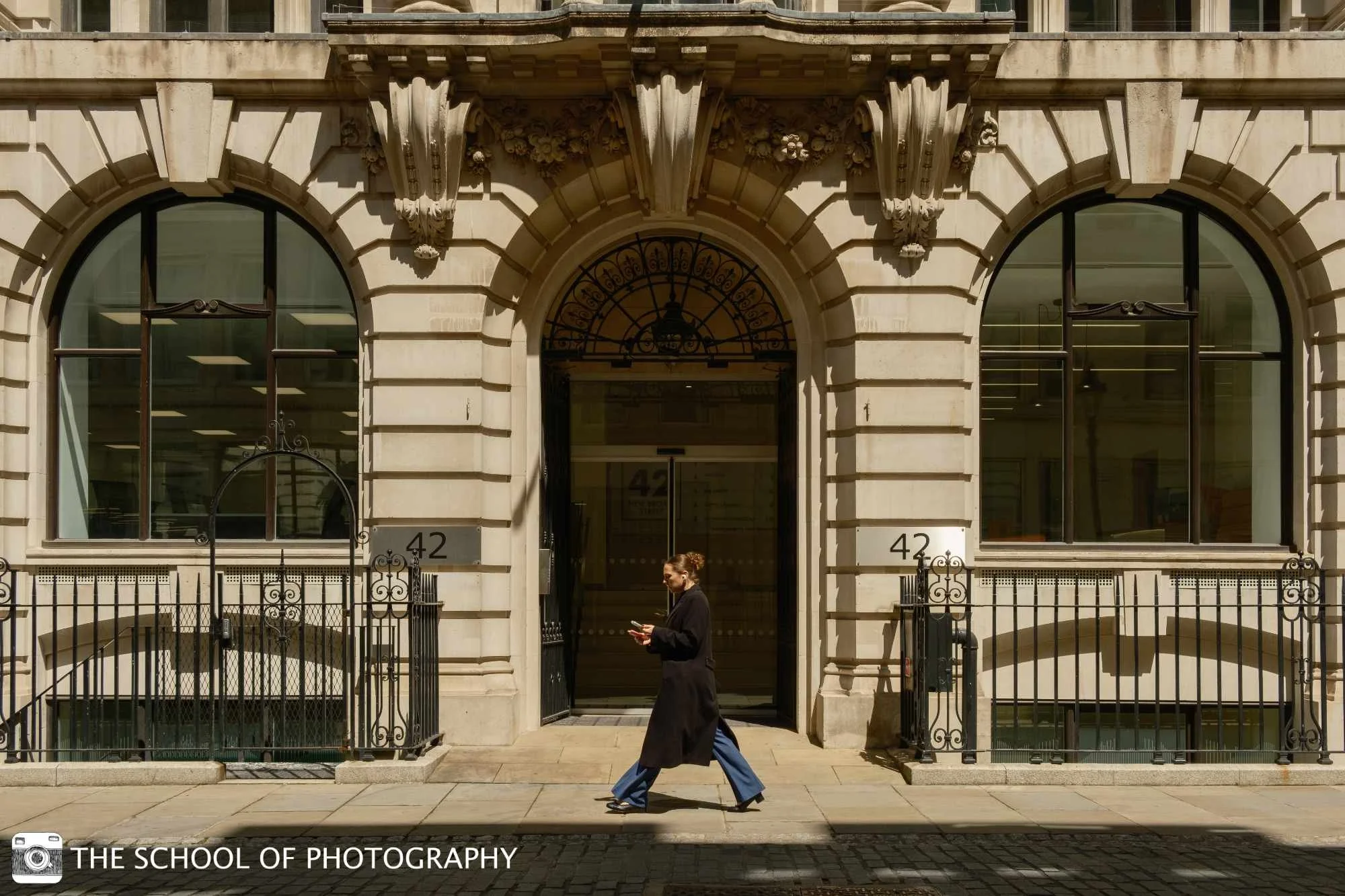
Strong sunlight, symmetry and architectural lines frame a perfectly timed moment as a pedestrian walks through the scene — showing how colour and light can transform everyday street photography.
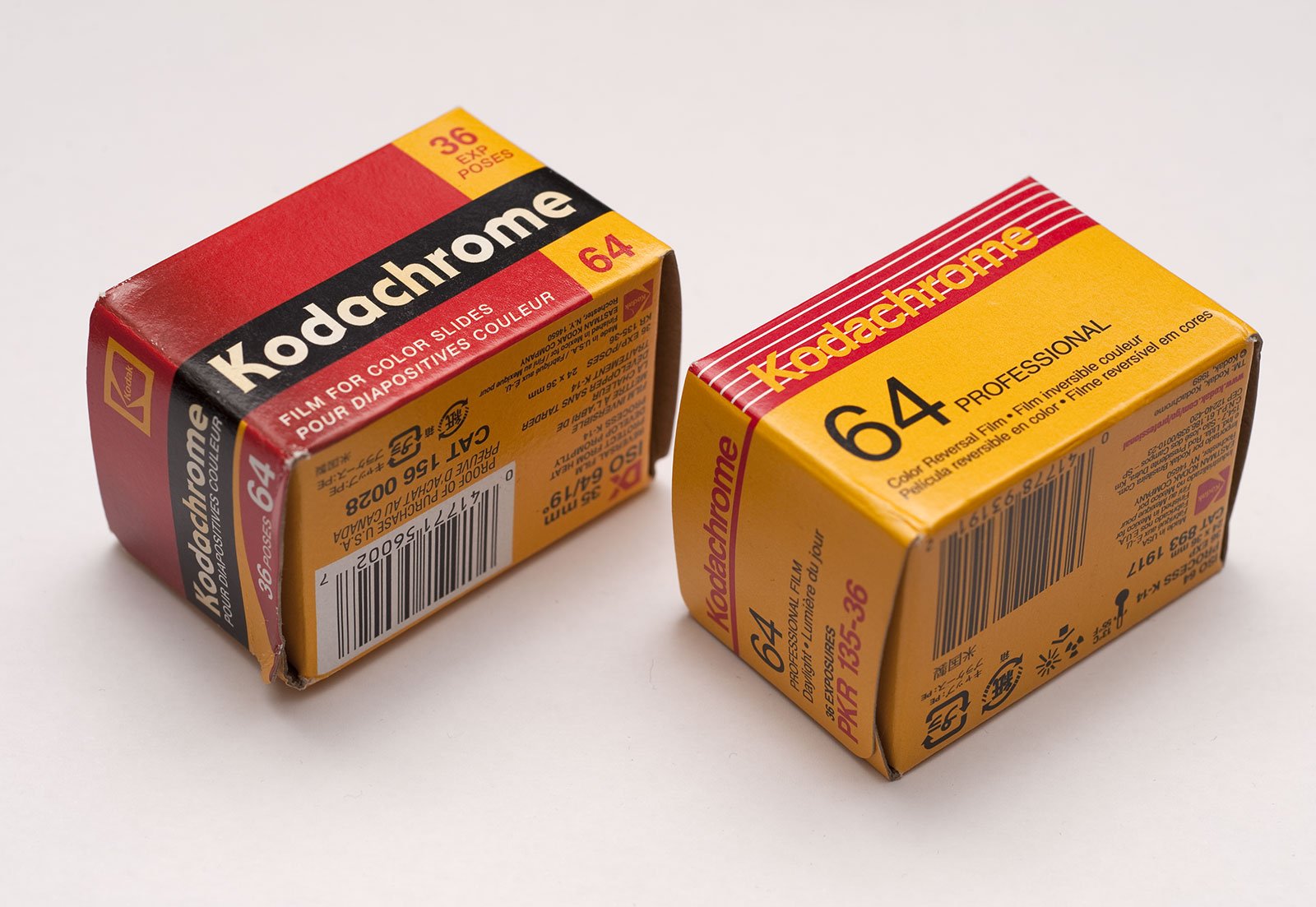
Kodachrome 64, one of photography’s most iconic colour films, renowned for its rich colours, strong contrast and distinctive look that continues to inspire photographers and modern film simulations.
Find the Light and Wait
One of my favourite photographs from the shoot came from doing almost nothing.
I found an area where a small section of light was cutting through the scene and waited.
And waited.
What I needed wasn't simply a person to walk through the frame. I wanted the right person in exactly the right position.
Eventually, a smartly dressed woman walked through and the light briefly caught her face.
That was the photograph.
Later I found another narrow shard of light down an alleyway. Again, rather than moving on, I waited.
Eventually a man came out of one of the offices and stood directly in that patch of light to smoke a cigarette.
Click.
This is something we've spoken about before with street photography: some of the photographs that appear completely spontaneous actually involve a great deal of patience.
Instead of constantly chasing interesting people, try reversing the process.
Find the composition first.
Look for an interesting background, good light, strong shadows or a shape that gives you a composition.
Then wait for your subject.
Sometimes you'll wait five minutes. Sometimes considerably longer.
And sometimes nobody comes at all.
That's street photography.
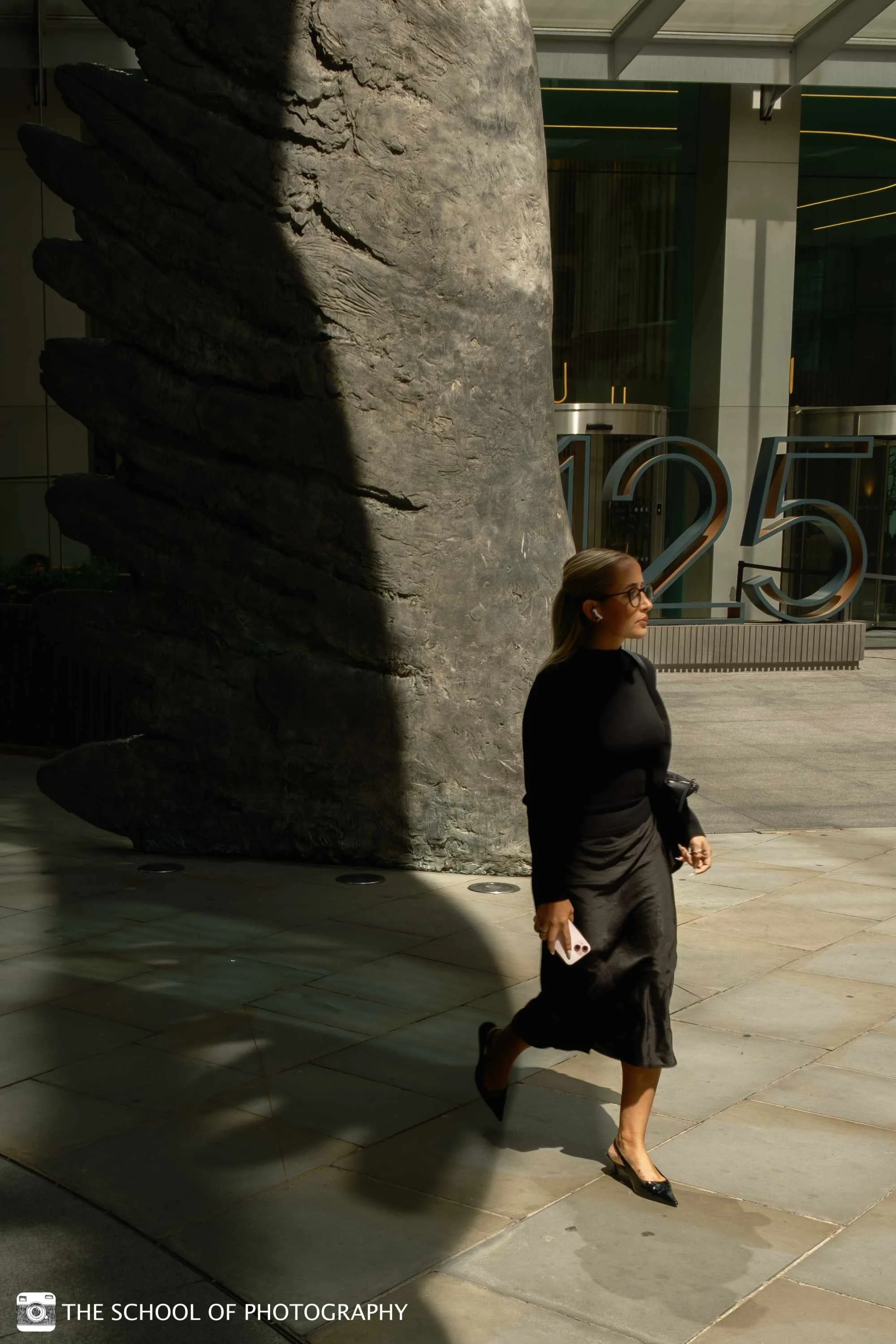
A perfectly timed street photography moment where the subject moves from deep shadow into harsh sunlight, creating strong contrast, texture and shape within the composition.
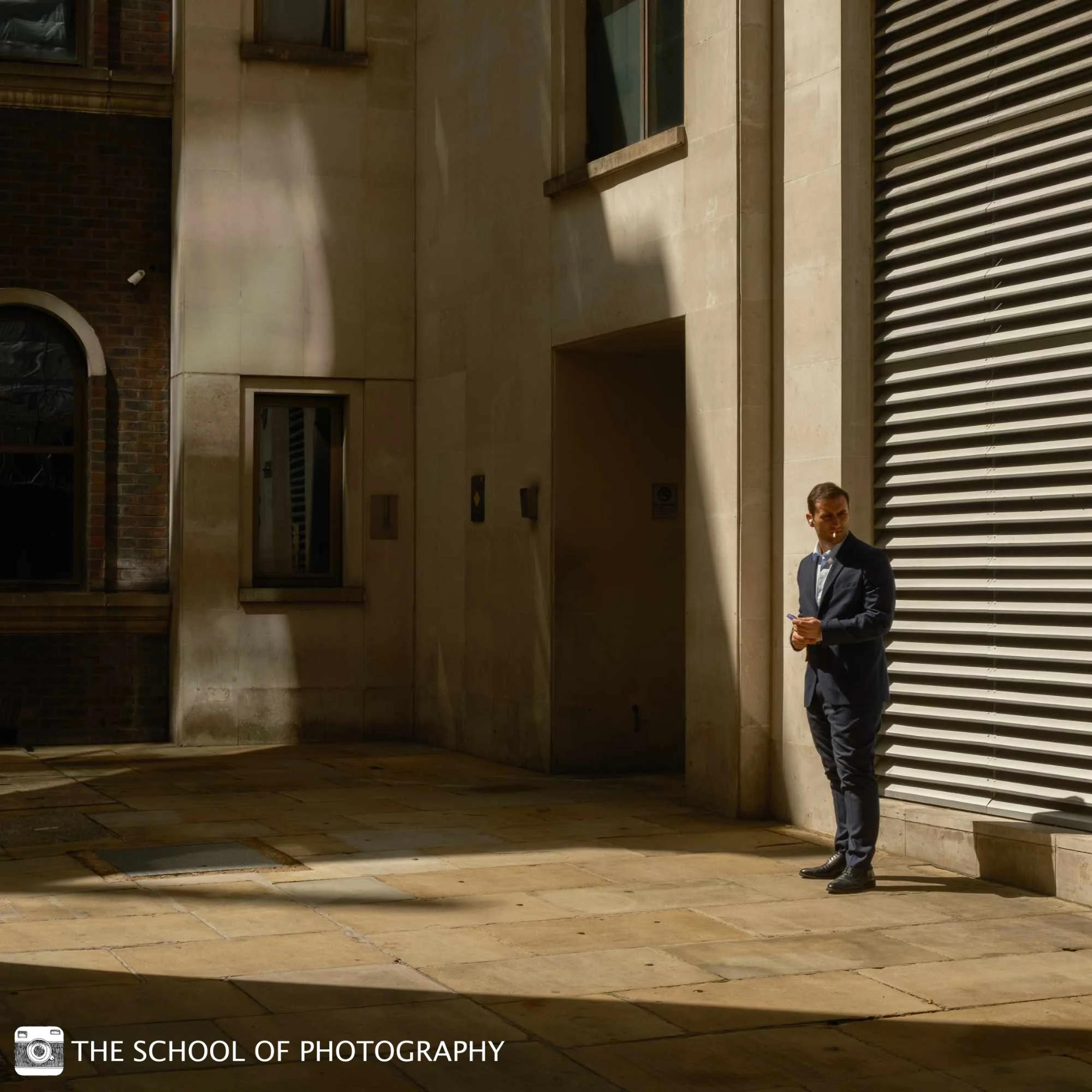
Harsh light and deep shadows create a dramatic street photography composition, with the solitary figure positioned against strong architectural lines and contrasting shapes.
Why Restrictions Can Improve Your Photography
One of the biggest lessons from this challenge had surprisingly little to do with colour.
It was about restriction.
Jimmy had restricted himself to black and white and a single 50mm-equivalent focal length.
I had to shoot colour using the same Kodachrome-style look throughout the session.
Neither of us could simply switch styles every time we saw a photograph that might look better another way.
And that's a very useful exercise.
Modern cameras give us an enormous number of options. Different lenses, autofocus modes, exposure modes, colour profiles, film simulations and countless other settings are available at the touch of a button.
Having all those choices isn't always helpful.
If you're constantly wondering which lens, setting or look you should use, the photograph can disappear while you're still making your decision.
Restrict yourself and something interesting starts to happen.
After shooting with one focal length for a while, you begin to instinctively understand what will fit inside the frame before you even lift the camera to your eye.
Stick with black and white and you begin looking for scenes that work in monochrome.
Commit to colour and you start noticing colour relationships that you might otherwise have ignored.
Limitations force you to look harder.
And that can make you a better photographer.
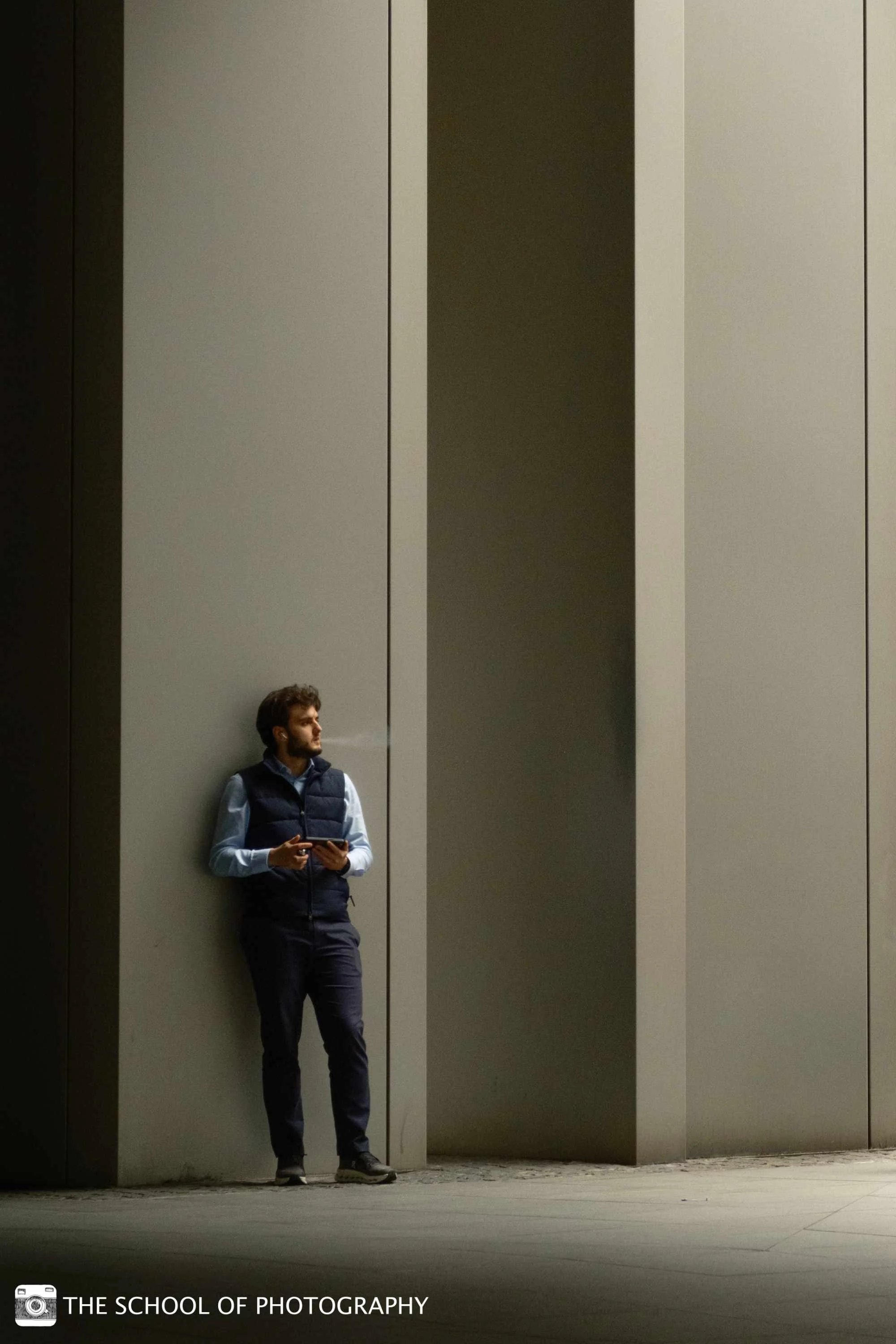
Strong vertical lines, negative space and contrasting light and shadow frame the subject in this minimalist street photography composition.
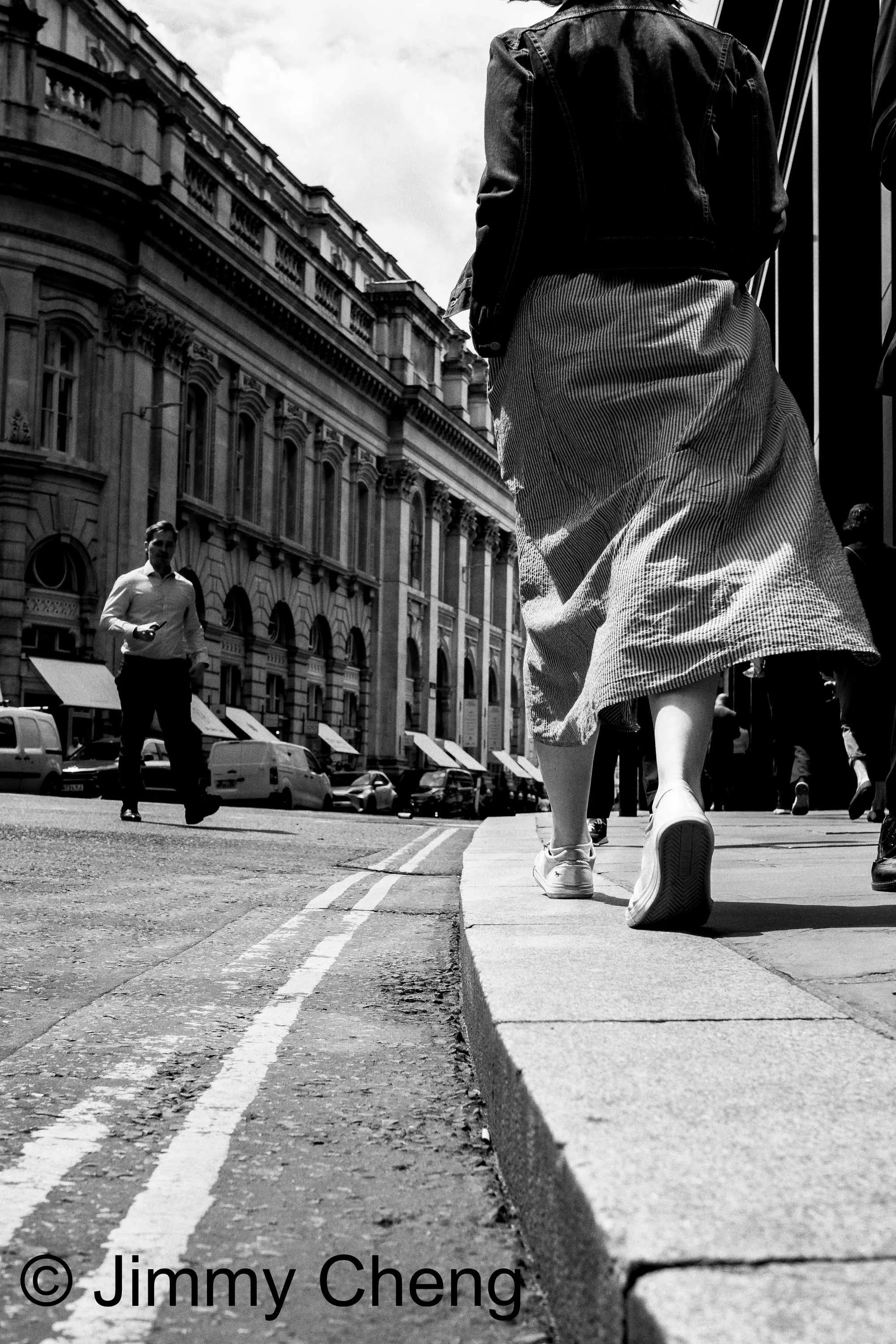
© Jimmy Cheng | A low viewpoint transforms an everyday street scene, using leading lines, bold contrast and harsh light to draw the eye through the black and white composition.
3 Street Photography Tips from Jimmy Cheng
At the end of our shoot, I asked Jimmy for his three top tips for street photographers.
1. Be Brave
Street photography often requires you to push yourself a little.
That doesn't only mean having the confidence to photograph around strangers. It also means being prepared to go out when conditions aren't perfect.
Some of Jimmy's best photographs have been taken in the rain.
Provided your equipment is suitable for the conditions, don't automatically put the camera away when the weather changes.
Rain can give you reflections, umbrellas, different light and an atmosphere you simply won't get on a clear day.
2. Be Patient
Great street photographs don't always happen instantly.
Choose your location. Look at the light. Think about your composition.
Then wait.
If you've found a great background with beautiful light but the photograph isn't quite there yet, the missing ingredient might simply be the right person entering the frame.
Patience can be far more effective than walking around endlessly hoping that a great photograph suddenly appears in front of you.
3. Don't Always Shoot Wide Open
There's a strong trend towards photographing with very wide apertures and using shallow depth of field to separate a subject from the background.
Jimmy often takes a different approach.
He likes to use smaller apertures to create greater depth of field, allowing the foreground, subject and background to work together.
Rather than separating the subject using blur, think about using light, shadow, patterns and contrast instead.
It's a very different way of approaching street photography and one that's well worth trying.
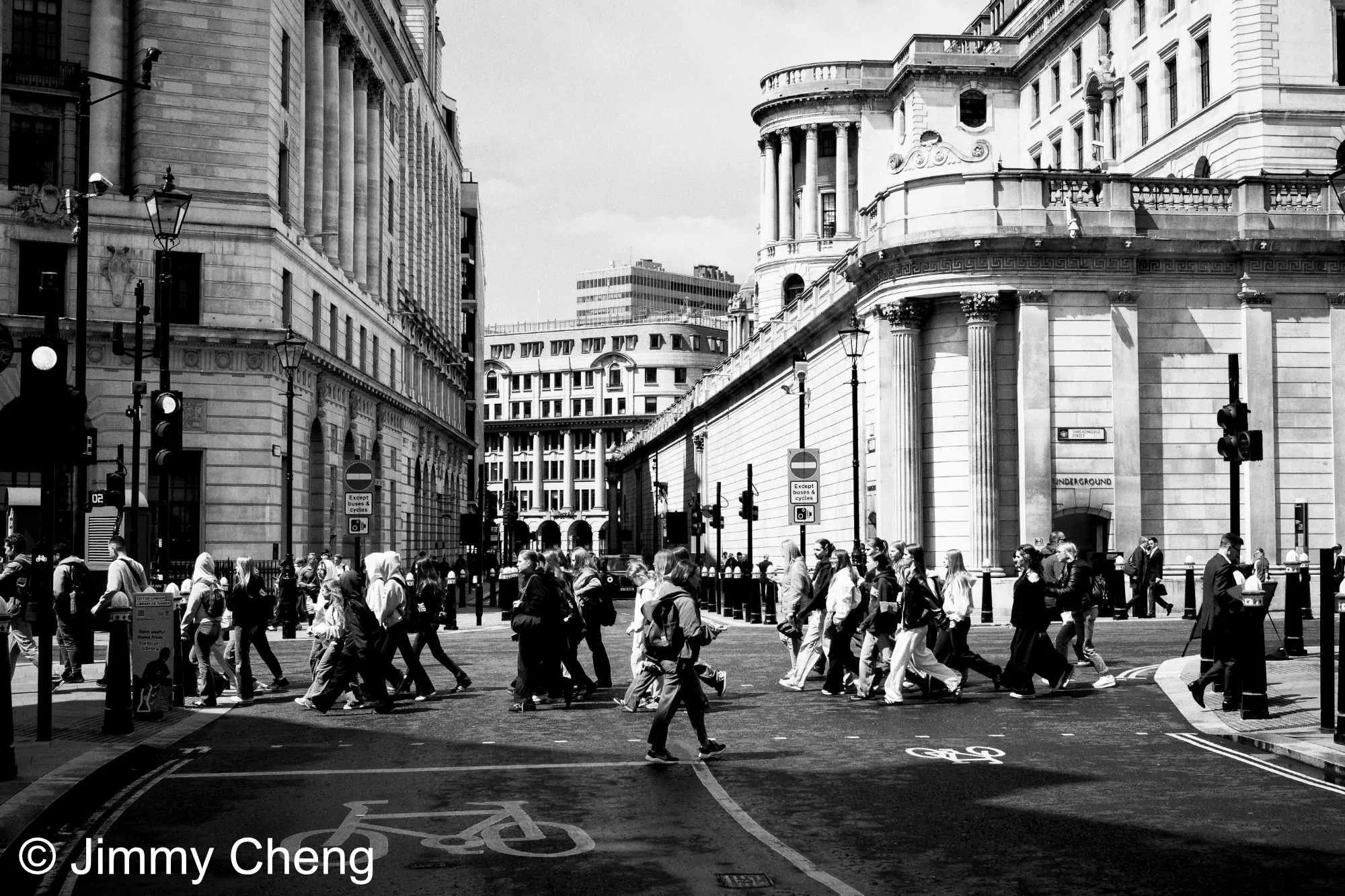
© Jimmy Cheng | A busy London street scene captured in black and white, where crowds, architectural lines and strong contrast combine to create a sense of movement and everyday city life.
So, Is Colour or Black and White Better for Street Photography?
After spending the day shooting both, the answer is probably not the one you were hoping for.
Neither.
There were photographs Jimmy took that made me wish I'd been shooting black and white.
And there were colour photographs that made Jimmy wish he'd had the Kodachrome look.
The important thing isn't deciding that one is better than the other.
It's learning to recognise why a particular scene works in colour or black and white.
If colour is adding something important to the photograph, use it.
If colour is becoming a distraction and the photograph is really about shape, expression, texture, light or contrast, try black and white.
Better still, give yourself the same challenge we did.
Go out for a couple of hours and decide beforehand that you're only going to photograph in black and white.
Then do another session entirely in colour.
Don't keep switching between the two.
By removing that choice, you might be surprised by how differently you start seeing the world around you.
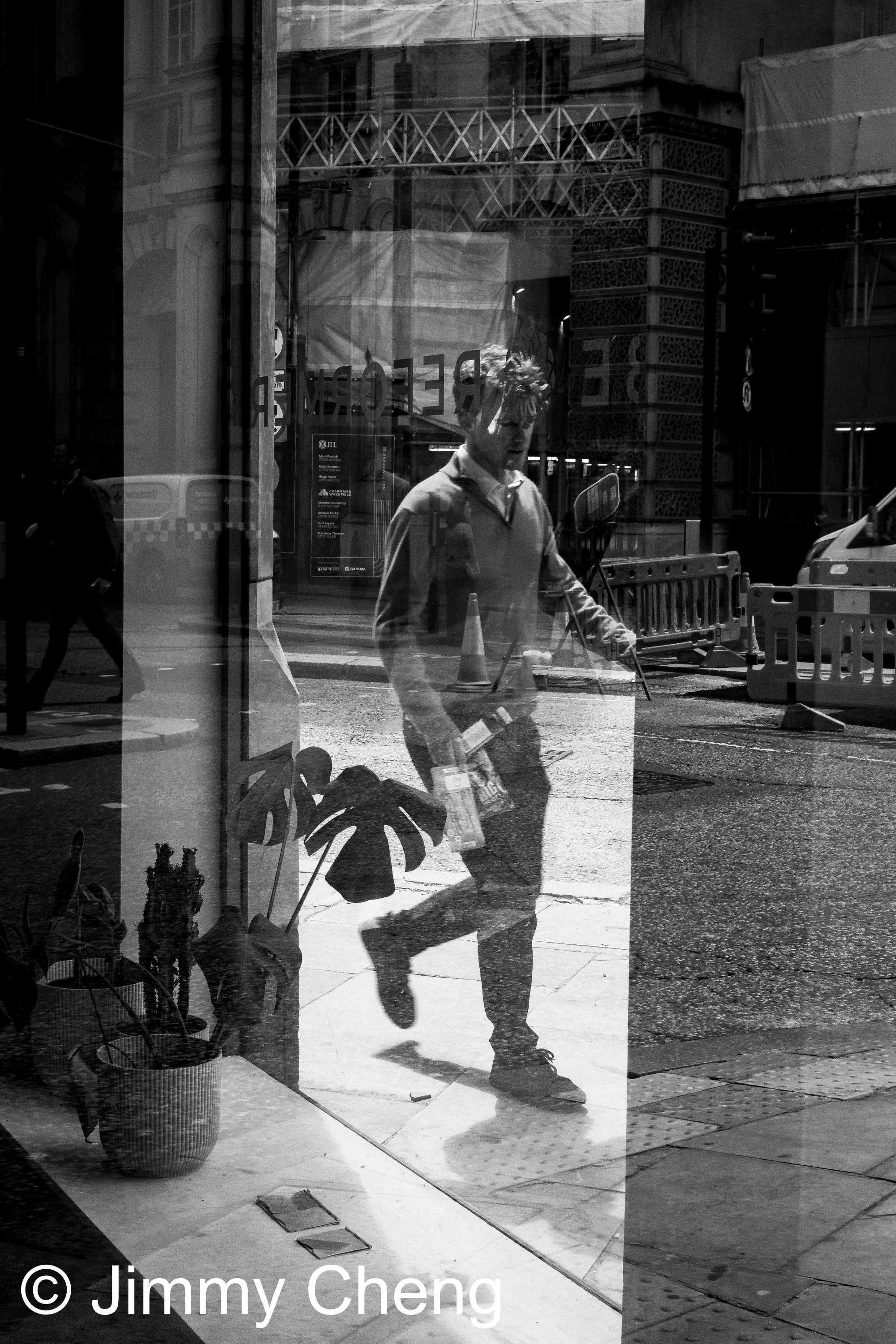
© Jimmy Cheng | Reflections add layers and visual complexity to this black and white street photograph, combining a passing pedestrian with the surrounding architecture, light and shadows.
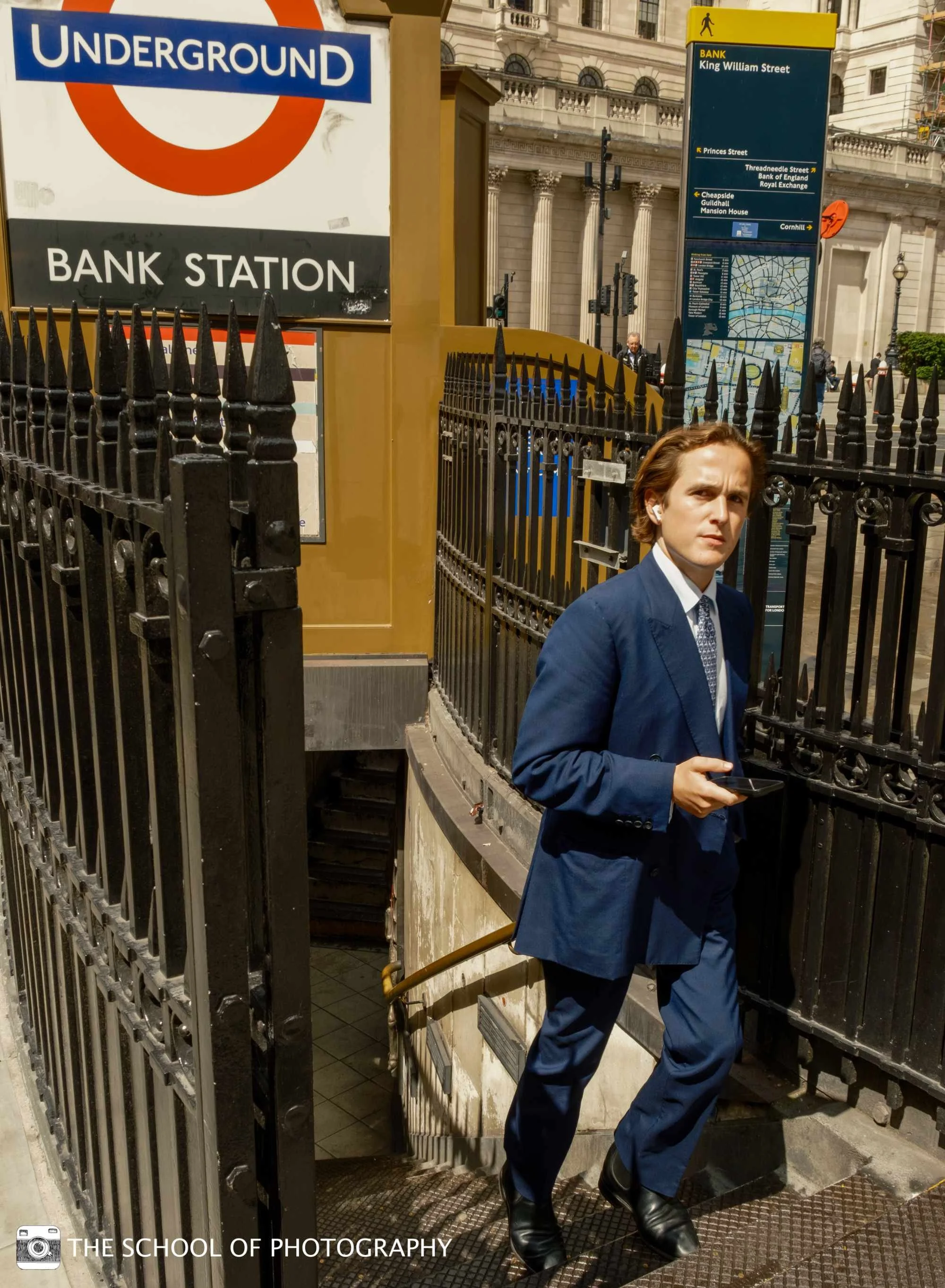
A fleeting London street photography moment at Bank Station, using strong sunlight, colour and the surrounding architecture to frame the subject as he emerges from the Underground.
Learn Street Photography
Street photography is about much more than simply walking around with a camera and photographing whatever happens in front of you.
Understanding exposure, light, composition, focal length and camera settings gives you the ability to recognise a potential photograph and capture it when the moment arrives.
At The School of Photography, we teach photography properly, from complete beginners through to more advanced photographers.
Our courses cover the fundamentals of photography as well as street photography, Lightroom, Photoshop, portraiture, landscape, wildlife, macro and much more.
If you're serious about improving your photography and want to understand your camera rather than simply hoping it gets the shot right, take a look at our photography courses and join thousands of other photographers learning with The School of Photography.
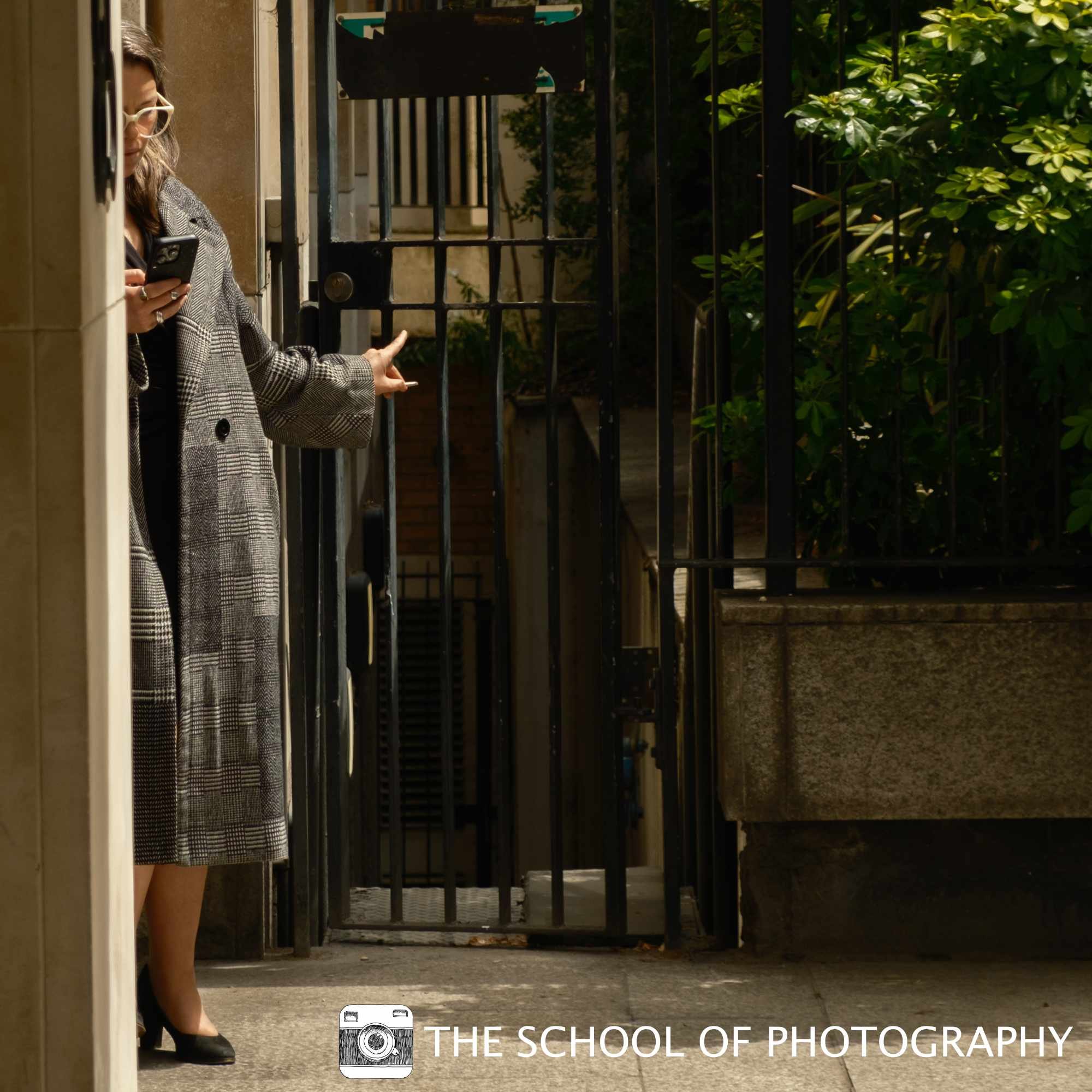
Careful framing and strong contrast turn an everyday moment into an engaging street photograph, with the partially hidden subject adding mystery and visual interest.
Like this? - Check out similar tutorials below


I hope you liked this blog on Colour vs Black and White Street Photography: Which Should You Choose? If you did, please leave us a comment and support us by sharing it with your friends and subscribe to our newsletter at the bottom of this page for more.
We also have an excellent learning community on social media so please join us there as well.
Thanks for watching and remember – Learn more at The School of Photography.
About the author
Hi, I’m Marc Newton and I’m a photographer, educational speaker, author, teacher of photography and the founder of The School of Photography. Follow my personal work on Facebook, Instagram.